Trout Survival Through Summer in New Jersey Lakes
It's a question that plagues many an angler in New Jersey as the dog days of summer roll in: "Will those beautiful trout I caught in spring actually survive the heat, or are they just… gone?" It's a valid concern, and one that often leads to disappointment for those hoping to extend their trout season. This guide will dive deep into the real factors affecting trout survival in New Jersey lakes once the warm weather hits, helping you understand why some hold on and most don't, and what you can do to support these magnificent fish.
The Harsh Reality of Summer Trout Survival in New Jersey Lakes
Let's be honest, seeing a trout caught in a warm New Jersey lake in July or August is a rare treat, often sparking debates among anglers. The truth is, the odds are heavily stacked against most trout surviving the summer in many of our state's lakes, especially those that are regularly stocked. It’s not just about the air temperature; it’s a complex interplay of water chemistry and trout biology that makes summer a perilous time.
Why Temperature is the Ultimate Enemy
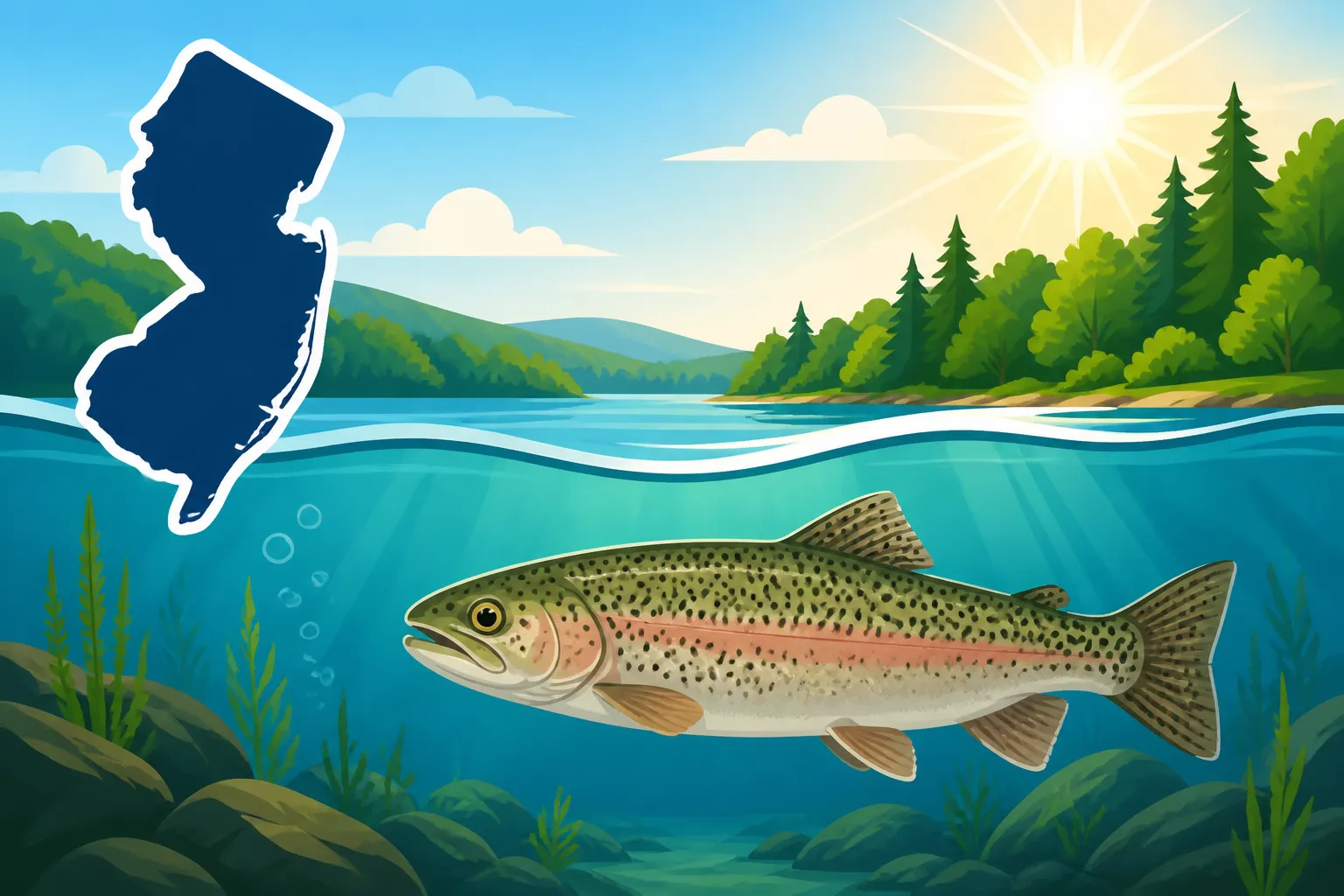
Trout, by their very nature, are cold-water fish. Species like rainbow trout, brown trout, and brook trout thrive in water temperatures generally below 68°F (20°C). When water temperatures climb significantly above that, even into the low 70s, their physiological systems begin to suffer immense stress. Their metabolism speeds up, requiring more oxygen than the warmer water can often provide, leading to a dangerous imbalance.
Imagine trying to run a marathon in a sauna with very little air – that's essentially what a trout experiences in warm water. Their heart rate increases, their immune system weakens, and their ability to feed and escape predators diminishes. Prolonged exposure to temperatures in the mid-70s and higher often proves lethal. New Jersey's smaller, shallower lakes and ponds, which warm up quickly under the intense summer sun, become death traps for these cold-loving species. You might recall those spring mornings when the water felt crisp, invigorating – that's when trout are happiest.
Stocked Trout vs. Wild Trout Resilience
It's crucial to understand that not all trout are created equal, particularly when it comes to their ability to withstand environmental stress. The vast majority of trout caught in New Jersey lakes are hatchery-raised, stocked fish. These fish are bred and grown in controlled environments with consistent water temperatures and abundant, easy-to-find food. While they provide fantastic sport for anglers, their upbringing doesn't prepare them for the harsh realities of a wild ecosystem, especially one battling summer heat.
These stocked trout often lack the natural instincts and physical conditioning of wild trout. They haven't had to seek out subtle cold water pockets or compete aggressively for food in fluctuating conditions. When released into a lake, they're already under stress from transport and adaptation. Add rising summer temperatures, and their chances of survival plummet dramatically. Wild trout, on the other hand, often reside in spring-fed streams or specific, naturally cold lakes where they've evolved over generations to find and defend the limited coldwater refuges. They are tougher, smarter, and better adapted, which is why preserving their habitat is so vital. You can learn more about the differences in their resilience by exploring how New Jersey Rainbow Trout vs Brown Trout vs Brook Trout compare, or by looking at New Jersey Stocked Trout vs Wild Trout Streams.
Factors That Influence Trout Survival in Summer Lakes
While temperature is the primary antagonist, it doesn't act alone. Several interconnected factors in a lake environment determine whether a trout has even a fighting chance to make it through the warmer months. Understanding these elements can help you identify which lakes might offer a slim possibility of a summer trout hook-up, or more importantly, which lakes to avoid disturbing these stressed fish.
Lake Depth and Thermal Stratification
One of the most critical factors is a lake's depth. Deeper lakes often undergo a natural process called thermal stratification during summer. This means the water column separates into distinct layers based on temperature. The top layer, the epilimnion, is warm and circulates freely. Below it lies the metalimnion, or thermocline, a transitional layer where temperature drops rapidly. And beneath that, in deep enough lakes, you find the hypolimnion – a layer of cold, dense water that remains relatively stable throughout the summer.
This hypolimnion is the trout's best, and often only, hope for survival. If a lake is deep enough (think 30-40 feet or more) to develop a substantial, oxygenated hypolimnion, trout can retreat to these cooler depths. Places like Round Valley Reservoir are prime examples where lake trout and even some holdover rainbow and brown trout can find refuge in the icy depths. However, many New Jersey lakes simply aren't deep enough to develop this critical coldwater sanctuary, or if they do, other factors come into play.
Dissolved Oxygen Levels
Even if a lake is deep and cold, it still needs oxygen for trout to survive. And here's where another challenge arises: warm water holds significantly less dissolved oxygen (DO) than cold water. As surface temperatures rise, the overall capacity for oxygen in the lake diminishes. Compounding this, the breakdown of organic matter (like decaying weeds and leaves) at the bottom of a lake consumes oxygen, further depleting the already limited supply in the colder, deeper hypolimnion.
So, you can have cold water at the bottom, but if it becomes anoxic (lacking oxygen), it's just as lethal to trout as warm, oxygenated water. This is a common issue in many productive New Jersey lakes that have a lot of aquatic vegetation or organic sediment. Anglers who are serious about finding trout in summer will often use a dissolved oxygen meter in conjunction with a temperature gauge to find that sweet spot: cold and oxygenated water. Without adequate DO, even the deepest parts of a lake become uninhabitable for trout.
Spring Water Inflows and Coldwater Refuges
Some lakes have a natural advantage: cold, oxygen-rich spring water inflows. These natural springs or seeps can introduce pockets of colder water, creating small, localized refuges where trout might congregate and survive the summer. These areas often remain cooler and more oxygenated than the surrounding lake water, even during hot spells.
Identifying these subtle inflows can be tricky, as they might not always be obvious. Sometimes it's a small stream entering the lake that originates from an underground spring, or simply cold seeps from the lake bottom. Anglers who spend a lot of time on a particular lake might notice areas where the water feels noticeably cooler, even on the hottest days. While these refuges are crucial for a handful of fish, they are typically limited in size and can become overcrowded with stressed trout, making them vulnerable. Knowing the local geography and seeking advice from experienced local bait shops can sometimes reveal these hidden gems.
Identifying New Jersey's "Trophy Trout" Lakes for Summer Survival
Given the challenges, the idea of a "trophy trout lake" in New Jersey, particularly one where trout consistently survive through summer, often refers to specific, deep, and well-managed reservoirs. New Jersey Fish and Wildlife works diligently to identify and manage these waters, understanding that not all stocked lakes can support trout year-round.
Criteria for a Successful Summer Trout Fishery
For a New Jersey lake to reliably hold trout through the summer, it typically needs to meet several key criteria. Firstly, significant depth is paramount, allowing for distinct thermal stratification and a substantial hypolimnion. We're talking about lakes with depths exceeding 40 feet, preferably much deeper, to provide that coldwater retreat. Secondly, consistent dissolved oxygen levels in those deeper, colder layers are essential. This means the lake isn't overly eutrophic (rich in nutrients, leading to excessive plant growth and decay) and has good water quality.
Thirdly, coldwater inflows, whether from natural springs or deep tributaries, can be a major bonus, constantly replenishing the cold, oxygenated water. Finally, a lake's success often comes down to active management by the New Jersey Division of Fish and Wildlife, which may involve stocking specific strains of trout known for better survival, or monitoring water conditions closely. This is why certain lakes are designated as "Trophy Trout Lakes" and receive larger, robust trout in both spring and fall. You might want to check out What Is a Trophy Trout Lake in New Jersey? for more details on these special designations.
Notable New Jersey Lakes with Better Summer Trout Prospects
While most small ponds and shallower lakes will see significant trout mortality come summer, a few New Jersey water bodies stand out for their ability to sustain trout populations, at least for a portion of the summer, or even year-round for certain species.
The undisputed champion for deep-water trout in New Jersey is Round Valley Reservoir. This massive, exceptionally deep (up to 180 feet!) reservoir in Hunterdon County is renowned for its lake trout, which are perfectly adapted to cold, deep water, and often survive year-round. It also supports holdover rainbow and brown trout, though finding them in summer requires specialized tactics for deep-water fishing. Anglers targeting these fish often need to use downriggers or heavy jigging spoons to reach the depths where the trout reside. Remember that these trout often congregate along the thermocline. For specific strategies, our guide on Round Valley Reservoir Lake Trout Fishing is an excellent resource, as is learning How to Fish Clear Water Lakes Like Round Valley Reservoir.
Other reservoirs like Merrill Creek Reservoir in Warren County and Monksville Reservoir in Passaic County also possess significant depth and better water quality, giving trout a fighting chance. While not as deep as Round Valley, they can sustain trout into the early summer, and sometimes even through it, especially in cooler years or specific deep sections. These waters are often stocked with robust trout, and their deeper sections provide a temporary reprieve from the heat. It’s still a challenge, but compared to a typical small pond, the survival rate is significantly higher.
Here's a quick comparison of factors influencing summer trout survival in different types of New Jersey lakes:
| Factor | Small, Shallow Pond (e.g., local park pond) | Moderately Deep Lake (e.g., typical stocked lake) | Deep Reservoir (e.g., Round Valley, Merrill Creek) |
|---|---|---|---|
| Average Depth | < 15 feet | 15-40 feet | > 40 feet |
| Thermal Stratification | None/Weak | Moderate/Temporary | Strong & Stable |
| Hypolimnion (Cold Water) | Absent | Limited, often anoxic | Well-developed, oxygenated |
| Dissolved Oxygen | Low in summer, especially at depth | Variable, often depletes at depth | Generally good in hypolimnion |
| Spring Inflows | Rare | Possible, but often insufficient | More likely, can create refuges |
| Trout Survival Rate | Very Low to Nil | Low | Moderate to Good (especially for lake trout) |
| Best Time to Fish | Spring, Fall (post-stocking) | Spring, Early Summer | Year-round (specific species/techniques) |
Angler Responsibility and Best Practices for Summer Trout Fishing
Understanding the science behind trout survival means we, as anglers, also have a responsibility to these fish, especially during periods of stress. Catching a trout in summer is a thrill, but it's important to consider the impact of our actions.
When to Avoid Targeting Trout
The simplest way to ensure trout survive the summer is to not target them when conditions are unfavorable. If the surface water temperature in a lake is consistently above 68-70°F, it's a strong indicator that trout are under severe stress. Even if you manage to hook one from deeper, cooler water, the fight itself, and bringing the fish through warmer surface layers, can be lethal. The stress from lactic acid buildup, combined with thermal shock, significantly reduces their chances of survival post-release.
It’s often best to put away your trout gear for the summer and focus on species like bass, pickerel, or panfish, which are much more tolerant of warm water. Consider shifting your focus to saltwater fishing along the coast for fluke or striped bass during these months. If you see signs of stressed trout – such as fish struggling at the surface, gulping air, or exhibiting unusual lethargy – it's a clear signal to avoid fishing for them entirely. This is also a good reason to be mindful of how New Jersey Fishing Season Dates and Closures are set, as they are often designed with fish health in mind.
Minimizing Stress During Catch and Release
However, if you find yourself fishing in a deep, coldwater reservoir like Round Valley where trout are known to survive and you inadvertently hook one, or if conditions are marginally better, there are crucial steps you can take to maximize its chances of survival during catch and release.
First, use barbless hooks or pinch down the barbs on your hooks. This makes hook removal quicker and causes less damage to the fish's mouth. Second, handle the fish as little as possible, and ideally, never remove it from the water. A good quality, rubber-meshed net can cradle the fish in the water while you remove the hook. Third, have your tools ready. Pliers or a de-hooker should be easily accessible so you can release the fish swiftly. Products like long-nose pliers or specialized de-hooking tools, readily available on Amazon, can be invaluable for minimizing handling time.
Lastly, avoid the "hero shot". That brief moment out of the water for a photo, especially on a warm day, can be fatal. If you must take a picture, keep the fish submerged as much as possible, lift it quickly for a second, and immediately return it to the water. Gently revive the fish by holding it upright in the water until it swims away under its own power. These practices, similar to those outlined in New Jersey Catch and Release Striped Bass Handling Rules, are vital for the conservation of any stressed fish.
Choosing to fish for other species when water temperatures are high, or employing strict catch-and-release practices when targeting trout in coldwater refuges, ensures that New Jersey's trout populations, particularly the hardy holdovers, have the best possible chance to thrive for future generations of anglers. You can help ensure trout have a good start by also understanding New Jersey Spring Trout Stocking Start Date and being aware of how New Jersey Trout Stamp Requirements Explained contribute to conservation efforts.
Disclaimer
Please note that fishing regulations and conditions in New Jersey can change. Always consult the latest New Jersey Fish and Wildlife Digest or their official website for the most up-to-date rules, regulations, and advisories before heading out on the water. This guide provides general information and best practices based on common knowledge and current understanding.