Nymphing Techniques for Trout Streams
If you've spent any time fishing for trout in New Jersey's beautiful, clear streams, you've probably experienced the frustration of seeing fish hold in likely spots, seemingly ignoring everything you throw at them. Whether they're stacked up behind a boulder or tucked under an undercut bank, sometimes traditional dry fly or spinner presentations just don't cut it. That's often because the vast majority of a trout's diet comes from beneath the surface, in the form of nymphs. This guide is all about demystifying nymphing techniques, giving you the practical know-how to consistently catch more trout in New Jersey's diverse waterways, turning those frustrating blank days into memorable catches.
Understanding Nymphing: Why It's a Game Changer for New Jersey Trout
Nymphing, at its core, is simply presenting an imitation of an aquatic insect larva or pupa to a feeding trout below the surface. It sounds straightforward, but there's an art and a science to it that can dramatically improve your success. Many anglers in New Jersey overlook nymphing, perhaps thinking it's too complicated or less "pure" than dry fly fishing, but understanding how and why trout feed on nymphs will quickly show you its immense value.
The Trout's Diet: Why Nymphs Are Key
Think about it: most of the insects that trout eat spend the vast majority of their lives underwater. Mayflies, caddisflies, stoneflies, midges – these creatures hatch from eggs on the streambed, grow through various nymphal stages, and only briefly emerge as adults. For a trout, these subsurface stages represent a consistent, abundant food source that's often easier to catch than a fleeting adult fly on the surface. They don't have to look up and risk exposure to predators like osprey or eagles; they can just calmly feed in the current.
In the cold, clear waters of New Jersey's pristine trout streams, especially in places like the Pequest River or the Musconetcong River, trout become incredibly efficient feeders. They'll expend minimal energy for maximum caloric return. A well-presented nymph, drifting naturally with the current, mimics this natural food source perfectly. It’s a guaranteed meal, and trout are programmed to take advantage of such opportunities. Ignoring this primary food source means you're missing out on where trout are feeding most of the time, regardless of whether there's a visible hatch on the surface.
Reading the Water: Where Trout Hold
Successful nymphing starts with understanding where trout live and feed. Trout are creatures of comfort and efficiency. They want to be in a place where food is easily accessible, but where they also feel safe from predators and can conserve energy. This means looking for seams, eddies, pockets, and current breaks. Think about the structure: rocks, logs, undercut banks, and even subtle changes in the streambed provide perfect ambush points and resting spots.
In a fast-flowing stretch, a trout might sit directly behind a large boulder, letting the current bring food to them while using the boulder as a shield. In a slower, deeper pool, they might hold near the bottom, picking off nymphs as they drift by. The challenge is that these fish are often not visible, unlike when they're rising to dry flies. You need to learn to "read" the water, anticipating where a trout would naturally hold, and then present your nymph rig in a way that travels through that feeding lane. This skill is paramount in places like the Black River, where varied water types demand careful observation.
Essential Nymphing Rigs and Gear for New Jersey Waters
Getting your gear dialed in for nymphing can feel a little overwhelming at first, especially with all the specialized terms. But really, it boils down to a few key components designed to help you present your fly naturally and detect the subtle takes. Don't worry, you don't need to break the bank for a top-of-the-line setup; many excellent options can be found on Amazon.
Rod, Reel, and Line Selection
For nymphing in New Jersey's streams, your rod choice is more critical than you might think. A longer rod, typically between 9 and 10.5 feet, in a 3-weight to 5-weight, is ideal. The extra length gives you better line control, allowing for longer, drag-free drifts, and making it easier to mend your line over tricky currents. This reach is a huge advantage when you're trying to keep your fly in the feeding zone without disturbing the water directly above it. A medium-fast to fast action rod will give you the backbone to cast weighted nymphs and fight larger trout effectively.
Your reel, for trout nymphing, is mostly a line-storage device. As long as it balances your rod and holds your fly line comfortably, it will do the trick. The fly line itself is where things get interesting. Many anglers start with a standard weight-forward floating line, which works perfectly fine. However, some dedicated nymphing lines exist that have a thinner diameter or a specific taper to help with casting and sensitivity. Don't feel pressured to get one right away; master the techniques with your existing floating line first.
Indicator Setups and Weighting
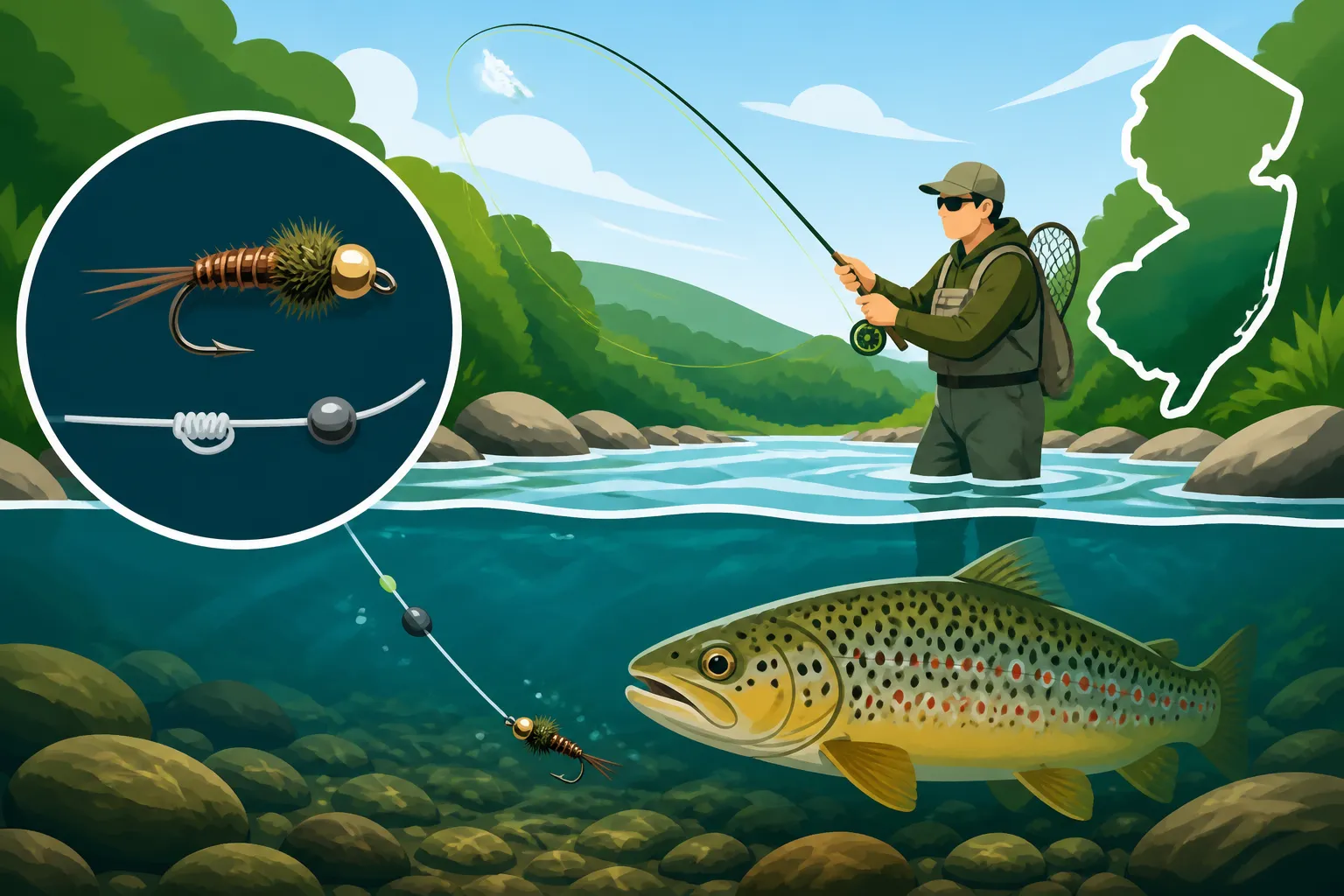
This is where the rubber meets the road for strike detection. An indicator, often called a strike indicator or bobber, is essential for most nymphing techniques. Its job is twofold: to suspend your nymph at the desired depth and to signal when a trout takes your fly. There are many styles, and choosing one often comes down to personal preference and water conditions.
- Floating Bobber-Style Indicators: These are the most common. They come in various sizes and colors, attaching to your leader with a O-ring, rubber O-ring, or clip. They're highly visible and great for general nymphing, especially when you need to suspend heavier flies. Brands like Thingamabobber or Air-Lock are popular choices you can easily find on Amazon.
- Yarn Indicators: Made from buoyant yarn, these are often preferred for their softer landing and minimal splash. They absorb water, making them slightly less buoyant than foam, but their sensitivity can be fantastic. They are typically attached with a half-hitch knot or a rubber band sleeve, allowing for easy depth adjustments.
- Sighter Tippet/Euro Nymphing Line: For "contact nymphing" or "Euro nymphing," many anglers forgo traditional indicators entirely. Instead, they use a brightly colored monofilament or fluorocarbon sighter material integrated into their leader. The sighter's sag or sudden movement becomes your strike indicator, offering incredible sensitivity and direct contact with your flies. This technique really shines when fishing swift, broken water or very close to the fish.
Weighting is the other critical component. Trout feed on the bottom, so your nymph needs to get there quickly and stay there. Small split shot (non-toxic, please!) crimped onto your leader, or moldable tungsten putty, are your primary tools. Start with just enough weight to get your fly down, then add more if you're not ticking the bottom occasionally. The key is to find the balance between getting to depth and maintaining a natural, drag-free drift. Experimentation is crucial, as stream depth and current speed constantly change.
| Component | Typical Nymphing Recommendation | Purpose |
|---|---|---|
| Rod Length | 9 to 10.5 feet | Increased reach, better line control for longer drifts |
| Rod Weight | 3-weight to 5-weight | Versatile for most NJ trout sizes and stream conditions |
| Rod Action | Medium-Fast to Fast | Power for casting weighted rigs, fighting fish |
| Reel | Any quality reel that balances the rod | Line storage, rod balance |
| Fly Line | Weight-forward floating line (or specialized nymphing line) | Floatation, casting weight distribution |
| Leader/Tippet | Tapered leader with 4x-6x tippet | Stealthy presentation, breaking strength |
| Indicator | Foam bobber, yarn, or sighter tippet | Strike detection, depth control |
| Weight | Non-toxic split shot, tungsten putty | Get flies to depth, maintain contact with bottom |
Mastering Nymphing Techniques: Strategies for Success
Once you have your gear set up, it's time to learn how to put those nymphs where the fish are. Nymphing isn't just one technique; it's a family of approaches, each with its own nuances. Getting a good drift is often harder than it looks, and it’s the number one factor in success.
The Dead Drift: The Foundation of Nymphing
The dead drift is the bread and butter of nymphing, and honestly, of all fly fishing. It means your fly is moving at the exact same speed as the current, completely free of any drag or unnatural movement imparted by your line. For a nymph, this is absolutely crucial. Trout quickly learn to ignore anything that isn't behaving like a natural insect washed down by the current.
To achieve a dead drift, cast your weighted nymph rig slightly upstream and across from where you expect the fish to be. As soon as your line lands, immediately make an "upstream mend" – a quick flick of the rod tip to throw a loop of line upstream. This buys you precious seconds of slack line, allowing your fly to sink and drift naturally without the faster surface current pulling on your indicator or leader. As your rig drifts downstream, continue to mend your line as needed, always trying to keep as little line as possible on the water while maintaining control of your indicator. Your goal is for your indicator to float at the same speed as any foam or debris on the water, without pulling ahead or lagging behind. It takes practice, but once you get it, you'll feel a huge difference in your hook-up rate.
High-Sticking and European Nymphing
When conditions get tough, or you're fishing fast, turbulent water, high-sticking and European (Euro) nymphing techniques really shine. These methods prioritize direct contact with your flies, often minimizing or eliminating the use of a traditional floating indicator.
High-sticking involves holding your rod tip high, almost directly over your line and flies, to keep as much fly line off the water as possible. This minimizes drag in complex currents and allows for incredibly sensitive strike detection. You'll typically cast shorter distances, often just a rod length or two, and follow your flies downstream with the rod tip, feeling for subtle taps or seeing the line pause. This is particularly effective when fishing tight seams, plunge pools, or around structure in smaller New Jersey streams.
European Nymphing takes high-sticking to the next level. It encompasses several specific styles, like Polish, Czech, and French nymphing, all centered on maintaining direct contact. Instead of a floating indicator, a brightly colored sighter is typically used as mentioned earlier, often tied directly into a long, thin leader. The rod tip stays high, and the angler leads the flies, almost hovering the sighter just above the water's surface. Takes are detected by watching the sighter for any twitch, stop, or acceleration, or by feeling the subtle bump transmitted directly through the line. This approach allows for incredible precision and sensitivity, often preferred when trout are exceptionally spooky or holding in very specific, difficult-to-reach pockets. Learning these techniques takes dedication, but the rewards are many, especially in pressured waters where trout have seen every other trick in the book.
Reading the Indicator and Setting the Hook
This is arguably the most challenging and rewarding part of nymphing. Your indicator isn't just a bobber; it's your window into the underwater world. Any unnatural movement – a pause, a twitch, a sudden dip, or a quick acceleration – can mean a trout has taken your fly. Sometimes, a fish will simply stop your fly, and the indicator will just look "stuck" for a split second. This is often the most common and easily missed take.
The rule of thumb: if in doubt, set the hook! Many missed fish happen because anglers hesitate. To set the hook, use a sharp, quick, but controlled upward or sideways sweep of your rod. Avoid a violent, over-the-shoulder trout set that can break your light tippet or send your rig flying into a tree. A smooth, decisive motion is usually enough to drive the hook home. Remember that trout often spit out flies almost instantaneously, so your reaction time needs to be quick. Practice distinguishing between a true take and the indicator simply bumping the bottom. You'll miss a few, but you'll also land many more fish than you would by waiting for an unmistakable pull.
Selecting the Right Nymphs for New Jersey Trout Streams
Choosing the right nymph can sometimes feel like trying to pick a needle out of a haystack, given the sheer variety available. But in New Jersey, sticking to a few core patterns that imitate common aquatic insects will get you a long way. The key is to match the size, shape, and color as closely as possible to the naturals in the water.
Imitating Natural Hatches
Trout largely feed on what's available and abundant. In New Jersey, this means focusing on mayflies, caddisflies, and stoneflies in their nymphal stages, as well as midges. Different species hatch at different times of the year, and understanding these cycles, even generally, can help you pick the right fly. For instance, early spring might see larger stonefly nymphs, while summer and fall could feature smaller mayfly and caddis larvae.
If you can, observe the stream before you fish. Turn over a few rocks in the riffles; you might be surprised at the variety of insect life clinging to the underside. Note their size, shape, and color. This on-the-spot reconnaissance is invaluable. Even without seeing exact insects, having a selection of nymphs that cover different sizes (from tiny #20 midges to chunky #8 stoneflies) and colors (olive, brown, black, tan) will ensure you're prepared for most situations. For a deeper dive into insect life, check out guides on Fly Selection for Trout Streams in Spring.
Go-To Nymph Patterns for New Jersey
While hatches vary, some nymph patterns are universal producers, mimicking a broad range of aquatic insects or acting as general "attractors." You'll find these staples in almost every serious trout angler's fly box, and they are readily available online through retailers like Amazon.
- Pheasant Tail Nymph: This classic pattern is incredibly versatile, imitating many species of mayfly nymphs. Carry it in sizes #12-20, both weighted and unweighted, and in natural brown/olive shades.
- Hare's Ear Nymph: Another fantastic general-purpose pattern, the Hare's Ear has a buggy, lifelike appearance that trout can't resist. It mimics mayflies, caddis pupae, and even some stoneflies. Sizes #10-18 are good to have.
- Caddis Larva/Pupa Imitations: Caddisflies are abundant in many New Jersey streams. Patterns like the "Green Weenie" (a simple green wormy fly) or more detailed caddis pupa imitations in green, tan, or brown in sizes #12-18 are always good to have on hand.
- Copper John: While not a direct imitation of any single insect, the Copper John is a highly effective attractor nymph due to its flash and weight. It sinks quickly and often provokes a strike even when trout are finicky. Sizes #12-18 are common.
- Squirmy Wormy/Worm Imitations: Love them or hate them, worm patterns catch fish, especially after rain or when trout are keyed into segmented prey. Keep a few in red, pink, or brown.
- Midges: Don't underestimate tiny midges, especially in winter or when trout are focused on minute food. Zebra Midges (black or olive with a silver rib) in sizes #18-22 can be deadly when nothing else works.
Remember, presentation often trumps pattern. A perfect dead drift of an "okay" fly will almost always outfish a poorly presented "perfect" fly. Pair these patterns with solid New Jersey Trout Fishing Techniques and you’ll be well on your way to success. As you explore different waters, like those mentioned in Fishing the Musconetcong River for Trout, you'll develop your own favorites.
Advanced Nymphing Considerations for Tough Conditions
Sometimes, even with the right setup and a perfect dead drift, the trout just aren't cooperating. This is when you need to start thinking outside the box, adjusting your approach to trick those finicky fish. New Jersey's trout can be exceptionally smart, especially in heavily fished areas or during challenging weather patterns.
Adjusting to Water Levels and Clarity
New Jersey streams, like many, are dynamic environments. Water levels can fluctuate wildly after heavy rains, and clarity can change from crystal clear to muddy in a matter of hours. These changes directly impact nymphing success. After a significant rain, when water levels are high and murky, trout often move closer to the banks to escape the main current and find clearer water. This is when larger, darker, or more heavily weighted nymphs can be effective, as they create a stronger silhouette and are easier for trout to see in reduced visibility. Patterns with a bit of flash, like a Copper John or a heavy stonefly, can also stand out.
Conversely, when water levels are low and gin-clear, stealth becomes paramount. This is a common scenario during summer months, especially when considering How to Catch Trout in Warm Summer Water. You'll need to scale down your leader and tippet to finer diameters (e.g., 6x or 7x fluorocarbon), use smaller, more natural-looking nymphs, and approach the water with extreme caution. Long, delicate casts and an absolutely perfect, drag-free drift are non-negotiable. Sometimes, even the shadow of your line or rod can send trout scattering. This is also where the subtle approach of How to Fly Fish for Trout in New Jersey Streams really pays off.
Targeting Specific Species: Rainbows, Browns, and Brookies
While nymphing works for all trout species, understanding the subtle behavioral differences between New Jersey's rainbow, brown, and brook trout can give you an edge. New Jersey Rainbow Trout vs Brown Trout vs Brook Trout highlights these differences. Rainbow trout, often stocked heavily in many state waters, tend to be more aggressive and opportunistic feeders. They're often found in faster currents and are more likely to chase a drifting nymph. You can often get away with slightly larger or flashier patterns for them.
Brown trout, on the other hand, are often more wary and territorial. They prefer holding in slower, deeper water, under cover, or against undercut banks. You'll need to be more precise with your presentations, targeting their specific lies with a subtle, perfectly drifted nymph. They are often less forgiving of a poor presentation. Brook trout, our native species, are generally found in smaller, colder, higher-gradient streams. They are often less selective but can be incredibly spooky. Stealth and delicate presentations with smaller, more natural nymphs are key for these beautiful fish. Always remember to check the New Jersey Trout Season: Spring vs Fall dates for the waters you plan to fish, as regulations can vary.
The Importance of Stealth and Approach
No matter how perfect your nymphing rig or technique, a poor approach will ruin your chances. Trout are incredibly aware of their surroundings. Vibrations on the bank, a sudden shadow, or loud splashing can send them bolting for cover. When fishing New Jersey's clear trout streams, always approach the water slowly and carefully, staying low and out of the trout's line of sight.
Wading should be minimized, and when necessary, done slowly and deliberately. When you move, move like a predator, not a bulldozer. If you're fishing a small, tight stream, consider kneeling or even crawling to your casting position. Cast upstream or across, never directly over the fish if you can avoid it. The goal is to present your fly before the trout knows you're there. Combining this stealth with the right nymphing approach will increase your catch rate exponentially and truly make you feel like a seasoned angler. For safety in rocky streams, be sure to read up on How to Wade Fish New Jersey's Rocky Trout Streams Safely.
Disclaimer
This article is for general informational purposes only and does not constitute professional advice. Laws, prices and regulations vary by location and change over time. Consult a qualified professional for guidance on your specific situation.