How to Fish Bloodworms for Striped Bass
There's nothing quite like the thrill of a hard hit from a striped bass, but sometimes it feels like they're just not interested in anything you throw at them. If you've ever felt frustrated by picky stripers in New Jersey waters, you're not alone. This guide is all about one of the most consistently effective baits out there for these powerful fish: the humble, yet mighty, bloodworm. We'll dive deep into why they work, how to get them rigged up properly, and the best ways to fish them to maximize your chances of reeling in a trophy striped bass.
Why Bloodworms are a Striped Bass Magnet in New Jersey
When it comes to enticing striped bass, especially in New Jersey's diverse waterways, bloodworms have a legendary reputation. They're not just another bait; they're often the bait, especially when other offerings fail. Anglers swear by them for a reason, and it boils down to a combination of their natural appeal and how they interact with the local environment.
The Irresistible Aroma and Natural Draw
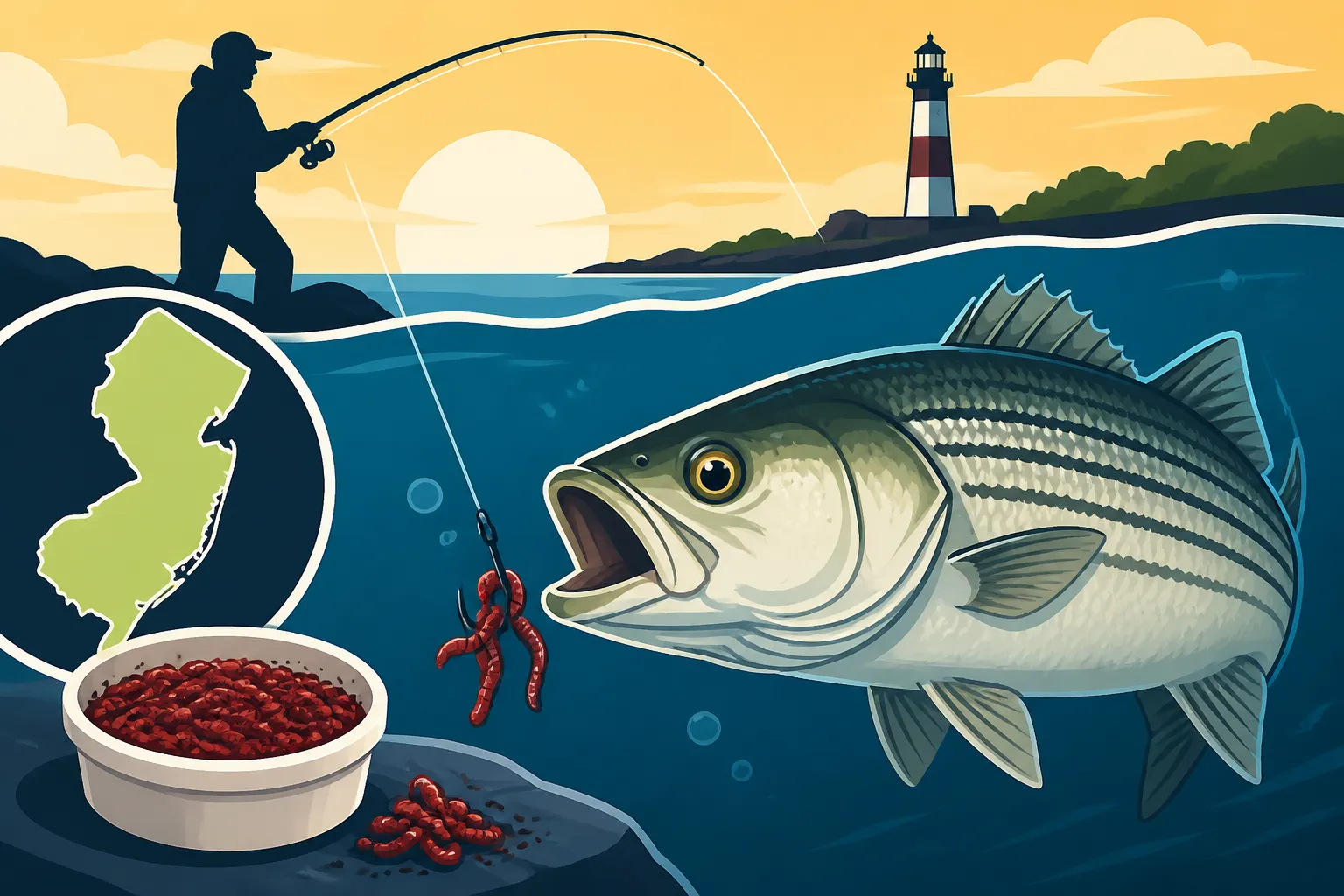
Imagine a hungry striped bass cruising through a sandy channel or along a muddy bottom. What are they looking for? Often, it's something that smells and tastes like a natural part of their diet. Bloodworms fit this bill perfectly. These segmented, wriggly creatures emit a distinct, potent scent into the water that striped bass simply can't ignore. It's an organic signal that screams "easy meal" to them. Their natural oils and unique blood give off a chemical signature that actively draws in fish from a distance, much like a siren song. This isn't just theory; countless times, I've seen a spot go quiet with artificial lures, only to light up once bloodworms hit the water. It’s like ringing the dinner bell for them. The fish don't have to be actively feeding on a massive bunker school to be interested; a bloodworm offers an easy, accessible snack.
When and Where Bloodworms Shine Brightest
While bloodworms are effective almost anytime you're targeting stripers, there are particular conditions and locations in New Jersey where they truly excel. They are absolute gold in the spring, especially during the early part of the season when migratory stripers are first pushing into our bays and rivers. The water can still be quite cold then, and fish are often lethargic or spread out. A bloodworm’s potent scent helps them locate the bait even in murky or cold water. You'll find them incredibly productive in places like Raritan Bay, the Navesink River, and the back bays along the Barnegat Bay Fishing Guide where stripers are often grubbing on the bottom. They also perform exceptionally well during slower periods or when fish are scattered rather than tightly schooled. For shore anglers, bloodworms are a top choice for fishing off piers, jetties, or even directly from the beach, especially at places like Island Beach State Park. They are also fantastic for fishing the Delaware River Fishing in New Jersey for striped bass that might be present. In areas with strong currents, the scent trail they leave is even more effective, distributing their allure over a wider area.
Sourcing, Storing, and Handling Your Precious Bait
Bloodworms aren't always the cheapest bait, so getting good quality and keeping them alive is crucial. There's nothing worse than showing up to your favorite fishing spot with a container full of dead, mushy worms. Taking a little extra care will go a long way in ensuring your day on the water is a success.
Finding Fresh Bloodworms and Keeping Them Alive
The first step to success is finding good, fresh bloodworms. Most local bait and tackle shops along the Jersey Shore, from Cape May to Sandy Hook, will carry them, especially during prime striped bass season. You want worms that are lively, firm, and have a good reddish-brown color. Avoid any that look pale, shriveled, or are sitting in a pool of dark, stinky liquid—those are on their last legs. If you buy a full flat of them, you’re usually getting a better deal. When you get them home, the key is cool, consistent temperatures and a little moisture. Don't put them directly on ice or in water. Instead, store them in their original newspaper or peat moss container, or transfer them to a small bait cooler with a layer of damp (not wet) peat moss or shredded newspaper. You can keep this container in your refrigerator, ideally in the crisper drawer, for up to a week if cared for properly. If they start to get sluggish, try adding a tiny bit of fresh saltwater (not tap water!) to the paper, but never submerge them. Some anglers even add a cold pack or two to their bait cooler on warmer days, just to keep them lively. You won't find bloodworms on Amazon directly, but you might find specialized bait coolers or peat moss for storage there.
The Art of Hooking a Bloodworm (Without Getting Bit!)
Bloodworms are famous for their four small "teeth" (or jaws) that can deliver a surprisingly painful, though harmless, nip. It's a rite of passage for any angler using them! To avoid getting bitten, handle them carefully. You can pinch them gently behind the head with one hand while you thread the hook with the other. The goal is to thread the worm onto the hook so it stays on securely during your cast and looks as natural as possible in the water. For smaller bloodworms, you might thread the entire worm onto a single hook. For larger ones, you can cut them into smaller, manageable pieces, typically 1 to 2 inches long. This actually makes your bait go further and some anglers believe the cut pieces release even more scent.
Here’s the trick for threading: start by inserting the hook point into the head end of the worm and gently push it up the shank, leaving about half an inch of the worm to wriggle freely. If you're using a smaller piece, just make sure the hook point and barb are fully exposed. The key is to keep them looking lively and natural. Don't crowd the hook or ball them up too much.
Rigging Up for Success: Essential Tackle and Setups
Having the right bait is only half the battle. You need the right gear to present that bloodworm effectively to a striped bass. From the rod and reel to the specific rig you tie, every component plays a role in your success.
Choosing the Right Rod, Reel, and Line
For general bloodworm fishing for striped bass in New Jersey, you'll want a medium-heavy to heavy action spinning rod, typically between 7 and 9 feet long. This length gives you enough leverage to cast your bait and sinker a good distance, which is often necessary when targeting stripers from shore or a boat. A sturdy conventional rod can also work, especially if you're fishing heavier currents or need even more casting power. Match this with a reliable spinning reel in the 4000 to 6000 size range, or a conventional reel suitable for 15-30 lb line. The reel should have a smooth drag system, as even smaller striped bass can put up a strong fight.
As for line, 15 to 20 lb monofilament or fluorocarbon main line is a good all-around choice for durability and abrasion resistance, especially if you're fishing near structure. Many anglers prefer braided line in the 30 to 50 lb range for its incredible strength, sensitivity, and casting distance. If you use braid, always tie on a fluorocarbon leader of 20 to 30 lb test, about 2-3 feet long, to provide some stretch and make it less visible to the fish. Make sure your knots are strong and reliable; a surgeon's knot or an FG knot are excellent choices for connecting braid to a fluorocarbon leader. You can find a vast selection of fishing rods, reels, and lines suitable for striped bass on Amazon.
The Go-To Rigs for Striped Bass with Bloodworms
When fishing with bloodworms, you’re usually trying to get your bait down to the bottom where stripers often feed. The most popular and effective rig for this is the fish-finder rig. This setup allows the line to run freely through a slide (typically a plastic slider with a snap swivel), which is attached to your sinker. This means when a fish takes the bait, it feels less resistance, giving you a better chance for a solid hookset.
Here's how to tie a basic fish-finder rig:
- Main Line: Start with your main line coming from your reel.
- Fish-Finder Slide: Thread a fish-finder slide onto your main line.
- Shock Leader/Swivel: Tie a sturdy barrel swivel or a high-quality snelled hook leader (often 30-50 lb test fluorocarbon) to the end of your main line. This swivel acts as a stopper for the fish-finder slide.
- Leader Line: To the other end of the swivel, tie about 18 to 36 inches of 20 to 30 lb fluorocarbon leader.
- Hook: At the end of your leader, tie on an appropriately sized hook. For bloodworms, a circle hook in sizes 1/0 to 3/0 is often recommended. New Jersey Circle Hook Requirements for Bait Fishing are often in place for striped bass, so always check the latest regulations. Circle hooks significantly reduce gut hooking, making for healthier releases if you're practicing catch and release.
- Sinker: Attach a pyramid or bank sinker to the snap swivel on your fish-finder slide. The weight will depend on the current and depth, but typically ranges from 2 to 6 ounces.
Another common rig, especially for pier or jetty fishing where you don't need to cast a mile, is a simple bottom rig or "high-low" rig. This uses two hooks spaced a foot or so apart above a sinker, allowing you to present two bloodworm pieces at different depths, doubling your chances.
| Rig Type | Best Use Cases | Key Components | Benefits |
|---|---|---|---|
| Fish-Finder Rig | Surf fishing, boat fishing, strong currents | Fish-finder slide, swivel, leader, circle hook, pyramid/bank sinker | Low resistance for fish, good casting distance, natural bait presentation |
| Bottom (High-Low) Rig | Piers, jetties, calmer bays, targeting multiple fish | Two snelled hooks, barrel swivel, leader, sinker | Two bait presentations, good for various bottom structures |
Fishing Techniques and Strategy with Bloodworms
Now that you've got your bloodworms and your rig, it's time to put it all into action. Knowing where and when to cast, and what to look for, can dramatically increase your success rate.
Where to Cast Your Line Along the Jersey Shore
Striped bass are often found near structure, current breaks, or areas where baitfish congregate. When fishing from shore, look for natural features like jetties, rock piles, bridge pilings, or the edges of channels. These spots provide ambush points for stripers. In the surf, cast beyond the breaking waves into deeper troughs or towards sandbars. Remember, stripers will often hug the bottom, so getting your bloodworm down there is key. Pay attention to how the tide is moving bait around; often, the best fishing is at the beginning or end of a tide. How to Read Tide Charts for Better Fishing in New Jersey can really give you an edge. In bays and rivers, focus on drop-offs, muddy flats where worms naturally live, and points or coves with good current flow. Don’t be afraid to move around if a spot isn’t producing. Sometimes just a short walk down the beach or pier can make all the difference.
Understanding Tides and Prime Fishing Windows
Tides are perhaps the most critical factor when fishing for striped bass, especially with bait like bloodworms. The movement of water associated with incoming and outgoing tides stirs up the bottom, dislodges bait, and concentrates fish. Many anglers find the hour before and after high tide, or the hour before and after low tide, to be the most productive. These are often periods of strong current where stripers position themselves to ambush prey. The outgoing tide, in particular, can be excellent in bays and rivers as it flushes baitfish out of the shallower areas.
Conversely, a slack tide—the brief period between the change of tides when the water movement slows—can sometimes be less productive, but not always. Sometimes, stripers will feed more actively during the slack if bait is concentrated. The key is to observe and learn your specific fishing spots. Keep a mental note, or even a log, of when you get bites relative to the tide cycle. This knowledge will become invaluable. Also, consider the time of day. While bloodworms work around the clock, early morning and late evening often provide cooler water temperatures and lower light conditions, which stripers typically prefer. Best Time of Day to Fish for Bluefish might be different, but for stripers, dawn and dusk are often prime.
Tips for Maximizing Your Bloodworm Success
Beyond the rigging and locations, a few finer points can truly elevate your bloodworm game. These small details can be the difference between a slow day and a banner day.
Hooking the Bloodworm Just Right
We talked about avoiding the bite, but proper hooking is also about presentation. You want your bloodworm piece to look alive and enticing, not like a dead clump. If using a whole worm, thread it so the head end can still wiggle. If cutting pieces, ensure the hook is threaded through the tougher, meatier part of the worm to keep it secure, but leave enough tail for natural movement. The exposed part of the worm, wriggling in the current, is what triggers the strike. If you're using a circle hook, make sure the hook point isn't buried in the worm; it needs to be exposed to do its job effectively and catch the corner of the fish's mouth. Don’t be shy about using fresh bait; a fresh, lively bloodworm will always outperform a sluggish, decaying one.
Patience is a Virtue, But Be Ready
Bloodworm fishing is often a waiting game. Unlike actively casting lures, you're relying on the scent trail and the fish finding your bait. Cast your rig out, let it settle on the bottom, and put your rod in a sturdy rod holder. Keep your drag set appropriately and your bail open or clicker on, especially if you step away for a moment. You want the fish to be able to run with the bait a bit without feeling immediate resistance. When you get a bite, especially with a circle hook, resist the urge to violently set the hook. Instead, let the fish take the bait, and when you feel steady pressure, slowly reel into the fish until the line comes tight. The circle hook will usually find its way to the corner of the fish's mouth on its own. Be patient, watch your rod tip for subtle taps or aggressive bends, and be ready to pick up your rod quickly when a striper decides to commit. Sometimes, a slow retrieve of a few feet every few minutes can help spread the scent and cover more ground, mimicking a crawling worm.
Disclaimer
This article is for general informational purposes only and does not constitute professional advice. Laws, prices and regulations vary by location and change over time. Consult a qualified professional for guidance on your specific situation.