Are Weakfish Related to Sea Trout?
It's incredibly common for anglers, especially those new to the diverse waters of New Jersey, to get a little confused when it comes to fish identification. One of the biggest head-scratchers I hear out on the water, or in line at the tackle shop, is whether weakfish are actually a type of sea trout. It's a fair question, given their appearance and the historical regional nicknames. This guide is here to clear up that persistent misunderstanding once and for all, helping you confidently identify your catch and understand the fascinating biological differences that set these species apart.
The Weakfish Identity Crisis: Are They Trout?
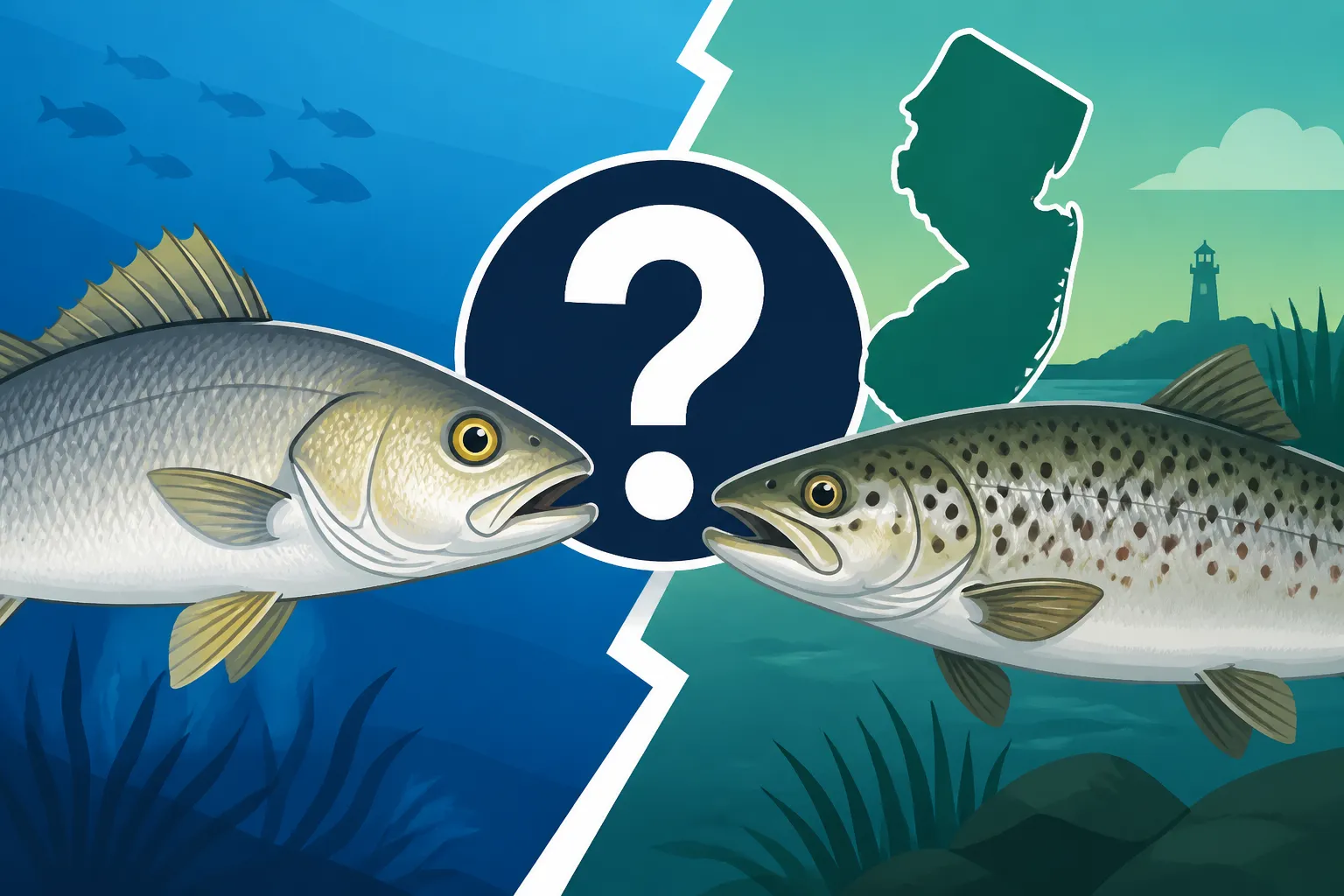
Picture this: you're casting in a New Jersey bay, the sun is shining, and suddenly, you feel a strong tug on your line. You reel in a beautiful, iridescent fish with a silvery body and speckled fins, its mouth a bit softer than you expected. Someone nearby might chime in, "Nice sea trout!" And just like that, the confusion begins. While it's easy to see why weakfish are often called sea trout, especially in casual conversation or by anglers who grew up with that local vernacular, the scientific truth paints a very different picture.
Unpacking the "Sea Trout" Misnomer
The term "sea trout" itself is a bit of a chameleon, often used broadly in various regions to refer to different species that inhabit saltwater or brackish environments but bear a superficial resemblance to freshwater trout. In New Jersey, and indeed across much of the Mid-Atlantic, the weakfish (scientific name: Cynoscion regalis) has historically been, and sometimes still is, lumped into this "sea trout" category. You might walk into an old-school bait and tackle shop down in South Jersey, say near the Great Egg Harbor Bay or the Mullica River estuary, and hear old-timers referring to them as such. It’s part of the local fishing lexicon, a charming but ultimately misleading nickname that has been passed down through generations.
This misnomer likely stems from a few factors. Both weakfish and true trout have somewhat elongated, torpedo-shaped bodies, relatively large mouths, and often silvery, somewhat iridescent scales. They're both predatory fish, actively hunting baitfish, and they can both provide a spirited fight on appropriate tackle. For a long time, before widespread scientific classification was readily available to every angler, it was easier to simply categorize fish by their general looks and habitat. So, a "trout-like" fish found in the "sea" became a "sea trout." However, as we dive deeper, it becomes clear that this is where the similarities really end.
The Scientific Standpoint: Drum Family, Not Trout
Here's the definitive answer: weakfish are absolutely not related to true trout. Despite the colloquial "sea trout" moniker, weakfish are members of the drum family, scientifically known as Sciaenidae. This family is incredibly diverse, encompassing many well-known species you might encounter in New Jersey, like croakers, spot, and red drum. One of the most distinctive characteristics of fish in the drum family is their ability to produce drumming or croaking sounds by vibrating muscles against their swim bladder. If you've ever caught a croaker, you know exactly what I'm talking about – that distinct thump-thump-thump sound. While weakfish aren't as vocally prominent as some of their drum cousins, they still possess the anatomical structures that link them to this unique family.
True trout, on the other hand, belong to the Salmonidae family, which includes salmon, char, and, of course, the various species of trout like rainbow, brown, and brook trout. These are predominantly freshwater fish, requiring cold, clear, oxygen-rich water for survival and spawning. While some salmonids, like certain strains of rainbow trout (steelhead) or brown trout, can spend part of their lives in saltwater (anadromous species), they always return to freshwater to spawn. This fundamental difference in family, habitat, and life cycle immediately separates weakfish from any true trout species. Think of it like calling a dolphin a "sea dog" – they're both mammals, but clearly distinct species.
When you really examine a weakfish, the differences from a true trout become striking. Weakfish have a pair of prominent canine teeth in their upper jaw, a feature absent in true trout. Their scales are relatively large and easily shed, a trait often noted by anglers handling them. They also lack the adipose fin – that small, fleshy fin located between the dorsal and caudal (tail) fins – which is a hallmark of the salmonid family. Understanding these key distinctions is not just about scientific accuracy; it's about being a more informed and responsible angler. New Jersey Weakfish Decline and Conservation is a great resource to learn more about the species itself.
Distinguishing Weakfish from True Trout (and Other Look-Alikes)
Beyond their family tree, there are numerous physical and behavioral traits that clearly separate weakfish from true trout. Knowing these distinctions can help you quickly identify your catch on the water, ensure you're following the right regulations, and even inform your fishing tactics. It's a skill that comes with practice, but once you know what to look for, it's quite clear.
Key Anatomical Differences
Let's get down to the nitty-gritty of what makes a weakfish a weakfish and a trout a trout. Imagine holding both side-by-side – the differences would be immediately apparent.
First, consider the mouth structure. A weakfish has a relatively large mouth, but its most distinguishing feature is that pair of prominent canine-like teeth, often called "fangs," in the upper jaw. These are used for grasping slippery baitfish like spearing and anchovies. True trout, whether it's a rainbow, brown, or brook trout, have numerous smaller, conical teeth along their jaws, roof of the mouth, and tongue. They're efficient predators, but they lack the weakfish's distinct dental weaponry.
Next, look at the body shape and fins. Weakfish typically have a more elongated, slender body compared to the generally stockier, more robust build of most trout species. Their tail fin (caudal fin) is typically somewhat forked. True trout often have a broader, more muscular body and a square or slightly forked tail. The most telling fin difference, as mentioned earlier, is the adipose fin. This small, fleshy, rayless fin is located on the back, just in front of the tail, and is present on all true trout and salmon. Weakfish do not have an adipose fin. This single feature is a dead giveaway.
Their coloration also differs. Weakfish are known for their beautiful iridescent sheen, often greenish-bronze on the back fading to silvery sides, sometimes with faint dusky spots or streaks running obliquely along the lateral line. The inside of their mouth is often yellow, which is another easy identifier. True trout, especially wild ones, have much more complex and vibrant patterns: rainbow trout have a pinkish lateral stripe, brown trout are typically golden-brown with dark and red spots (often with light halos), and brook trout are a mosaic of olive green, red spots (with blue halos), and distinctive vermiculations on their backs. What Is the Difference Between Rainbow and Brown Trout? explains more about the nuances there.
Here's a quick comparison table:
| Feature | Weakfish (Cynoscion regalis) | True Trout (e.g., Rainbow Trout) |
|---|---|---|
| Family | Sciaenidae (Drum family) | Salmonidae (Salmon & Trout family) |
| Primary Habitat | Saltwater, brackish estuaries, nearshore ocean | Freshwater (cold rivers, streams, lakes) |
| Adipose Fin | Absent | Present (small, fleshy fin) |
| Teeth | Prominent canine teeth in upper jaw | Numerous small, conical teeth |
| Mouth Color | Often yellow inside | Not typically yellow |
| Scales | Relatively large, easily shed | Smaller, firmly embedded |
| Body Shape | More elongated, slender | Stockier, more robust |
| Sound | Can produce drumming sounds (less pronounced than croakers) | Silent |
Habitat and Behavioral Divergences
The environments where you find weakfish and true trout are perhaps the most glaring difference, and a simple way to confirm your identification.
Weakfish are true denizens of the saltwater and brackish environments along the Atlantic coast. In New Jersey, you'll find them thriving in our expansive coastal bays like Barnegat Bay or Great Egg Harbor Bay, as well as in the estuaries of tidal rivers. They frequent areas with sandy or muddy bottoms, often near structure like oyster beds, docks, or bridge pilings where baitfish congregate. They are migratory, moving up and down the coast with the seasons, often appearing in New Jersey waters from spring through fall. They are active predators, often schooling to ambush baitfish, shrimp, and squid. Their delicate mouths, which give them their "weak" name, mean you need to be gentle when setting the hook and fighting them to avoid tearing the hook out. For finding them, check out Where to Catch Weakfish in New Jersey.
True trout, in stark contrast, are quintessential freshwater fish. They demand cold, clean, oxygenated water. In New Jersey, you'll typically find them in our pristine trout streams in the northern part of the state, like the Pequest or Musconetcong Rivers, or in designated "Trophy Trout Lakes." These environments often feature rocky or gravelly bottoms, clear water, and plenty of cover from overhanging banks or submerged logs. While New Jersey heavily stocks its waters with rainbow and brown trout, especially in spring and fall, wild populations of brook trout cling to the coldest, purest headwater streams. Their diet consists primarily of aquatic insects (larvae and adults), terrestrial insects that fall into the water, and smaller baitfish or crustaceans. New Jersey Trout Fishing Techniques provides great insights into targeting these cold-water beauties. The very fact that one lives in the ocean and the other in mountain streams should be the clearest indicator they are not the same species!
Why the Confusion Matters to New Jersey Anglers
Beyond simply satisfying your curiosity, understanding that weakfish are not sea trout has real, practical implications for every angler fishing in New Jersey. From staying on the right side of the law to choosing the best gear, correct identification is key to a successful and responsible fishing experience.
Impact on Regulations and Conservation
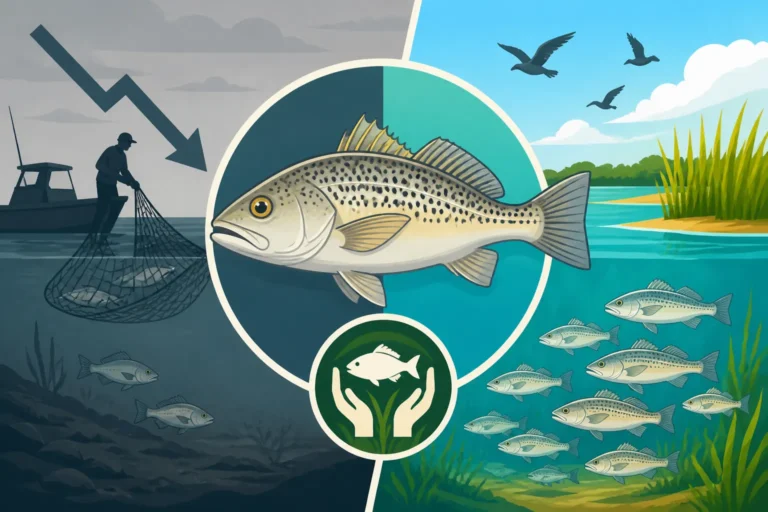
Here in New Jersey, our fisheries management relies heavily on species-specific regulations. This means that bag limits, size limits, and even seasonal closures are often unique to each type of fish. If you misidentify a weakfish as a "sea trout" and try to apply trout regulations, you could inadvertently violate fishing laws. For instance, weakfish have specific slot limits and bag limits designed to protect their populations, which have experienced significant fluctuations over the years. New Jersey Weakfish Decline and Conservation delves into why these regulations are so important for this species.
On the other hand, freshwater trout regulations are entirely different, often tied to statewide stocking programs and specific dates like the eagerly anticipated spring trout opener. New Jersey Freshwater Fishing Regulations Every Angler Should Know outlines these rules. Imagine accidentally keeping an undersized weakfish because you thought it was a small trout, or vice-versa! This could lead to penalties for fishing without a license or adhering to the wrong limits, as explained in How Bag and Size Limits Work in New Jersey. The state's fisheries biologists work tirelessly to set these rules based on scientific data for each species, ensuring their sustainability. Your role as an angler includes knowing what you've caught and adhering to the specific rules for that species.
Practical Fishing Implications
Correct identification also profoundly impacts your fishing strategy. Knowing what you're targeting allows you to select the appropriate bait, tackle, and even fishing location.
For weakfish, you'll typically be casting in saltwater or brackish environments. Light to medium spinning tackle is often preferred, spooled with braid or monofilament in the 10-20 lb test range. Popular baits include soft plastic baits on jig heads (like Gulp! or Z-Man baits), live shrimp, shedder crab, or spearing. Many anglers swear by a specific color of soft plastic when the bite is on! If you're looking for gear, a quick search on Amazon will show you countless options for soft plastics and jig heads specifically designed for weakfish and similar saltwater species. Best Lures for Striped Bass Fishing also has some crossover with weakfish tackle, as both are baitfish predators.
For true trout, the approach is entirely different. You'll be in freshwater streams or lakes, often requiring lighter rods and reels, or even specialized fly-fishing gear. Small spinners, worms, powerbait, or specific fly patterns are the baits of choice. Fishing techniques like drifting worms under a bobber in a stream or trolling small spoons in a lake are common. The tackle and techniques are tailored to their freshwater habitat and feeding preferences. New Jersey Trout Fishing Techniques offers a deep dive into this. Using a heavy saltwater weakfish rig in a delicate trout stream would be completely out of place and likely unsuccessful.
Understanding these distinctions helps you prepare better, fish more effectively, and enjoy the full range of angling opportunities New Jersey has to offer. It’s not just about fish names; it's about connecting with the species and their environment in a more meaningful way.
Other New Jersey Species Often Mistaken for Each Other
The weakfish/sea trout confusion is just one example of how easily species can be misidentified in New Jersey's diverse waters. Our state is home to a fantastic array of fish, and many share superficial similarities that can trip up even experienced anglers. Recognizing these common mix-ups is part of becoming a truly knowledgeable and versatile angler.
Fluke vs. Other Flounder
Perhaps one of the most common identification challenges along the Jersey Shore revolves around "flounder." When most anglers talk about flounder in summer, they're usually referring to summer flounder, affectionately known as fluke. This highly prized game fish is a flatfish, known for its delectable taste and aggressive strikes. However, there are other flatfish species in New Jersey waters, such as winter flounder (blackback flounder) and windowpane flounder. While all are flatfish, their appearances, habitats, and, critically, their regulations differ significantly.
For example, winter flounder have a much smaller mouth and are typically found over muddier bottoms in cooler water. Fluke, on the other hand, have a large mouth with sharp teeth and prefer sandy or gravelly bottoms, often ambushing bait from the bottom. Fluke vs Summer Flounder: Is There a Difference? breaks down these subtle but important distinctions. Misidentifying a small winter flounder as an undersized fluke, or vice-versa, can lead to keeping illegal fish or missing out on a legal catch. Anglers need to pay close attention to the eyes and mouth, which are key identifiers.
Striped Bass vs. Bluefish (for aggressive predators)
Another pair of aggressive, schooling predators that can sometimes cause momentary confusion, especially during a fast bite, are striped bass and bluefish. Both are highly sought-after sportfish, found in similar saltwater coastal environments, and both will readily strike baitfish imitations or live bait. However, they are quite distinct in appearance, behavior, and, importantly, edibility for some.
Striped bass are easily identified by the distinct dark horizontal stripes running along their silvery-white bodies. Their mouths are large, but their teeth are small and rasp-like. They are powerful fighters, making strong runs. Striped Bass Fishing in New Jersey offers a deep dive.
Bluefish, while also silvery and powerful, lack those distinct stripes. Instead, they have a greenish-blue back and silver sides, with a notoriously sharp set of teeth capable of snipping through fishing line and fingers alike. Their body is generally more stout, and they are known for their incredibly aggressive "bluefish blitzes," where they savagely attack schools of baitfish. Bluefish Blitzes Along the Jersey Shore describes this exciting phenomenon. While both are great sport, bluefish meat, especially larger ones, can be oily and strong-flavored if not handled properly, while striped bass are generally considered excellent table fare. The key takeaway here is that even among similar-acting species, knowing the precise differences ensures you're complying with specific rules and maximizing your enjoyment of your catch.
By continuing to learn about the various fish species in New Jersey, you not only deepen your appreciation for our aquatic ecosystems but also become a more skilled and responsible angler.
Disclaimer
This article is for general informational purposes only and does not constitute professional advice. Laws, prices and regulations vary by location and change over time. Consult a qualified professional for guidance on your specific situation.