What Should You Do If You Catch a Snakehead in New Jersey?
Imagine you're out on a beautiful New Jersey lake, casting a line, enjoying the peace and quiet. Suddenly, you reel in something that looks… alien. It's long, mottled, with a head like a snake, and frankly, a bit unsettling. You've just caught a snakehead, and if you're like many anglers, you might not know what to do next. This guide is here to walk you through exactly what steps you need to take, why they're so important, and how you can help protect our precious New Jersey waterways.
The Unwelcome Intruder: What is a Snakehead Fish?
Catching a fish you don't recognize can be confusing, but when it's a snakehead, it's more than just a mystery; it's a call to action. These fish are not native to our waters, and their presence poses a significant threat to our local ecosystems. It's easy to feel a pang of uncertainty when you have one on your line, but understanding what they are and why they're problematic is the first step toward responsible angling.
Identifying a Snakehead: Key Features
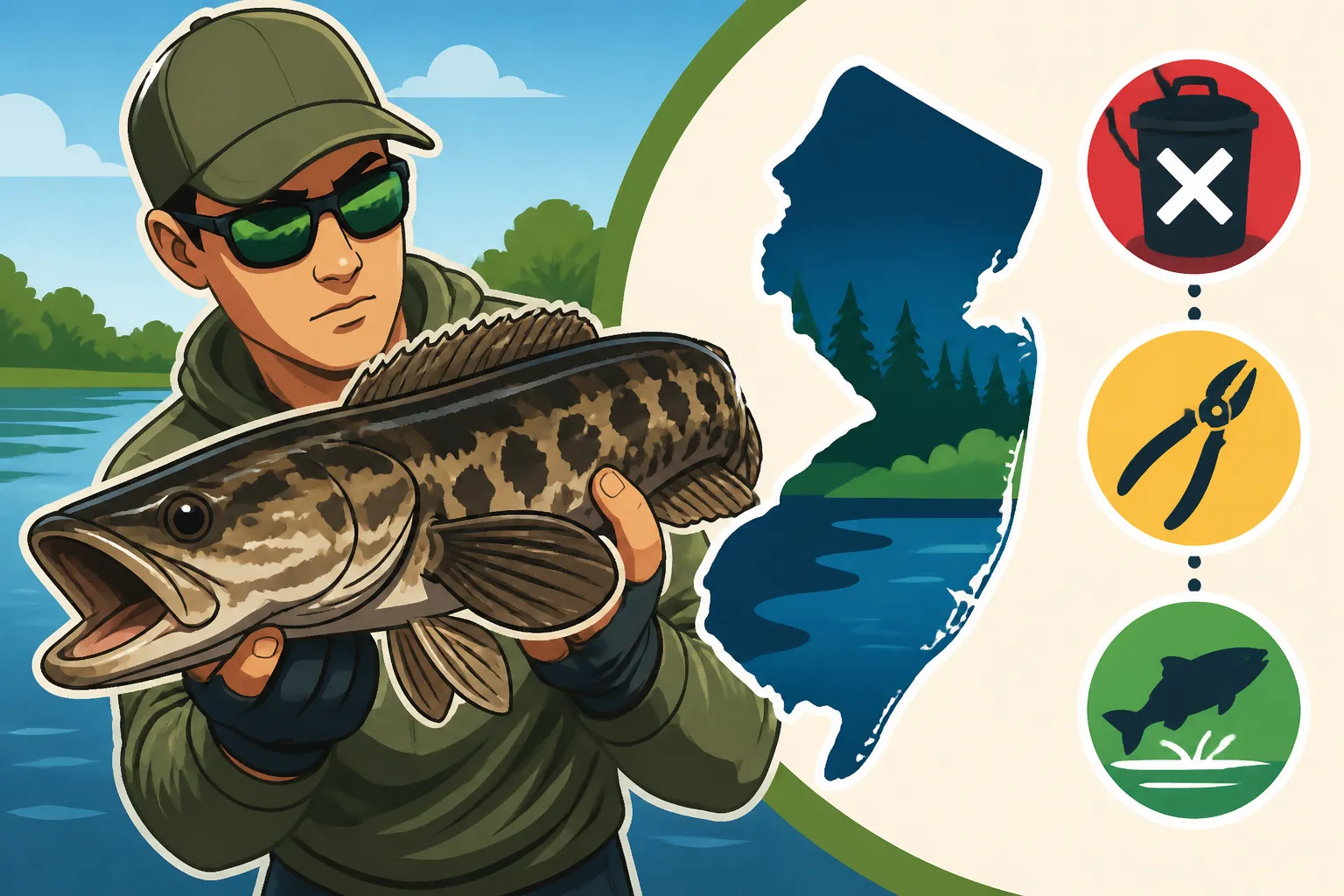
First things first, let's make sure you've actually got a snakehead. They can sometimes be confused with native fish, which is why a clear identification is so important. Northern snakeheads, the most common species found in New Jersey, are easily recognizable by their distinctive appearance. They have a long, cylindrical body, much like a snake, with a somewhat flattened head and prominent, sharp teeth. Their color can vary, often a mottled brown or greenish-brown, with darker blotches along their sides. Perhaps their most telling feature is a very long dorsal fin that runs almost the entire length of their back, with no break. Their pelvic fins are located directly under their pectoral fins, a feature that helps distinguish them from some other native species.
It's crucial not to confuse a snakehead with a native bowfin or even a pickerel, which share some superficial similarities. Bowfin, for instance, have a much shorter anal fin and a distinct black spot on their tail fin that often has an orange halo. Pickerel, while having a similar elongated body, have a more duckbill-like snout and a completely scaled operculum (gill cover). If you’re ever in doubt, a quick photo with your phone can be a huge help, especially when you report your catch. Always refer to a reliable New Jersey Freshwater Fish Size Chart 2026 if you need more visual cues for various species.
Here's a quick comparison to help you differentiate:
| Feature | Northern Snakehead | Bowfin (Native) | Chain Pickerel (Native) |
|---|---|---|---|
| Body Shape | Long, cylindrical, snake-like | Long, cylindrical, robust | Long, slender, pike-like |
| Head | Snake-like, flattened, large mouth | Rounded, bony plates, smaller mouth | Long, duckbill-like snout |
| Dorsal Fin | Very long, continuous, no spines | Very long, continuous, no spines | Shorter, set far back near tail |
| Anal Fin | Long, continuous, similar to dorsal | Shorter than dorsal, often rounded | Shorter, set far back |
| Tail Fin | Rounded | Rounded, often with a black spot (ocellus) | Forked or slightly rounded |
| Coloration | Mottled brown/green with darker blotches | Olive green/brown with dark reticulations | Greenish with chain-like markings |
| Scales | Large, rough scales covering head | Large scales, but head is largely bony | Smaller scales, cheek and gill cover fully scaled |
| Pelvic Fins | Directly under pectoral fins | Behind pectoral fins | Set further back on belly |
Why They're a Problem for New Jersey's Waters
Northern snakeheads are not just interesting-looking fish; they are an invasive species, and that's where the problem really lies. They're native to parts of Asia and Africa, and they ended up in U.S. waters through various means, including accidental release from aquaculture facilities or illegal introductions by individuals. Once they establish themselves, they can wreak havoc on native fish populations and aquatic ecosystems.
Their impact is multi-faceted. First, they are voracious predators. They'll eat just about anything smaller than them, including native fish, frogs, crayfish, and even small birds and mammals. This directly competes with our native game fish like bass and pickerel, reducing their food sources and preying on their young. This ecological disruption can severely impact the delicate balance of a pond, lake, or river. Imagine how hard our local Largemouth Bass Fishing in New Jersey efforts become when a new, aggressive predator is introduced that outcompetes them for food and habitat.
Second, snakeheads are incredibly resilient and adaptable. They can survive in a wide range of water conditions, from clear lakes to muddy ponds. What's truly alarming is their ability to breathe atmospheric air, allowing them to survive for extended periods out of water. This means they can "walk" or wriggle across land for short distances from one body of water to another, especially if the ground is damp. This capability makes containing their spread a monumental challenge. Their rapid reproduction rates, coupled with strong parental care for their young, mean they can quickly establish dominant populations, making them incredibly difficult to eradicate once they've taken hold. Knowing about what invasive fish species are found in New Jersey waters is crucial for all anglers.
Your Legal and Ethical Responsibility When You Catch One
This is where your actions as an angler become critical. When you hook a snakehead, it's not like catching a bass you can just release back. There are strict rules in place, and for good reason. Understanding and adhering to these rules is how we, as a community of anglers, protect New Jersey's natural resources.
The Mandatory "Do Not Release" Rule
Let me be absolutely clear: if you catch a snakehead in New Jersey, you are legally required to not release it back into the water. This isn't a suggestion; it's a mandate from the New Jersey Department of Environmental Protection (NJDEP) Division of Fish and Wildlife. Releasing a live snakehead back into any body of water, whether it's the one you caught it from or a different one, is illegal and carries penalties. The reasoning is straightforward: every live snakehead returned to the water has the potential to reproduce and further spread this invasive species, causing more damage to our native fish populations and the overall ecosystem.
This "do not release" rule might feel harsh, especially if you're a catch-and-release angler by nature, but it's a necessary step in the fight against invasive species. Your immediate action helps prevent the spread and protects the future of fishing for all of us in New Jersey. It's a small but significant way you can contribute to conservation efforts. If you're ever in doubt about any fishing rule, it's always a good idea to consult the New Jersey Fish and Wildlife Digest: Where to Find the Current Rules.
Safe and Humane Dispatch Methods
So, you've caught a snakehead, you've identified it, and you know you can't release it. Now what? The next step is to humanely dispatch the fish. This means killing it quickly and efficiently, minimizing any suffering. For some, this might be an uncomfortable task, but it's part of being a responsible angler in this situation.
The most common and effective methods involve ensuring the fish is unmistakably dead. A swift, decisive blow to the head with a blunt object, often referred to as "braining" the fish, is highly effective. Many anglers carry a small club or a fish bat for this purpose. You can find simple, effective fish bats or similar tools on sites like Amazon, which can be useful for dispatching larger fish ethically. Another method is to sever the spine or gills, which ensures a quick death by cutting off nerve function or blood supply. If you're squeamish about this, consider bringing a pair of strong, sharp shears or a sturdy knife on your fishing trips specifically for this purpose.
Make sure the fish is completely still and unresponsive before you proceed with anything else. A flopping snakehead can be a handful, so wearing gloves can offer a better grip and protect your hands from their sharp teeth and spines. Don't just throw it on the bank and walk away; ensure it's properly dispatched. The goal is humane and immediate termination to prevent it from ever returning to the water. Anglers who are unsure about specific regulations regarding dispatching fish can always review general guidelines provided by New Jersey Freshwater Fishing Regulations Every Angler Should Know.
Reporting Your Snakehead Catch to the Authorities
Once you've safely and humanely dispatched a snakehead, your job isn't quite done. The next crucial step is to report your catch to the proper authorities. This might seem like an extra hassle, but it provides invaluable data to wildlife managers who are working tirelessly to control and monitor these invasive populations.
Why Your Report is Crucial
Every snakehead catch reported provides a piece of the puzzle. Think of it like a detective story: each report helps state biologists track the spread of the species, identify new populations, and understand how quickly they are expanding. This information is vital for developing effective management strategies, whether that involves targeted removal efforts or public awareness campaigns. Without your reports, they're essentially flying blind.
Moreover, reporting helps confirm where snakeheads are establishing themselves. Are they isolated incidents, or are they forming breeding populations in a new lake or river system? This distinction is important for allocating resources and determining the severity of the threat in specific areas. It’s also a way for anglers to directly participate in the conservation of How Many Fish Species Live in New Jersey Waters? by providing real-time intelligence from the field. Your report is a direct contribution to keeping our native fish thriving.
How to Submit a Report
Reporting a snakehead catch is usually a straightforward process. The primary agency to contact is the New Jersey Department of Environmental Protection (NJDEP) Division of Fish and Wildlife.
Here’s a step-by-step guide:
- Document Your Catch: This is the most important part!
- Take Photos: Get clear pictures of the fish. Try to capture its full body, head, and especially that long dorsal fin, as well as any distinguishing patterns. A picture next to a ruler or a familiar object can help biologists estimate size.
- Note the Location: Be as precise as possible. GPS coordinates from your phone are ideal. If you don't have GPS, note the nearest landmark, street intersection, or body of water. "Near the bridge on Smith Creek" is good; "GPS: 40.7128° N, 74.0060° W" is even better.
- Record the Date and Time: This helps track trends and activity.
- Estimate Size/Weight: If you have a measuring tape or scale, great. If not, a good estimate (e.g., "about 20 inches, heavy for its length") is still useful.
- Contact NJDEP Fish and Wildlife:
- Email is often best: Send your photos and all the details (location, date, time, estimated size, your contact info) to the official NJDEP Fish and Wildlife email for invasive species or general inquiries. You can usually find this contact information readily on the NJDEP Fish and Wildlife website under their "Invasive Species" or "Fisheries" sections.
- Phone Call: If you prefer, or if you can't email right away, you can also call the regional office or the main Fish and Wildlife number. Explain clearly that you've caught an invasive snakehead and have it in your possession.
- Online Reporting Form: Some states have dedicated online forms for reporting invasive species. Check the NJDEP Fish and Wildlife website to see if such a form is available.
Be prepared to answer questions and provide further details if requested. The more information you can give them, the better. This proactive step helps them manage these problematic fish populations. When you communicate with state officials, it’s good to know that New Jersey Conservation Police and License Checks are routine, so showing your diligence is always appreciated. If you've ever had to How to Report a Fishing Violation in New Jersey, you'll find the process quite similar.
What to Do With a Dispatched Snakehead
Once the snakehead is dispatched and reported, you might be wondering what to do with the carcass. Unlike some invasive species that require special disposal, the Northern snakehead has a silver lining: it's edible!
Keeping and Transporting Your Catch
Yes, after you've humanely dispatched a snakehead, it is perfectly legal to keep and transport it. In fact, keeping it removes it permanently from the ecosystem, which is the goal. You don't need to worry about special disposal sites or handing it over to authorities, unless they specifically request it for research purposes (which is rare but possible). Just make sure it's clearly dead before you move it.
When transporting it, treat it like any other fish you'd keep for dinner. Place it in a cooler with ice to keep it fresh. Just be mindful not to let it come into contact with live bait or other live fish if you intend to release those. The key takeaway here is: once it's dead, it's yours to take home. This is distinct from rules for other species where New Jersey Daily Bag Limits by Species dictate how many you can take and their size.
Culinary Delights: Eating Snakehead Fish
This might come as a surprise to some, but Northern snakeheads are considered excellent table fare! Don't let their appearance or invasive status deter you. Many anglers who have tried them rave about their firm, white, flaky flesh, often comparing it to snapper or cod. They have a mild flavor that holds up well to various cooking methods.
Think about it: not only are you doing a service to the environment by removing an invasive species, but you're also providing yourself with a delicious, wild-caught meal. It's a win-win situation! You can bake, fry, grill, or pan-sear snakehead fillets just as you would any other white fish. They're particularly good in stir-fries, tacos, or as fish and chips. If you're looking for cooking inspiration, a quick search online will yield plenty of recipes. You can even find cookbooks that feature invasive species, sometimes available on Amazon, which offers creative ways to prepare these fish.
So, next time you're on the water in New Jersey and you hook into one of these unique-looking fish, remember your responsibilities. Identify it, dispatch it humanely, report it to the NJDEP, and then, if you're so inclined, enjoy a guilt-free and tasty meal. Your vigilance makes a real difference in protecting New Jersey's precious aquatic environments.
Disclaimer
This article is for general informational purposes only and does not constitute professional advice. Laws, prices and regulations vary by location and change over time. Consult a qualified professional for guidance on your specific situation.