Navesink River Fishing Guide
Many anglers in New Jersey overlook the incredible fishing opportunities that lie within our tidal rivers, often fixating on the open ocean or larger bays. But if you've ever wondered where to find diverse species without battling massive swells or long boat rides, the Navesink River offers a fantastic solution. This comprehensive guide will walk you through everything you need to know to successfully fish this productive waterway, from identifying prime spots to mastering the best techniques.
The Navesink River: A Hidden Gem for Anglers
The Navesink River, located in Monmouth County, isn't just a picturesque waterway; it's a vibrant, tidal estuary that offers a fantastic fishing experience for both seasoned anglers and beginners. Flowing approximately 9 miles from its headwaters near Colts Neck to its mouth at Sandy Hook Bay, it’s a relatively protected body of water, making it accessible even on days when the ocean is too rough. Its brackish waters, a mix of freshwater runoff and saltwater from the Atlantic, create a unique ecosystem that supports a wide variety of fish species throughout the year.
Understanding the Navesink's Unique Ecosystem
What truly sets the Navesink apart is this delicate balance of fresh and salt water. The river acts as a nursery for many species, providing rich feeding grounds and calmer waters for juvenile fish to grow before heading out to the open ocean. Its diverse bottom structure, ranging from muddy flats to rocky ledges and oyster beds, creates perfect habitat for different types of fish and their prey. You’ll find everything from baitfish like spearing and bunker to crustaceans like blue claw crabs, which in turn attract larger predatory fish. This ecological richness means that the Navesink isn't just a place to catch one or two species; it's a dynamic environment that offers a new surprise with every cast.
The river's banks are lined with residential areas, parks, and even some natural marshland, creating a mosaic of environments. This proximity to human activity means there are plenty of access points, but it also means anglers need to be mindful of their surroundings and respectful of private property. Despite its developed shoreline, the Navesink maintains a healthy aquatic environment, thanks in part to ongoing conservation efforts. For anyone looking to understand the broader regulatory landscape, a good starting point is our guide on New Jersey Fishing License Guide for 2026, which covers all the essential requirements for fishing in New Jersey waters, including tidal rivers like the Navesink.
Navigating the River: Depths, Currents, and Hazards
While the Navesink River might seem calm on the surface, beneath it lies a dynamic environment with varying depths and currents that can significantly impact your fishing strategy. The river's average depth hovers around 6 to 10 feet in many areas, but there are deeper channels, particularly closer to the mouth and around bridges, that can drop to 20 feet or more. These deeper holes are often where fish congregate, especially during colder months or when seeking refuge from strong currents. Learning to read a depth finder or consulting navigational charts can give you a significant advantage.
Currents in the Navesink are primarily tidal, meaning they flow in and out with the tides. The strength of the current varies greatly depending on the moon phase, with full and new moons bringing stronger "spring" tides. Knowing how to read a tide chart is crucial here; understanding How to Read Tide Charts for Better Fishing in New Jersey can really boost your success. Stronger currents can be great for drift fishing, carrying your bait or lure naturally to fish, but they can also make it challenging to hold bottom, requiring heavier weights. Anglers often find success fishing the "slack tide" periods – the hour or so around high or low tide when the current is at its weakest – as fish tend to be more active and less wary during these times.
Navigational hazards are relatively minimal but still present. Shallow areas, particularly along the edges and in smaller coves, can be an issue for boaters with deeper drafts. There are also occasional submerged structures like old pilings or debris, especially near bridges or former dock areas. Always keep a watchful eye, and if you’re boating, respect no-wake zones and channel markers.
Popular Access Points and Marinas
One of the Navesink River's greatest assets is its accessibility. You don't always need a fancy boat to enjoy a productive day of fishing here. There are numerous shore fishing opportunities, public parks, and boat launches that cater to various fishing styles.
For shore anglers, Red Bank's Marine Park is a perennial favorite. It offers ample parking, a long promenade for casting, and views of the river. It’s an excellent spot for targeting striped bass, bluefish, and even some fluke, especially during tidal changes. Further downstream, closer to the ocean, you'll find other public access points like Rumson's Victory Park, which provides a good vantage point for casting into deeper channels and the main river flow. Remember, a New Jersey fishing license is required for most anglers, and if you’re fishing saltwater species, you’ll also need to register with the New Jersey Saltwater Registry Explained, which is free and easy to do.
For those with boats, kayaks, or canoes, the Navesink has excellent launch options. The Red Bank Public Dock and Launch is popular, allowing easy access for smaller boats and kayaks right into the heart of the river. Larger marinas, like those in Red Bank and Rumson, offer transient slips and ramp access for bigger vessels. These marinas are also fantastic places to find local bait and tackle shops, where you can get up-to-the-minute reports on what's biting and what local anglers are using. Kayak anglers, in particular, will appreciate the calmer waters and numerous coves that are easily explored by paddle. If you're planning a trip and don't have your own boat, or want to experience fishing with an expert, many local captains offer guided trips. Websites like FishingBooker can help you find reputable charter services and guides operating out of the Navesink River and nearby waters.
Here's a quick overview of some popular access points:
| Access Point | Type of Access | Primary Target Species | Notes |
|---|---|---|---|
| Marine Park, Red Bank | Shore, Kayak Launch | Striped Bass, Bluefish, Fluke | Popular, good for casting, central location. |
| Victory Park, Rumson | Shore | Striped Bass, Bluefish | Good for casting into main channel. |
| Red Bank Public Dock | Boat, Kayak Launch | All Navesink Species | Easy access for small boats. |
| Manhasset Creek | Kayak, Canoe | Largemouth Bass, Pickerel | Upstream, more brackish, quiet. |
| Oceanic Bridge Area | Shore (limited), Boat | Striped Bass, Bluefish, Fluke | Strong currents, structure, popular for boats. |
Prime Fish Species You'll Encounter in the Navesink
The Navesink River is a biological powerhouse, offering anglers the chance to hook into a surprising array of fish species. From migrating ocean fish to resident freshwater species, its diverse habitats mean there's always something biting. Understanding what's available and when is key to a successful outing.
Chasing Striped Bass and Bluefish
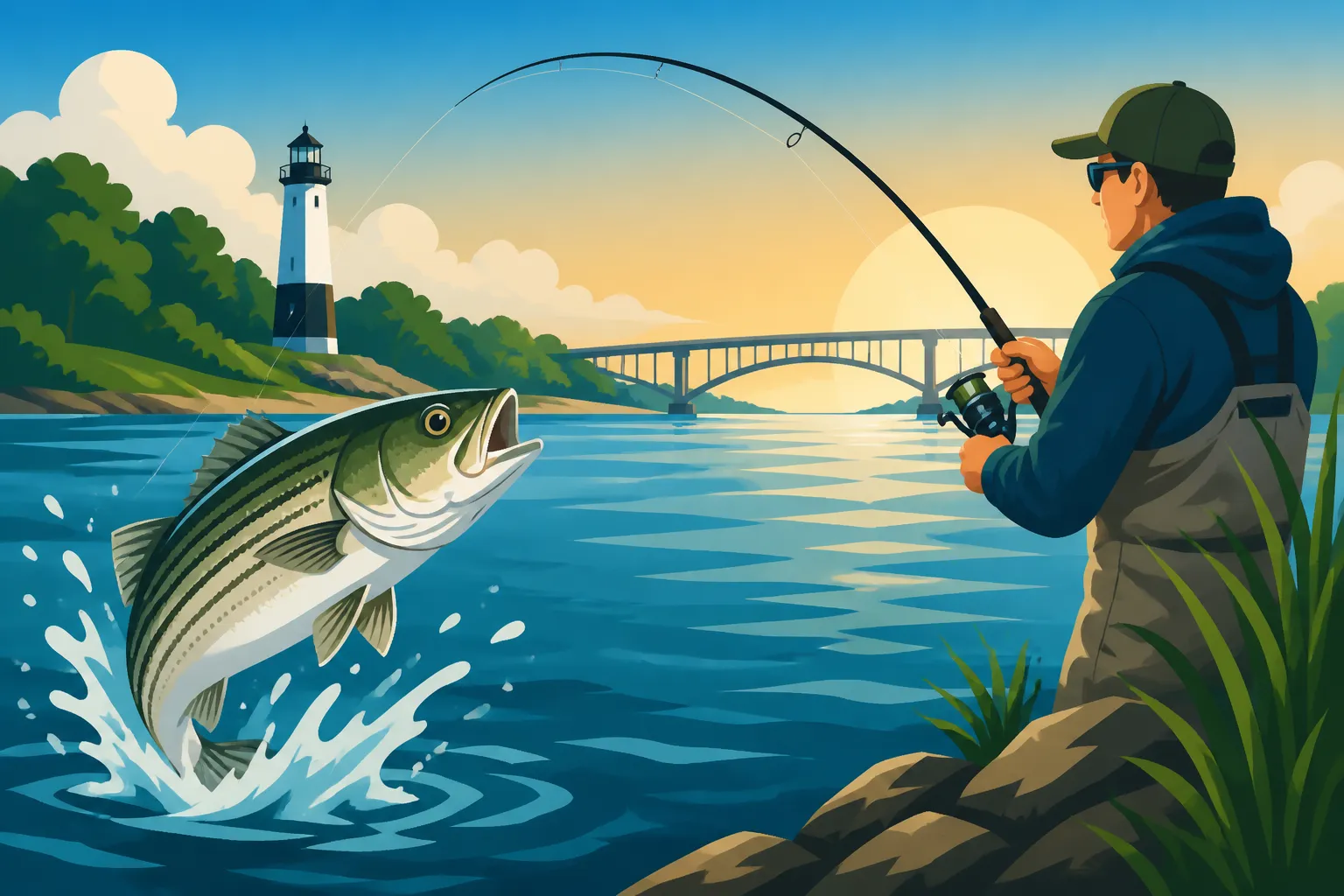
If there are two species that get New Jersey anglers truly excited on the Navesink, it's striped bass and bluefish. These powerful predators are drawn to the Navesink's rich baitfish populations, especially during their spring and fall migrations. Striped Bass Fishing in New Jersey is a huge draw, and the Navesink plays a significant role in both the spring run, when "schoolie" stripers push into the river system to feed, and the famed fall run, when larger migratory fish follow bait south along the coast.
In spring, often from April through May, schoolie bass (those under the slot limit) are abundant throughout the river. They'll readily hit small soft plastics, poppers, and even clam or bloodworm baits. As the waters warm, larger bass move in, especially around the deeper channels and bridge pilings near the Oceanic Bridge and the mouth of the river. The New Jersey Striped Bass Slot Limit Explained is crucial to understand, as regulations are strict to protect this iconic species. Anglers often fish at dawn or dusk, or even at night, for the best chances at these wary fish. For tactics, learning How to Fish for Striped Bass in New Jersey will be incredibly beneficial, including techniques like jigging, chunking, and trolling.
Bluefish, known for their aggressive strikes and sharp teeth, are also a major player in the Navesink, particularly from late spring through fall. They often follow schools of baitfish, creating frenetic feeding frenzies known as "bluefish blitzes." While many bluefish in the river are "snapper blues" (juveniles), larger choppers can certainly move in, especially during the summer. They'll hit anything shiny and fast-moving, from metal spoons and poppers to chunked bait. Bluefish can be a ton of fun on light tackle, but be sure to use a wire leader to prevent bite-offs! You can dive deeper into these toothy critters with our guide on Bluefish Fishing in New Jersey.
Flounder and Weakfish Opportunities
The Navesink also provides excellent opportunities for catching flounder and, at times, weakfish. Fluke and Summer Flounder Fishing in New Jersey is a beloved summer pastime, and the Navesink River is a productive nursery and feeding ground for these delicious flatfish. Fluke (which is just another name for summer flounder) enter the river system in late spring and stay through the summer, feeding on baitfish, crabs, and shrimp. They prefer sandy or muddy bottoms, often ambushing prey from depressions or along channel edges.
Drifting with a bucktail jig tipped with Gulp! or a strip of natural bait like spearing or squid is a classic and highly effective method for fluke in the Navesink. For a detailed guide on how to rig your baits and lures, check out Best Bait for Fluke Fishing. The areas around the Oceanic Bridge and further upriver towards Red Bank can be particularly good. Be sure to pay close attention to the New Jersey Fluke Size and Bag Limits Explained, as these regulations can change year to year to manage the stock.
Weakfish, sometimes called "sea trout" due to their delicate flesh and beautiful iridescent scales, also make appearances in the Navesink, though their populations have been more variable in recent years. Historically, the Navesink was a hotspot for weakfish, and they still show up, particularly during late spring and early summer. They often feed on baitfish and shrimp and can be caught using soft plastic jigs, small bucktails, or natural baits like shedder crabs or bloodworms. Fishing at night, especially around lit docks or bridge pilings, can sometimes yield good results for weakfish.
Crabs, Eels, and Other Estuary Inhabitants
Beyond the glamour species, the Navesink River is teeming with other aquatic life that can provide exciting fishing or crabbing opportunities. Blue claw crabs are incredibly abundant in the Navesink from late spring through early fall. Setting out crab traps or hand lines baited with chicken necks is a popular and rewarding activity, especially for families. Just remember to check crabbing regulations regarding size limits and the possession of female crabs.
American eels are another common inhabitant. While often considered bait by many anglers, eels can grow quite large and put up a surprising fight. They are typically caught on chunked bait or worms fished on the bottom, often at night. They can be a nuisance if you're targeting other species, but they are an integral part of the river's ecosystem.
Further upstream, as the water becomes less saline, you can also encounter freshwater species like pickerel, carp, and even some largemouth bass, especially in the calmer tributaries and coves. These species provide a different kind of angling challenge and can be a good option on days when the tidal bite is slow. For example, Manhasset Creek, a tributary of the Navesink, is known for its more brackish to freshwater conditions, offering opportunities for these species.
Seasonal Strategies for Navesink River Fishing Success
Fishing the Navesink River successfully means understanding the seasonal rhythms of its aquatic inhabitants. The river's productivity ebbs and flows with the changing temperatures, bringing different species into focus throughout the year.
Spring Run: Awakening the Waters
Spring on the Navesink is a time of awakening, typically kicking off in March and running through May. As water temperatures slowly rise from their winter lows, baitfish begin to become more active, and migratory species start to push into the estuary. This is arguably one of the most exciting times to fish the Navesink.
The undisputed stars of the spring run are striped bass. Smaller "schoolie" stripers are often the first to arrive, eager to feed after the lean winter months. They can be found almost anywhere in the river, from the shallower banks to the deeper channels. Early spring bass often respond well to soft plastics on light jig heads, especially in natural colors like white or chartreuse. As the water warms further, larger bass start to appear, following schools of bunker that push into the bay and river. Chunking with fresh bunker is a highly effective method, particularly around deeper drop-offs and structure. Live-lining a bunker, if you can net them, is even better. The best time of year to fish for striped bass in New Jersey definitely includes the spring, as these fish are hungry and migrating.
Alongside the bass, you'll also start to see the first signs of winter flounder and, occasionally, early weakfish. Winter flounder, while not as abundant as they once were, can still be found in muddy bottom areas. They respond well to bloodworms or clam baits fished on a high-low rig directly on the bottom. By late spring, bluefish will also begin to make their presence known, often heralded by their aggressive strikes on fast-moving lures. Don't forget that spring is also prime crabbing season as blue claw crabs become active, providing a fun alternative if the fish aren't biting.
Summer Action: Fluke, Blues, and Bass
Summer on the Navesink, from June through August, brings warmer waters and a bounty of species, though fishing can sometimes be a bit slower during the hottest parts of the day. This is prime time for fluke, bluefish, and consistent action from resident striped bass.
Fluke fishing truly hits its stride in the summer. These bottom dwellers will spread out across the river, favoring sandy and muddy flats where they can camouflage themselves and ambush prey. Drifting is the most popular and effective technique. Using traditional fluke rigs with a bucktail jig on the bottom and a teaser hook above, tipped with Gulp! Swimming Mullets (chartreuse, white, or pink are popular colors) or natural bait, will put you in the best position. Focusing on areas with good tidal flow, especially during a moving tide, is key. Our guide on How to Fish for Fluke in New Jersey offers detailed techniques to master this summer favorite.
Bluefish are also very active throughout the summer. You'll find snapper blues in huge numbers, providing endless action for kids and light tackle enthusiasts, especially around docks and piers. Larger bluefish will patrol the main channels, eagerly hitting metal spoons, poppers, and even chunked bait. Striped bass, while not as prevalent as during the migrations, can still be caught, particularly at dawn, dusk, or throughout the night, often around structure or where cooler water might persist. Targeting them with topwater lures in low light can be incredibly exciting.
Fall Run: The Grand Finale
Fall, typically from September through November, marks the Navesink River's grand finale, rivaling if not surpassing spring in terms of fishing excitement. As water temperatures begin to drop, baitfish start to school up and migrate out of the estuary, triggering a massive feeding frenzy among predatory fish.
Striped bass are again the main event, with larger migratory fish pushing through the river system on their southward journey. This is when you have your best shot at catching a legal-sized "keeper" striped bass. They will gorge themselves on bunker, mullet, and other baitfish. Tactics include chunking fresh bait, live-lining, casting large plugs (pencil poppers, swimming plugs), and jigging soft plastics or bucktails. Fishing the jetties and inlets where the Navesink meets Sandy Hook Bay becomes particularly productive during this period. Remember to keep an eye on the New Jersey Fishing Season Dates and Closures to ensure you're fishing within legal windows.
Bluefish continue their aggressive feeding behavior, often mixing with the striped bass in massive "blitzes" where they push bait to the surface. Trolling or casting spoons and poppers into these feeding frenzies can result in non-stop action. Weakfish, though less predictable, can also have a resurgence in the fall, especially in deeper holes. The Navesink in fall is a truly special place, offering some of the most dynamic and memorable fishing experiences of the year.
Winter Quiet: Opportunities for the Dedicated Angler
While many anglers pack away their gear as winter sets in (December through February), the Navesink River still offers some opportunities for the truly dedicated. The fishing slows significantly, but the possibility of a trophy catch remains.
Striped bass, particularly larger, resident fish, will often hold over in the deeper channels and holes of the Navesink through the winter. They become sluggish in the cold water but will still feed, albeit less frequently. Vertical jigging with heavy spoons or soft plastics, fished slowly and deliberately on the bottom, can entice a bite. Patience is paramount during winter fishing; expect fewer bites, but often larger fish when they do hit. Targeting slack tides can be beneficial, as fish don't have to expend as much energy fighting current in the cold water.
While most other species are either dormant or have migrated offshore, winter can also be a good time for specific baitfish. White perch, for example, can be caught in the brackish upper reaches of the river using small jigs or bait. For those keen on expanding their New Jersey fishing knowledge year-round, exploring resources like New Jersey Fishing Seasons Explained can provide a broader context for winter's unique challenges and rewards across the state.
Essential Gear and Proven Techniques for Navesink Anglers
Having the right gear and understanding the most effective techniques are paramount to success when fishing the diverse waters of the Navesink River. It's not just about having a rod and reel; it's about matching your tackle and approach to the species you're targeting and the conditions you face.
Rods, Reels, and Line Choices
For general-purpose Navesink River fishing, a medium to medium-heavy spinning rod, typically 7 to 8 feet in length, is a versatile choice. This length provides enough casting distance from shore or a boat, while still having the backbone to handle larger striped bass or bluefish. Look for a rod with a fast action, meaning the top third of the rod bends easily, which helps with casting accuracy and sensitivity to bites.
Matching that rod with a quality spinning reel in the 3000 to 5000 size range is ideal. Brands like Shimano, Penn, or Daiwa offer reliable options that can withstand the corrosive effects of saltwater. Ensure the reel has a smooth drag system, which is crucial for fighting strong fish without breaking your line. For anyone just starting out, checking out Best New Jersey Fishing Gear for Beginners can provide excellent foundational advice on selecting suitable and durable tackle.
When it comes to line, braided line is a popular choice for many Navesink anglers. Its thin diameter for its strength means you can cast further and feel more subtle bites. A 20 to 30-pound braided line is a good all-around choice. Always tie on a fluorocarbon leader (20-40 lb test, 3-5 feet long) with a strong knot like an FG or Albright. Fluorocarbon is nearly invisible in water, providing a stealthy presentation, and offers better abrasion resistance against sharp teeth or rough structure. For leaders specifically, using a high-quality brand like Seaguar or Berkley can make a real difference in landing that trophy.
Baits, Lures, and Rigs for Success
The Navesink offers a smorgasbord of feeding opportunities for fish, so having a versatile bait and lure selection is key.
Natural Baits:
- Clams: Fresh clam, especially shredded or on a high-low rig, is a killer bait for striped bass, weakfish, and even some fluke.
- Bloodworms: These are gold for striped bass (especially schoolies), weakfish, and winter flounder in spring. They're expensive but highly effective.
- Bunker (Menhaden): Both whole and chunked bunker are irresistible to larger striped bass and bluefish, particularly during their migrations.
- Squid and Spearing: Excellent strip baits for fluke, often used on bucktail jigs or traditional fluke rigs.
Artificial Lures:
- Soft Plastics: Paddle tails (e.g., Keitech, Tsunami Holographic) on jig heads (1/2 to 1 oz) are incredibly versatile for striped bass, bluefish, and weakfish. White, pearl, and chartreuse are consistently productive colors.
- Bucktail Jigs: These classic lures are a must-have for fluke, but can also tempt striped bass and bluefish. Tip them with Gulp! or a strip of natural bait for added appeal.
- Topwater Plugs (Poppers, Walk-the-Dogs): Exciting for striped bass and bluefish, especially at dawn, dusk, or when fish are actively feeding on the surface. Brands like Super Strike or Gibbs are well-regarded.
- Metal Spoons: Fast-moving spoons (e.g., Kastmaster, Hopkins) are excellent for bluefish and can also attract striped bass, especially when baitfish are abundant.
For rigging, a basic high-low rig (two hooks above a sinker) is versatile for bottom fishing with natural baits. For fluke, a fluke rig with a bucktail jig on the bottom and a small teaser hook above is a staple. Don't underestimate the effectiveness of a simple Carolina rig (egg sinker, swivel, leader, hook) for presenting natural bait to wary fish.
Mastering Tidal Fishing Techniques
Understanding and utilizing the tides is arguably the most critical skill for Navesink River fishing. The Navesink is a tidal river, and the movement of water dictates when and where fish feed. Neglecting the tide is a surefire way to have a slow day.
Incoming Tide: As the tide rises and pushes into the river, it brings in cooler, oxygenated ocean water and often pushes baitfish further upstream into the estuary. This can activate predatory fish. Fishing around points, channel edges, and bridge pilings where bait might be concentrated or funneled can be very productive. The initial push of the incoming tide can be a prime bite window.
Outgoing Tide: As the tide falls and water moves out of the river, it can flush baitfish out of creeks and shallower areas into the main channel. Fish will often stage at the mouths of these tributaries or along deeper channel edges, waiting for an easy meal. This is often an excellent time for drift fishing for fluke or targeting bass and blues around deeper structure.
Slack Tide: The period of minimal current around high or low tide is known as slack tide. While some anglers prefer a moving tide, slack tide can also be productive. Fish might be less active in terms of chasing bait, but they can be easier to pinpoint as they often settle into deeper holes or tight to structure. This is a good time for finesse presentations or targeting bottom species that don't rely as heavily on current.
Always remember that currents can be strong, especially around bridges and narrower sections of the river. Adjust your weight accordingly to ensure your bait or lure gets to the strike zone. If you're drifting for fluke, the speed of your drift will be directly tied to the current. Sometimes a slower drift is better, sometimes faster. Experimentation is key! Booking a trip with a local guide via platforms like FishingBooker can offer invaluable, real-time insights into how the tides are affecting the bite on any given day.
Navigating Regulations and Responsible Angling on the Navesink
Fishing in New Jersey, including the Navesink River, comes with a set of rules and responsibilities designed to protect fish populations and ensure healthy ecosystems for future generations. Understanding these regulations is not just about avoiding fines; it's about being a responsible steward of our natural resources.
Understanding New Jersey's Licensing and Registry Requirements
Before you even make your first cast in the Navesink River, you need to ensure you're properly licensed and registered. This is a common point of confusion for many anglers, especially those new to New Jersey or transitioning between freshwater and saltwater fishing.
For almost all fishing in New Jersey, if you are 16 years of age or older, you will need a valid New Jersey Fishing License Guide for 2026. This includes fishing in tidal rivers like the Navesink. Licenses can be purchased online through the New Jersey Fish and Wildlife website, at many bait and tackle shops, or through retailers that sell sporting goods, like some Walmart locations. It's an annual license, and it's your responsibility to keep it current.
Beyond the general fishing license, if you're targeting or possessing any marine species (which includes most of the popular fish in the Navesink like striped bass, bluefish, fluke, weakfish, etc.), you are also required to register with the New Jersey Saltwater Registry Explained. The good news is that the New Jersey Saltwater Registry Program Requirements are simple and free! You can register online, and it helps the state track recreational fishing effort, which is vital for fisheries management. It's a separate requirement from your freshwater fishing license, so don't confuse the two. Even if you're fishing from a charter boat, while the boat may have a federal permit, it's still generally recommended to have your own state registry or to confirm with the captain if it's covered.
Always carry proof of your license and registration with you while fishing, whether it's a physical copy or a digital image on your phone. Conservation Police Officers regularly patrol these waters and will ask to see your credentials.
Navesink Specific Bag and Size Limits
Just having a license isn't enough; you also need to be intimately familiar with the specific bag and size limits for each species you intend to keep. These limits are designed to prevent overfishing and allow fish to reach maturity and reproduce. New Jersey's regulations are dynamic and can change seasonally or yearly based on scientific assessments and management goals.
For example, striped bass are currently managed under a "slot limit," meaning you can only keep fish within a specific size range, such as 28 to 31 inches. Fish smaller or larger than this slot must be immediately released unharmed. This is a crucial regulation to understand, and failing to adhere to it can result in significant penalties. Our guide on the New Jersey Striped Bass Slot Limit Explained provides a deep dive into these rules. Similarly, fluke (summer flounder) have strict minimum size and daily bag limits that vary year-to-year and sometimes even by region (e.g., Delaware Bay rules can differ from the rest of the state). Always check the latest New Jersey Fish and Wildlife Digest before heading out; it's available online and at tackle shops and is the definitive source for current regulations.
It's not just about size and bag limits; there are also restrictions on fishing methods for certain species, such as circle hook requirements for bait fishing for striped bass. Ignorance of the law is not an excuse, and game wardens are diligent. Make it a habit to check the current regulations before every fishing season.
Conservation Practices for a Healthy River
Responsible angling extends beyond just following the rules; it's about practicing conservation in every aspect of your fishing. The Navesink River is a precious resource, and its health depends on all of us.
Catch and Release Best Practices: For any fish you intend to release, minimize handling time. Wet your hands before touching the fish to protect its slime coat, which is vital for disease prevention. Use de-hooking tools if the hook is deep, and if a fish is deeply hooked, sometimes it's better to cut the line as close to the hook as possible rather than tearing internal organs. For species like striped bass, proper handling during release is especially important for their survival.
Respect the Environment: Always pack out everything you pack in. Discarded fishing line, bait containers, and other trash can harm wildlife and pollute the river. If you see trash, even if it's not yours, consider picking it up. Be mindful of prop scars in shallow seagrass beds if boating, as these habitats are critical nurseries for many fish species.
Report Violations: If you witness any fishing violations, such as someone keeping undersized fish or exceeding bag limits, report it to the New Jersey Division of Fish and Wildlife. Protecting the resource is a collective effort. By following these guidelines, you contribute to ensuring the Navesink River remains a fantastic fishing destination for years to come.
Disclaimer
Please note that fishing regulations, including licensing requirements, bag limits, and size restrictions, can change frequently. While we strive to provide accurate and up-to-date information, it is the angler's responsibility to consult the official New Jersey Fish and Wildlife Digest or their website for the most current regulations before fishing. Always prioritize safety and conservation.