Muskie and Pike Fishing in New Jersey
There's nothing quite like the heart-stopping moment a true freshwater leviathan strikes your lure, sending a jolt up your arm and a rush of adrenaline through your veins. For many anglers in New Jersey, that dream fish is either a powerful muskellunge or a feisty northern pike. These toothy predators are a real challenge, often testing your patience, skill, and gear to their limits. This comprehensive guide will delve into everything you need to know to pursue these magnificent fish across the Garden State, from understanding their habits to mastering the techniques that put them on your line.
Understanding Muskie and Pike in New Jersey
Before you even think about casting a line, it's crucial to understand the distinct personalities and characteristics of muskie and northern pike. While both are formidable apex predators known for their aggressive strikes and impressive size, they have different behaviors, preferred habitats, and even subtly different appearances that seasoned anglers learn to recognize. Getting to know them is the first step to successful targeting.
The Elusive Muskellunge: New Jersey's Apex Freshwater Predator
Ah, the muskellunge, often simply called "muskie." This fish is the stuff of legends and angler's dreams. It's not called "the fish of a thousand casts" for nothing! Muskie are notorious for their elusive nature and often frustratingly finicky bites. They are the largest member of the pike family, a true freshwater apex predator that can grow to astounding sizes in New Jersey's waters, sometimes exceeding 40 or even 50 inches. Imagine the sheer power of a fish that large. They are built for ambush, with long, torpedo-shaped bodies, dorsal and anal fins set far back near their powerful tail, and a large, duck-bill-like mouth filled with razor-sharp teeth.
What makes muskie so captivating, and at times so infuriating, is their intelligence and predatory prowess. They are highly territorial and keenly aware of their surroundings. Muskie often follow a lure right to the boat, giving you a heart attack with their sheer size, only to turn away at the last second. This behavior is why the "figure eight" at the boat is almost mandatory when muskie fishing – that sudden change of direction can often trigger a strike from a hesitant fish. They typically prefer cooler, clear water and thrive in large lakes and reservoirs where they have ample forage and plenty of cover. Their diet consists mainly of other fish, but they're opportunistic and won't turn down ducks or muskrats if the opportunity arises.
New Jersey's muskie population is primarily sustained through stocking efforts, making certain lakes and reservoirs the key places to target them. These fish take years to grow to trophy sizes, so catch and release is not just encouraged, it's vital for maintaining these incredible fisheries for future generations. The thrill isn't just in the catch, it's in the pursuit, the strategy, and the respect you gain for such a magnificent creature.
Northern Pike: A More Common, Yet Still Thrilling, Catch
While muskie are often the subject of grand tales, the northern pike is a much more accessible and still incredibly exciting freshwater predator in New Jersey. They share many similarities with their larger muskie cousins, including that powerful, elongated body and a mouthful of teeth, but they rarely reach the same colossal sizes. A northern pike in New Jersey might range from 20 to 30 inches, with some exceeding that, offering a fantastic fight for anglers. They are a bit more widespread in the state and tend to be less particular about water conditions, often thriving in weedy lakes, slow-moving rivers, and even some pond systems.
Northern pike are aggressive eaters, making them a bit more cooperative than muskie. They are ambush predators through and through, often lurking in dense weed beds, under lily pads, or near submerged timber, waiting for an unsuspecting baitfish or frog to swim by. When they strike, it's usually with explosive force, often tearing through flimsy tackle. This aggression makes them a fantastic target for anglers looking for consistent action and a strong fight.
Their willingness to strike a variety of lures and baits also makes them a great species for those looking to hone their predator fishing skills before potentially tackling the "fish of a thousand casts." They offer a fantastic entry point into the world of large freshwater game fish and are a beloved target for many New Jersey anglers, particularly during colder months when other species might be less active. You can find excellent pike fishing in various parts of the state, from the northern lakes down to some central and southern waterways.
Distinguishing Muskie from Pike: Key Identification Tips
It's actually a pretty common scenario: you reel in a long, toothy fish, and for a moment, your heart leaps, wondering if you've finally landed that muskie. Then you look closer. While muskie and pike are both members of the Esox family and look quite similar, there are a few key differences that, once you know them, make identification pretty straightforward. Misidentifying them can lead to problems with regulations, as limits and seasons might differ, so paying attention is important.
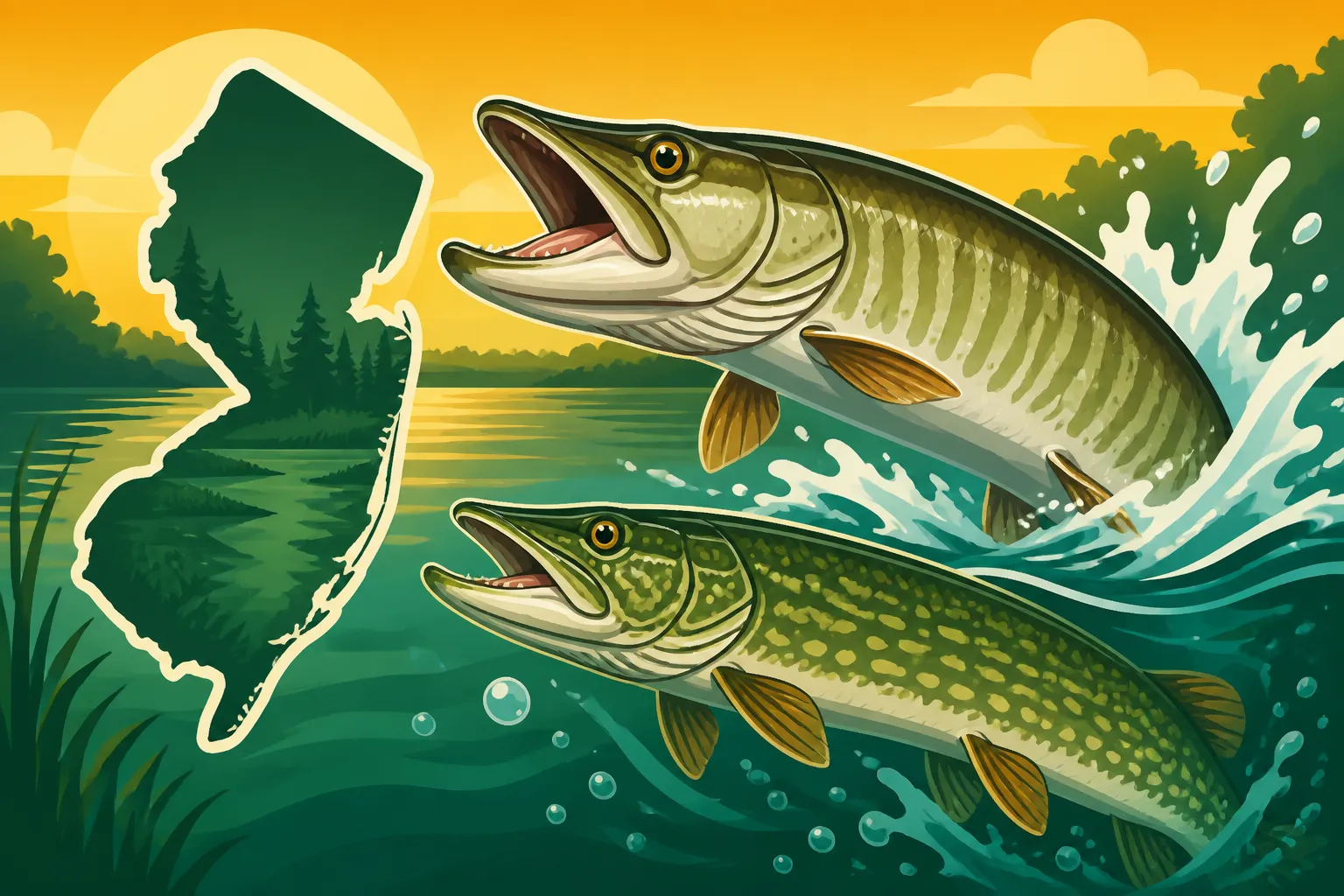
The most reliable way to tell them apart is by examining the scale pattern on their cheeks and gill covers, and by the markings on their bodies.
Here's a quick breakdown:
| Feature | Northern Pike | Muskellunge |
|---|---|---|
| Body Markings | Light spots on a dark body (sometimes bars/bands) | Dark spots or bars on a lighter body (or solid) |
| Cheek Scales | Fully scaled on both upper and lower halves | Scales only on the upper half of the cheek |
| Gill Cover | Fully scaled | Scales only on the upper half of the gill cover |
| Tail Fin | More rounded, sometimes slightly forked | More pointed, deeply forked |
| Pores on Jaw | 5 or fewer pores on each side of the lower jaw | 6 to 9 pores on each side of the lower jaw |
The easiest and most common way to identify them is by those body markings and the cheek/gill cover scaling. Pike have those light, bean-shaped spots on a darker background, while muskie often have dark bars or spots on a lighter, sometimes grayish or brownish, background. But always double-check the scaling – it's the most definitive feature. Pike look like a dark fish with light spots, while muskie look like a light fish with dark spots or bands. When you're fishing in a mixed species lake, this identification becomes even more critical for compliance with local New Jersey Freshwater Fishing Regulations Every Angler Should Know.
Where to Find Muskie and Pike in New Jersey
New Jersey might be a densely populated state, but it still offers some fantastic opportunities to pursue these freshwater giants. Knowing where to focus your efforts is paramount, as muskie and pike have specific habitat preferences. You can't just throw a lure in any pond and expect results – strategic location scouting is part of the fun and challenge.
Top Muskie Waters: Targeting the Giants
When it comes to muskie in New Jersey, certain waters consistently stand out as prime hunting grounds, largely thanks to dedicated stocking programs. These are the places where you have the best chance of encountering a true trophy-sized fish, but remember, success still requires patience and skill.
Lake Hopatcong, as New Jersey's largest lake, is probably the most famous muskie fishery in the state. It's a vast body of water with diverse structure, including deep channels, expansive weed beds, rock piles, and submerged timber, all of which provide excellent habitat for muskie. Anglers often target muskie in Hopatcong during the warmer months, focusing on areas with baitfish concentrations, particularly around prominent points, coves, and alongside weed lines. Early mornings and late evenings are often the most productive times. Lake Hopatcong Bass Fishing Hotspots might give you an idea of areas with good forage, as muskie follow their food source. Many local guides specialize in muskie fishing on Hopatcong, offering invaluable expertise for those looking to maximize their chances.
Another significant muskie destination is Monksville Reservoir in northern New Jersey. This picturesque reservoir is known for its clear, deep waters and rocky structure, making it a different kind of challenge compared to Hopatcong's shallower, weedier sections. Muskie in Monksville often relate to deeper water, suspended over humps or along steep drop-offs, especially as water temperatures rise. Fishing here often involves slower presentations or trolling tactics to cover water effectively. While it might not boast the same sheer numbers as Hopatcong, Monksville holds some truly impressive muskie, offering a shot at a fish of a lifetime.
Prime Northern Pike Hotspots
Northern pike are a bit more widely distributed than muskie across New Jersey, making them accessible to a broader range of anglers. While they won't always reach the same colossal sizes as muskie, they offer consistent action and a formidable fight.
Greenwood Lake, straddling the border with New York, is an excellent pike fishery. This large, nutrient-rich lake features extensive shallow flats, lily pad fields, and dense weed growth – ideal ambush habitat for northern pike. Anglers often find success casting spinnerbaits or large spoons around these weedy areas, particularly in spring and fall. The pike here are aggressive and willing to hit a variety of presentations. In winter, Greenwood Lake also becomes a popular spot for ice fishing, where tip-ups rigged with live bait can be incredibly effective for pike. Greenwood Lake Muskie Fishing Guide might also touch upon pike, as they often coexist in the same waters.
The lower Delaware River and its associated backwaters also hold a good population of northern pike. These areas often feature slower currents, oxbow lakes, and plenty of emergent vegetation, creating perfect pike habitat. Fishing the tidal sections of the Delaware can be particularly productive, as the changing water levels concentrate baitfish and, subsequently, pike. Spinnerbaits, swimbaits, and even large shiners under a float can entice strikes here. Further north along the river, in less tidal sections, slower moving pools with submerged wood and weeds are also worth exploring.
Many smaller lakes and ponds throughout the state, particularly those with good weed growth and forage, also contain healthy pike populations. Places like Spruce Run Reservoir and some of the WMA (Wildlife Management Area) ponds, while perhaps not "trophy" waters, can offer fantastic action for respectable-sized pike. It often pays to do a little research into local lake reports or chat with tackle shop owners to discover lesser-known pike gems in your area.
Identifying Productive Habitats: Weeds, Structure, and Forage
Understanding why these fish choose certain locations is more important than just knowing a list of lakes. Both muskie and pike are ambush predators, meaning they rely on cover to hide from their prey and then explode out to strike. This fundamental behavior dictates their preferred habitats.
Weed Beds: This is perhaps the most critical habitat element for both species, especially northern pike. Dense weed beds, whether milfoil, cabbage, or lily pads, provide perfect camouflage. Pike will sit on the edges, in pockets, or even deep within the weeds, waiting for baitfish to swim by. When targeting these areas, look for healthy, green weeds, as these usually indicate good oxygen levels and baitfish presence. Casting lures that can be worked through or over weeds without snagging is key.
Structure: Beyond weeds, any form of submerged structure can hold these fish. This includes fallen trees (timber), rock piles, humps, ledges, and even artificial structures like old docks or bridge pilings. Muskie, in particular, will often relate to deeper structure, especially in clearer lakes. These structures provide ambush points and often hold schools of baitfish, which are irresistible to predators. Using your electronics to identify these features is a huge advantage.
Forage: Simply put, muskie and pike will be where their food is. They primarily feed on other fish like perch, shiners, suckers, and even smaller bass. If you can locate schools of baitfish, you're likely in the vicinity of predators. Look for signs of baitfish on your fish finder, or observe activity on the surface, such as splashing or diving birds, which can indicate a baitfish school being harassed. Large game fish like these don't expend energy without a good reason, and that reason is almost always food. Knowing What Forage Fish Do Saltwater Gamefish Feed On is equally important for freshwater predators.
Essential Gear for Muskie and Pike Fishing
Successfully landing a muskie or a large pike isn't just about finding them; it's also about having the right tools for the job. These fish are powerful, aggressive, and equipped with serious dental work, so flimsy gear simply won't cut it. Investing in specialized, heavy-duty tackle is not just recommended, it's practically mandatory to avoid heartbreak at the boat.
Rods and Reels: The Heavy-Duty Setup You'll Need
Forget your typical bass or trout setups when you're targeting muskie and pike. These fish demand serious hardware designed to handle large lures, heavy baits, and the immense power of a battling predator.
For muskie, you'll want a heavy or extra-heavy power baitcasting rod, typically ranging from 8 to 10 feet in length. The extra length helps with casting large baits a long distance and provides leverage for controlling big fish and executing that crucial figure-eight at the boat. A fast or moderate-fast action is usually preferred, offering enough tip sensitivity for feel but plenty of backbone to set hooks and fight powerful runs. Brands like St. Croix, Shimano, and Daiwa offer excellent muskie-specific rods that can withstand the abuse.
Pair this with a heavy-duty, low-profile or round baitcasting reel with a strong drag system and a high line capacity. Look for reels with metal frames for durability and a gear ratio that allows for both fast retrieves (for some lures) and slow, powerful cranking. Some anglers even use conventional reels, especially for trolling. The key is a robust internal mechanism that won't strip gears under pressure. A good muskie reel will typically have a retrieve ratio of around 5.1:1 to 6.4:1, offering a balance of power and speed. You can find many reputable options on Amazon.
For northern pike, while you can certainly use muskie gear, you can get away with slightly lighter, but still robust, tackle. A heavy power, fast action baitcasting rod in the 7 to 8-foot range is usually sufficient. Some anglers also prefer heavy-duty spinning setups for pike, especially when casting lighter lures or for easier handling by beginners. The same principles apply: look for a strong backbone and a rod built to handle powerful fish.
For the reel, a heavy-duty spinning reel in the 4000-6000 size range, or a robust baitcasting reel similar to those used for muskie but perhaps with slightly less line capacity, will do the trick for pike. Again, a smooth, reliable drag is non-negotiable.
Lines, Leaders, and Terminal Tackle: Strength is Key
This is where many anglers make mistakes, and it's often the difference between landing a fish and watching your expensive lure disappear with a flick of a tail. Muskie and pike have incredibly sharp teeth that can slice through monofilament or fluorocarbon lines like butter.
Main Line: For both muskie and pike, braided line is the undisputed champion. It offers superior strength-to-diameter ratio, zero stretch for solid hooksets, and excellent abrasion resistance. For muskie, you'll want to spool up with 65-100 lb test braided line. For pike, 40-65 lb test braid is usually sufficient. The higher test allows for casting heavy lures and provides security against toothy encounters, even if the fish manages to get a bit of main line in its mouth.
Leaders: This is the most critical component for preventing bite-offs. You absolutely must use a steel, titanium, or heavy fluorocarbon leader when fishing for muskie and pike.
- Steel leaders (multi-strand or single-strand) are incredibly tough and bite-proof. Many come pre-tied with swivels and snaps.
- Titanium leaders are more flexible, kink-resistant, and lighter than steel, offering excellent performance.
- Heavy fluorocarbon leaders (100-150 lb test for muskie, 60-100 lb for pike) are less visible in the water, which can be an advantage in clear conditions, but they are not entirely bite-proof against a determined muskie or a frayed spot. They are, however, a popular choice for pike as they offer good protection and a more natural presentation.
Leaders should be at least 12-18 inches long to prevent the fish from biting through your main line if it inhales the lure deep. Use high-quality heavy-duty snaps and swivels that won't open under pressure or get damaged by repeated casts of heavy lures. Avoid cheap, flimsy hardware; it's a weak link you can't afford. Good quality leaders, snaps, and swivels are readily available on Amazon.
Lures and Baits: What Gets Their Attention
Muskie and pike are opportunistic predators, but they respond well to specific types of presentations. The sheer size of some muskie lures can be intimidating at first, but remember, these fish are looking for a substantial meal.
For Muskie:
- Large Bucktail Spinners: These are classic muskie lures, designed to create a lot of flash and vibration. Sizes often range from 8 to 12 inches with large blades. Colors like black, white, chartreuse, and natural patterns are popular.
- Jerkbaits/Glide Baits: These lures are worked with a series of jerks and pauses, imitating a wounded baitfish. They require a bit more skill to impart the right action but can be incredibly effective.
- Crankbaits: Large, deep-diving crankbaits are excellent for covering water and reaching fish holding in deeper areas or along drop-offs.
- Soft Plastics: Big soft plastic swimbaits, sometimes weighing several ounces, can be deadly when fished with heavy jig heads.
- Topwater Lures: During low light conditions or over shallow weed beds, large topwater baits like walk-the-dogs or prop baits can elicit explosive, visual strikes that are unforgettable.
For Pike:
- Spinnerbaits: Chartreuse, white, and black spinnerbaits with large blades are pike magnets, especially when retrieved through weed beds.
- Spoons: Classic metal spoons like Daredevils or Johnson Silver Minnows, in red/white, silver, or gold, are incredibly effective for pike. They wobble and flash, mimicking injured baitfish.
- Inline Spinners: Larger inline spinners can also entice pike, especially in areas with moderate current.
- Jerkbaits/Stickbaits: Smaller versions of muskie jerkbaits or even large bass jerkbaits can be very productive for pike.
- Swim Baits: Medium to large soft plastic swimbaits on weighted hooks or jig heads are great for working edges of cover.
- Live Bait: Large shiners, suckers, or other robust baitfish fished under a float or on a quick-strike rig are a traditional and highly effective method for pike, especially during colder water periods or when ice fishing. You'll want to check New Jersey Freshwater Fishing Regulations Every Angler Should Know for baitfish rules.
Always carry a variety of lure types and colors. Pike and muskie can be particular about their mood, and what works one day might not the next. Having a well-stocked tackle box gives you options.
Effective Techniques for Catching Muskie and Pike
Catching muskie and pike isn't just about having the right gear; it's about mastering the techniques that trigger their predatory instincts. These fish are smart and wary, so successful anglers employ a combination of strategic casting, careful retrieves, and sometimes, a little bit of unconventional thinking. Persistence is often the most important tool in your tackle box.
Casting and Retrieving: The Art of the Presentation
The vast majority of muskie and pike are caught through casting and retrieving lures. This technique allows you to systematically cover water, probe different types of cover, and present your lure in a way that mimics their natural prey. But it's not just about slinging a lure out there; the "how" of the retrieve is paramount.
When casting for these predators, accuracy is key. You want to place your lure precisely on the edge of a weed line, tight to submerged timber, or along a drop-off where a fish might be lurking. A long, accurate cast allows your lure to get down to depth or present itself naturally before it reaches the boat. After casting, the retrieve begins, and this is where the art comes in. The speed and action of your retrieve should vary depending on the lure type, water temperature, and the mood of the fish. Sometimes a fast, erratic retrieve that triggers a reaction strike is best, especially in warmer water. Other times, a slow, deliberate retrieve, with pauses and twitches, will entice a reluctant fish.
One of the most critical aspects of muskie and pike fishing is the "figure eight" at the boat. Muskie, in particular, are known for "following" a lure right up to the side of the boat, only to turn away at the last second. When your lure is nearing the boat, instead of simply reeling it in, plunge your rod tip into the water and execute a wide figure-eight pattern with your lure. This sudden, erratic movement often triggers a hesitant muskie to strike right at your feet. It's exhilarating and accounts for a significant number of muskie catches. You need a strong rod for this, and a good grip on the handle, as the strike can be explosive. Even for pike, this is a good habit to get into, as it can convert follows into strikes.
Trolling for Deepwater Monsters
While casting is highly effective, trolling is another powerful technique, especially for covering large expanses of water and targeting muskie and pike that might be holding in deeper sections of lakes and reservoirs. Trolling allows you to present large lures at consistent depths and speeds over extended periods, making it an excellent search method.
When trolling, you'll typically use large crankbaits, swimbaits, or even oversized bucktails designed to dive to specific depths. The speed of your troll is crucial and often depends on the lure you're using and the water temperature. Slower speeds (2-4 mph) are generally more effective in colder water, while slightly faster speeds can work in warmer conditions. Pay close attention to your boat speed and adjust it until your lure is running with the desired action. Using planer boards can help spread your lines out and cover more water, especially when fishing with multiple rods.
Trolling is particularly effective in large lakes like Lake Hopatcong or Monksville Reservoir, where fish can be widely dispersed or relate to offshore structure. Look for areas with distinct depth changes, submerged humps, or deep weed edges. Your electronics (fish finder/chartplotter) become invaluable for identifying these features and tracking your lure's depth and speed. Trolling requires patience, but it can be incredibly rewarding, often yielding some of the largest fish in a system. It's a great strategy when you're trying to figure out where the fish are holding or if they're suspended over open water.
Ice Fishing for Winter Pike and Occasional Muskie
When the lakes freeze over in New Jersey, the opportunity to target northern pike, and occasionally muskie, through the ice opens up. Ice fishing for these predators is a completely different ball game, offering a unique challenge and a chance to escape cabin fever.
For northern pike, tip-ups are the most popular and effective method. A tip-up consists of a spool submerged in the water, a flag that "tips up" when a fish takes the bait, and often a spreader bar. You'll bait your tip-ups with large live shiners or suckers, typically hooked through the back or lips. Set them over weed beds, along drop-offs, or near submerged structure. The key is to spread out your tip-ups (within legal limits) to cover a wider area, increasing your chances of intercepting a cruising pike. When the flag goes up, it's a rush to the hole, and then a hand-over-hand fight with a powerful fish on raw line.
Jigging for pike is also possible, often using large spoons, jigging raps, or heavy soft plastic swimbaits dropped down the hole. This active approach allows you to work a specific area thoroughly. While muskie are rarely caught through the ice, it does happen, usually as a bycatch when targeting pike with large live baits. This is a testament to their opportunistic nature, even in frigid waters.
Ice fishing demands attention to safety. Always check ice thickness before venturing out, and be aware of changing conditions. Dress in layers, wear proper footwear, and bring essential safety gear. Places like Greenwood Lake and Lake Hopatcong are popular New Jersey spots for ice fishing, but always verify ice conditions locally before heading out. For more on this, check out New Jersey Ice Fishing Safety Basics.
Best Times and Seasons to Target Muskie and Pike
Understanding the seasonal movements and feeding patterns of muskie and pike is crucial for consistent success. These fish, like all cold-blooded creatures, are heavily influenced by water temperature, available forage, and spawning cycles. Tailoring your approach to the time of year can dramatically increase your chances of a hook-up.
Seasonal Strategies for Muskie Success
Muskie fishing is a year-round pursuit for dedicated anglers, but certain seasons offer distinct advantages and challenges.
Spring (Post-Spawn): After the ice melts and water temperatures begin to rise (usually late April through May), muskie move into shallower areas to spawn. Directly after spawning, they are often lethargic. However, as they recover, they become incredibly aggressive, trying to regain lost energy. This post-spawn period can be a fantastic time to target them, as they'll be found in shallower bays, around emerging weed growth, and near woody cover. Slow-moving lures like gliders, crankbaits, or large soft plastics can be very effective. This is also when they're most accessible from shore in some areas.
Summer: As water temperatures continue to climb through June, July, and August, muskie often move to deeper, cooler water. They'll relate to deep weed edges, thermal breaks, submerged humps, and deep-water structure. Early mornings, late evenings, and even night fishing can be productive during this period. Fast-moving lures like large bucktails are great for triggering reaction strikes from active fish, and trolling deep-diving crankbaits becomes a very effective strategy for covering water and finding those offshore fish. However, prolonged fights in warm water can be stressful on muskie, so quick release is especially important.
Fall (Pre-Winter Feed): Many muskie anglers consider fall to be the absolute prime time for trophy muskie. As water temperatures drop, these fish go on a "feeding frenzy" to pack on weight before winter. They become incredibly aggressive and can often be found in shallower areas again, gorging on baitfish. Large baits are key during this time – big jerkbaits, oversized crankbaits, and huge soft plastics are all excellent choices. This is when muskie are at their fattest and most powerful. They will strike hard and fight even harder. The fall run can last well into late November or early December, until ice forms.
Winter: Muskie fishing slows considerably once the water gets truly cold and certainly once ice forms. While they can be caught through the ice as a bycatch when targeting pike, dedicated muskie anglers typically shift to other species or focus on late fall fishing until the last possible moment before the freeze.
Pike Fishing Through the Seasons
Northern pike offer more consistent action across a wider range of seasons than muskie, making them a great target for year-round angling.
Spring: Like muskie, pike spawn shortly after ice-out, often in shallow, vegetated areas. Post-spawn, they are incredibly hungry and aggressive. This is a fantastic time to target them in shallow bays, around new weed growth, and flooded timber. Spinnerbaits, spoons, and swimbaits retrieved slowly through these areas can be deadly. As the water warms, their metabolism picks up, making them more willing to chase.
Summer: Pike remain active throughout the summer, often retreating to the cooler, denser cover of deep weed beds or submerged structures during the heat of the day. Early mornings and late evenings are prime times, as are overcast days. Spinnerbaits, topwater lures, and weedless spoons are excellent choices for working through vegetation. Pike in summer can be ambush predators, so accurate casting to structure is key.
Fall: Similar to muskie, northern pike engage in a pre-winter feeding binge as water temperatures drop. They become highly aggressive and will readily hit a variety of lures. Large spoons, crankbaits, and even large live bait can be very effective. This is an excellent time to target them around weed edges and shallower flats as they chase schooling baitfish. The cooler water means stronger fights and less stress on the fish during release.
Winter (Ice Fishing): Northern pike are one of the most popular species to target through the ice in New Jersey. They remain active even in frigid water, though their metabolism slows. Live shiners or suckers fished on tip-ups are incredibly effective, as are large jigging spoons or blade baits. Pike will often cruise along weed lines or near structure under the ice, looking for an easy meal. This is a truly fun and rewarding way to catch them, offering a unique angling experience. New Jersey's Best Spots for Ice Fishing often include top pike waters.
Understanding Weather and Water Conditions
Beyond the seasons, daily weather and water conditions play a significant role in muskie and pike behavior.
- Barometric Pressure: A stable or rising barometer often correlates with active feeding, while a rapidly falling barometer (before a storm) can also trigger a bite. A stable high-pressure system can sometimes make fishing tough, pushing fish deeper.
- Water Temperature: As mentioned, water temperature dictates their metabolism and where they hold. Knowing the ideal temperature ranges for active feeding (e.g., 55-70 degrees Fahrenheit for peak aggression) helps you adjust your tactics.
- Light Conditions: Overcast days and low light conditions (dawn, dusk) are often prime times for these sight-feeding predators. Intense sunlight can push them into deeper water or denser cover.
- Wind: A moderate chop on the water can actually be beneficial, as it breaks up the surface, making it harder for fish to see the boat and more conducive for ambush. Wind also creates current, which can concentrate baitfish. However, strong winds can make boat control and casting difficult.
Paying attention to these environmental factors and making adjustments to your presentation, lure choice, and location will lead to more successful days on the water.
Handling and Conservation of Muskie and Pike
Catching a muskie or a large pike is an incredible achievement, but the responsibility doesn't end with the hook-up. These powerful predators are often long-lived, slow-growing, and crucial to the health of New Jersey's freshwater ecosystems. Proper handling, especially for muskie, is absolutely essential for their survival and the sustainability of the fishery. Conservation isn't just a suggestion; it's a practice that ensures these magnificent fish continue to thrive.
Safe Handling Practices: Catch and Release for These Giants
For muskie, catch and release isn't just encouraged; it's practically a religion among dedicated anglers. Many muskie fisheries in New Jersey, including Lake Hopatcong, are sustained by stocking and rely on these fish living long lives to grow to trophy size. Even for pike, especially larger ones, practicing responsible catch and release helps maintain healthy populations.
Here's how to handle these fish safely and effectively:
-
Preparation is Key: Before you even cast a line, have your tools ready. This means long-nosed pliers or a hook remover, bolt cutters (for cutting hooks if necessary), and a large, rubberized net or a cradle. A fish gripper can be useful but should be used with extreme caution, only on the lower jaw and only if you know how to support the fish's body properly. Never attempt to lip a muskie or pike with your bare hands – those teeth are no joke!
-
Minimize Fight Time: While a long fight is exhilarating, it exhausts the fish. Use appropriately heavy tackle to bring the fish to the boat as quickly as possible without over-stressing it.
-
Use a Large Net or Cradle: Once the fish is alongside, use a large, rubberized landing net to scoop it up. Rubberized nets are much gentler on the fish's slime coat and fins than traditional nylon nets. For truly huge muskie, a muskie cradle, which supports the entire body in the water, is ideal.
-
Keep the Fish in the Water: The golden rule for muskie and pike is to keep them in the water as much as possible. Their internal organs are not designed to support their weight out of water, and even a short time out of the water can cause severe damage. If you must lift them for a quick photo, support their entire body horizontally with both hands (one under the head/gill plate, one under the belly/tail) and lift only for a few seconds. Never hold them vertically by the head or gills, as this can severely damage their spine and jaw.
-
Remove Hooks Quickly: With the fish secured in the net or cradle in the water, use your long-nosed pliers or hook remover to extract the hooks. If the hooks are deeply embedded or difficult to remove, do not hesitate to use bolt cutters to snip them off. Hooks made of carbon steel will rust out of the fish's mouth over time. The fish's survival is more important than your lure.
-
Revive the Fish: If the fish seems sluggish after the fight and release, hold it gently upright in the water, facing into any current. Move it slowly back and forth to help oxygenated water flow over its gills. When it starts to kick strongly and tries to swim away, you know it's ready for release.
Practicing these steps will dramatically increase the survival rate of these incredible fish, allowing them to grow larger and provide future angling opportunities.
Conservation Efforts and Why They Matter
The pursuit of muskie and pike in New Jersey is only possible due to dedicated conservation efforts. These include state-run stocking programs, habitat protection, and responsible management by the New Jersey Division of Fish and Wildlife.
Stocking Programs: Muskie are not native to many New Jersey waters and their populations are largely maintained through regular stocking. This means that the fish you catch are often the result of significant financial and biological investment by the state. Ensuring their survival after catch is a direct contribution to the success of these programs. Northern pike populations are more naturally self-sustaining in some areas, but they still benefit from healthy habitats.
Habitat Protection: Preserving and restoring healthy aquatic habitats, including clean water, diverse weed beds, and natural shoreline structure, is vital for both muskie and pike. These fish rely on these environments for spawning, foraging, and refuge. Anglers can contribute by not littering, advocating for clean water, and being mindful of their impact on fragile ecosystems.
Angler Education: The angling community plays a crucial role in conservation. By understanding and adhering to regulations, practicing safe handling, and educating fellow anglers, we collectively ensure the future of muskie and pike fishing. Participating in angler surveys or volunteering with local conservation groups are other ways to contribute. Remember, the New Jersey Recreational Fishing Survey: Why You Might Get a Call helps inform management decisions.
New Jersey Regulations: Size and Bag Limits
To ensure the sustainability of muskie and pike populations, New Jersey has specific regulations regarding their harvest. These rules are put in place by the New Jersey Division of Fish and Wildlife and are subject to change, so always consult the most current Reading the New Jersey Fish and Wildlife Digest before heading out.
Regulations typically include:
- Minimum Size Limits: These are usually quite generous for muskie, reflecting their slow growth rate and the importance of allowing them to reach maturity and contribute to the gene pool. Pike often have a smaller, but still substantial, minimum size.
- Daily Bag Limits: For muskie, bag limits are often very restrictive, sometimes allowing for only one fish per angler per day, if any. For pike, the limit might be slightly higher, but still designed to prevent overharvest.
- Season Dates: While some waters might have year-round fishing, others might have specific open or closed seasons for certain species, especially around spawning times.
It's your responsibility as an angler to know and follow these rules. Not only is it legally required, but it's a fundamental aspect of ethical angling and ensuring that future generations can enjoy the thrill of pursuing these incredible freshwater titans in New Jersey. What Fish Species Are Illegal to Possess in New Jersey is also good information to be aware of.
Disclaimer
This article is for general informational purposes only and does not constitute professional advice. Laws, prices and regulations vary by location and change over time. Consult a qualified professional for guidance on your specific situation.