Fishing Lake Musconetcong for Bass
The thrill of chasing a trophy bass in New Jersey can be truly exhilarating, but trying to figure out the best spots and techniques can feel like navigating a maze, especially on a larger lake. If you’ve ever found yourself wondering where to cast next or what bait to tie on while fishing Lake Musconetcong, this comprehensive guide is designed to cut through the confusion and help you unlock its bass fishing potential.
Understanding Lake Musconetcong's Bass Population
Lake Musconetcong, nestled in Morris and Sussex counties, is a truly significant body of water in New Jersey's freshwater fishing scene. But like any large lake, it has its own unique characteristics that dictate where the bass live and how they behave. Understanding these nuances is the first step to consistent success.
Lake Overview and Habitat
Lake Musconetcong spans over 979 acres, making it one of the larger natural lakes in the state. Its average depth is around 6 feet, with some deeper sections reaching 10-12 feet. This relatively shallow nature means that aquatic vegetation plays a massive role in where bass are found. Think about those vast lily pad fields, submerged weed beds, and even brush piles that accumulate over time—these are prime real estate for both largemouth and smallmouth bass. The lake's shoreline varies from developed residential areas with docks and seawalls to more natural, reedy stretches. These diverse habitats offer different types of cover and ambush points for bass, providing anglers with a lot of options to explore. Knowing the topography, whether it's a gradual slope or a sudden drop-off near a channel, is crucial for targeting fish effectively.
The lake itself is part of a larger watershed, feeding into the Musconetcong River, which eventually flows into the Delaware River. This constant flow, though subtle in the main lake, contributes to the overall health of the ecosystem, influencing water quality and nutrient availability for forage species. The bottom composition also varies, from soft, silty areas where weeds thrive, to harder, rocky sections, especially near points and structure. Bass will often relate to these changes in bottom type, moving between them to feed or find comfort.
Largemouth vs. Smallmouth Bass in Musconetcong
When you're fishing Lake Musconetcong, you'll primarily encounter largemouth bass, which thrive in its vegetated, shallower waters. These green giants love to hide among the lily pads, under boat docks, and within dense weed beds, ambushing unsuspecting prey. They're often found in areas with plenty of cover, where they can dart out and grab a meal. Think about the northern and southern coves of the lake, where the water is often calmer and the vegetation more abundant; these are classic largemouth haunts.
While largemouth dominate, smallmouth bass are also present, though typically in fewer numbers and often in specific areas. Smallmouth, true to their nature, prefer clearer, deeper water with rocky bottoms and structure. You might find them closer to the main lake's deeper channels, around rip-rap, or any areas with harder bottom transitions. They tend to be more nomadic than largemouth, chasing baitfish in open water. Knowing the difference in habitat preference is key. If you're targeting largemouth, you'll be spending your time flipping jigs into thick cover. If a smallmouth is your goal, you'll likely be dragging tubes or working jerkbaits over rocky points. For a broader perspective on these species, you can check out our guide on Largemouth Bass Fishing in New Jersey.
Key Forage Species for Bass
The health and size of Lake Musconetcong's bass population are directly tied to its forage base. Bass are opportunistic predators, and they'll eat just about anything they can fit into their mouths. In Lake Musconetcong, a diverse menu keeps them well-fed and growing. Common forage includes various panfish like bluegill and perch, which are plentiful in the lake and often found alongside bass in vegetated areas. Smaller shiners, minnows, and other baitfish also make up a significant portion of their diet.
One often-overlooked but vital food source is crayfish. These crustaceans are abundant on rocky bottoms and provide a high-protein meal for bass. Imitating crayfish with jigs or soft plastics can be incredibly effective, especially when bass are sluggish or holding tight to structure. Additionally, insects and frogs contribute to the diet, especially in the shallower, weedy areas. A bass exploding on a topwater frog near a lily pad field is one of the most exciting bites in freshwater fishing! Understanding what the bass are eating will help you select the most effective lures and presentations, essentially "matching the hatch" for these freshwater predators.
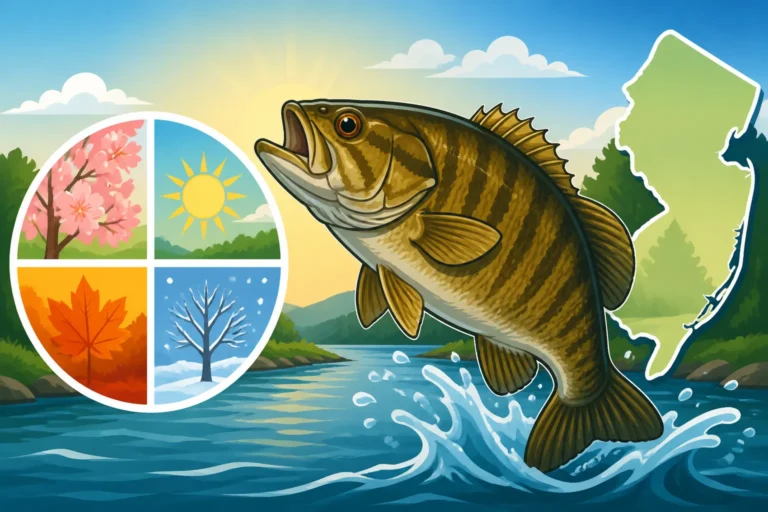
Best Times and Seasons for Bass Fishing on Lake Musconetcong
Fishing success, especially for bass, is heavily influenced by the seasons and corresponding water temperatures. Lake Musconetcong offers different challenges and opportunities throughout the year, so tailoring your approach to the season is paramount.
Springtime Spawning and Pre-Spawn Action
Spring on Lake Musconetcong is arguably the most exciting time for bass anglers. As the ice melts and water temperatures begin to climb into the 50s and low 60s Fahrenheit, bass move into shallower areas, preparing for the spawn. This pre-spawn period sees bass feeding aggressively, trying to bulk up before the energy-intensive spawning process. Look for them in sunny, protected coves and flats, especially those with dark bottoms that absorb heat faster. Spinnerbaits, lipless crankbaits, and jerkbaits worked along weed lines and channel edges can be incredibly effective during this time.
Once water temperatures reach the mid-60s, typically from late April through May, bass will begin to spawn. They'll fan out beds in shallow, hard-bottomed areas, often near docks, submerged logs, or dense vegetation. While sight-fishing for bedding bass can be tempting, many anglers opt to focus on post-spawn fish that are starting to recover and feed again. After the spawn, bass will often hold near deeper cover adjacent to their spawning grounds, slowly moving back into a more active feeding pattern. If you're wondering how to target them during this crucial time, our article on How to Catch Largemouth Bass in Early Spring provides some excellent strategies.
Summer Patterns and Deep Water Tactics
As the New Jersey summer really kicks in and water temperatures soar into the 70s and 80s, bass on Lake Musconetcong often change their behavior dramatically. The shallower, open areas can become less productive during the bright, hot midday hours. Instead, bass will seek refuge in deeper, cooler water or dense, shaded cover. This means targeting them becomes more about understanding thermal refuge and overhead protection.
During summer, look for bass to gravitate towards the thermocline if one forms, or to deep weed edges, submerged brush piles, and the shade created by boat docks. Early mornings and late evenings can still produce excellent topwater action, but during the day, you'll need to go deep or get into heavy cover. Jig-and-pig combos, Texas-rigged worms, and deep-diving crankbaits become indispensable tools. Slow presentations are often key, allowing the bass to investigate and commit to a strike. For specific lure recommendations, you might find our guide on Best Lures for Largemouth Bass in Summer Heat particularly helpful.
| Season | Typical Water Temp | Primary Bass Location | Recommended Techniques | Key Baits |
|---|---|---|---|---|
| Spring (Pre-Spawn) | 45-60°F | Shallow coves, rock banks, channel swings | Aggressive retrieve, covering water | Spinnerbaits, lipless cranks, jerkbaits |
| Spring (Spawn) | 60-70°F | Shallow beds, docks, submerged wood | Flipping, pitching, slower presentations | Jigs, soft plastics (worms, craws) |
| Summer | 70-85°F | Deep weed lines, docks, shade, brush piles | Finesse, punching, deep cranking | Texas rigs, jigs, deep crankbaits, frogs (early/late) |
| Fall | 50-70°F | Baitfish schools, main lake points, shallow flats | Reaction baits, jigging | Spinnerbaits, crankbaits, swimbaits, jigs |
Fall Feeding Frenzy
Autumn on Lake Musconetcong brings cooler temperatures, often sparking a renewed feeding spree in bass. As the water cools down from its summer highs, bass become incredibly active, trying to put on weight for the upcoming winter. This is a fantastic time to cover water and fish aggressively. Bass will often follow schools of baitfish, pushing them into shallow coves or against structure.
Look for bass around main lake points, transitions from deep to shallow, and remaining weed beds. Reaction baits like spinnerbaits, crankbaits, and swimbaits can be incredibly effective as bass chase down their prey. Topwater action can also return, especially on warmer fall days, offering some explosive strikes. The fish are often more grouped up in the fall, so once you find one, there's a good chance there are more nearby. The cooler weather also means less recreational boat traffic, making for a more peaceful fishing experience.
Top Techniques and Baits for Musconetcong Bass
Having the right bait and knowing how to present it can make all the difference on Lake Musconetcong. Bass can be finicky, so having a versatile tackle box and a range of techniques at your disposal is crucial for adapting to conditions.
Soft Plastics and Jigging Strategies
Soft plastics are a staple for any bass angler, and they are incredibly effective on Lake Musconetcong, especially when bass are holding tight to cover or are less aggressive. Texas-rigged worms, creature baits, and senkos are workhorses that can be flipped into dense lily pads, pitched under docks, or slowly dragged along weed edges. The key with these baits is often a slower, more deliberate retrieve, allowing the natural action of the plastic to entice a strike. Experiment with colors, from natural greens and browns to more vibrant blues and purples, depending on water clarity and sunlight.
Jigging, particularly with a jig-and-pig combo (a leadhead jig paired with a soft plastic crawfish imitation), is another powerhouse technique. This setup is fantastic for punching through heavy cover, probing submerged brush piles, or working along deeper drop-offs. The jig mimics a crawfish or a fleeing baitfish, and its compact profile allows it to penetrate dense vegetation where other lures might snag. On Lake Musconetcong, where vegetation is abundant, mastering the art of flipping and pitching jigs into tight spots will pay dividends. Many anglers, even those booking trips on platforms like FishingBooker, often ask guides for tips on these critical techniques.
Crankbaits and Spinnerbaits for Active Bass
When bass are more active and willing to chase, crankbaits and spinnerbaits are excellent choices for covering water quickly and locating fish. Crankbaits, with their diving lips, allow you to target various depths, from shallow flats with square bills to deeper channels with lipped versions. Their erratic, wobbling action and loud rattles can trigger aggressive reaction strikes. Match the color to the forage or the water clarity—natural baitfish patterns for clear water, and brighter, more aggressive colors for stained or muddy conditions.
Spinnerbaits, with their flashing blades and pulsating skirts, are incredibly versatile. They can be slow-rolled along the bottom, burned over weed tops, or allowed to fall and helicopter through the water column. The flash and vibration mimic a distressed baitfish, making them irresistible to hungry bass. They're also relatively weedless, which is a huge advantage when fishing Lake Musconetcong's often-vegetated waters. Experiment with different blade combinations (Colorado for vibration, Willow leaf for flash) to find what the bass prefer on any given day.
Topwater Excitement and Frogs
There’s nothing quite like a bass blowing up on a topwater lure. On Lake Musconetcong, topwater fishing can be incredibly productive, especially during low-light conditions in the early morning, late evening, or on overcast days. Poppers, walk-the-dog baits, and buzzbaits create surface commotion that triggers explosive strikes. These are best worked over shallower flats, along weed edges, or around docks where bass are actively hunting. If you're looking for more tips on these, consider reading our advice on How to Fish Topwater Lures for Largemouth Bass.
But if there's one topwater bait that truly shines on Musconetcong, it's the hollow-bodied frog. With its ability to glide over thick lily pads, matted grass, and other heavy cover without snagging, the frog is tailor-made for this lake's habitat. Bass lurking underneath this dense cover can't resist a frog slowly worked across their "roof." The key is patience: let the bass take the bait fully before setting the hook, as they often just slurp it down rather than striking violently. This technique often leads to some of the most memorable and exciting bites you'll experience.
Navigating Lake Musconetcong: Access and Regulations
Before you even launch your boat or cast from shore, it's crucial to understand the access points available and, more importantly, the regulations that govern fishing on Lake Musconetcong. New Jersey has specific rules designed to protect its fisheries, and ignorance is no excuse.
Boat Launch Access and Parking
For anglers with boats, Lake Musconetcong offers a public boat launch on the southern end of the lake, managed by the New Jersey State Park Service. This ramp, located off Lakeside Boulevard in Netcong, provides easy access for trailered boats. There's typically ample parking available for vehicles with trailers, though it can fill up quickly on busy weekend mornings during peak season. It's always a good idea to arrive early, especially if you're planning a full day on the water.
Remember that New Jersey lakes have specific rules regarding boat horsepower and speed, and Lake Musconetcong is no exception. Always check current regulations before heading out. Kayak and canoe anglers will also find this launch convenient, though they might also be able to find smaller, less formal access points along the shoreline. For those without their own vessel, some local liveries or guides, often found through services like FishingBooker, might offer rental options or guided trips directly on the lake. Don't forget, Do Kayak Anglers Need a License in New Jersey?, yes, typically, so be prepared.
Shoreline Fishing Opportunities
While Lake Musconetcong is primarily a boat-fishing lake due to its size and surrounding development, there are still some limited opportunities for shore anglers. The public boat launch area itself often provides a small stretch where you can cast from the bank. Additionally, some sections of the state park property that border the lake, particularly near the public access points, may offer walking trails or small clearings where you can cast a line.
However, many parts of the shoreline are privately owned or heavily vegetated, making direct access challenging. Your best bet for shore fishing might be around bridges or culverts that span smaller inlets or outlets, or any designated public parks along the lake. Always be respectful of private property and ensure you are only fishing from legally accessible points. Packing light with a few essential lures, a small tackle bag, and a comfortable chair will make any shore fishing expedition more enjoyable.
Important Regulations to Remember
Fishing in Lake Musconetcong, like any New Jersey waterbody, requires adherence to specific regulations. First and foremost, you must possess a valid New Jersey Fishing License Guide for 2026. If you're a resident, there are specific New Jersey Resident Fishing License Requirements, and non-residents also have options. Make sure your license is current and always carry proof of it with you. There are also specific New Jersey Fishing License Age Requirements, so check if junior anglers need one.
Beyond licensing, pay close attention to the statewide New Jersey Freshwater Fishing Regulations Every Angler Should Know. This includes bag limits and size limits for bass. These rules are put in place to ensure the sustainability of the fishery for future generations. For example, while striped bass have a "slot limit," freshwater bass usually have a minimum size and a daily creel limit. You can consult the official New Jersey Fish and Wildlife Digest, which outlines all the current rules, including New Jersey Daily Bag Limits by Species. Remember, regulations can change, so always check the latest digest before each fishing season. Being prepared ensures a smooth and enjoyable day on the water.
Disclaimer
Always check the latest New Jersey Department of Environmental Protection (NJDEP) Fish and Wildlife regulations before heading out, as rules and seasons can change. This guide is for informational purposes only and does not constitute legal advice regarding fishing regulations.