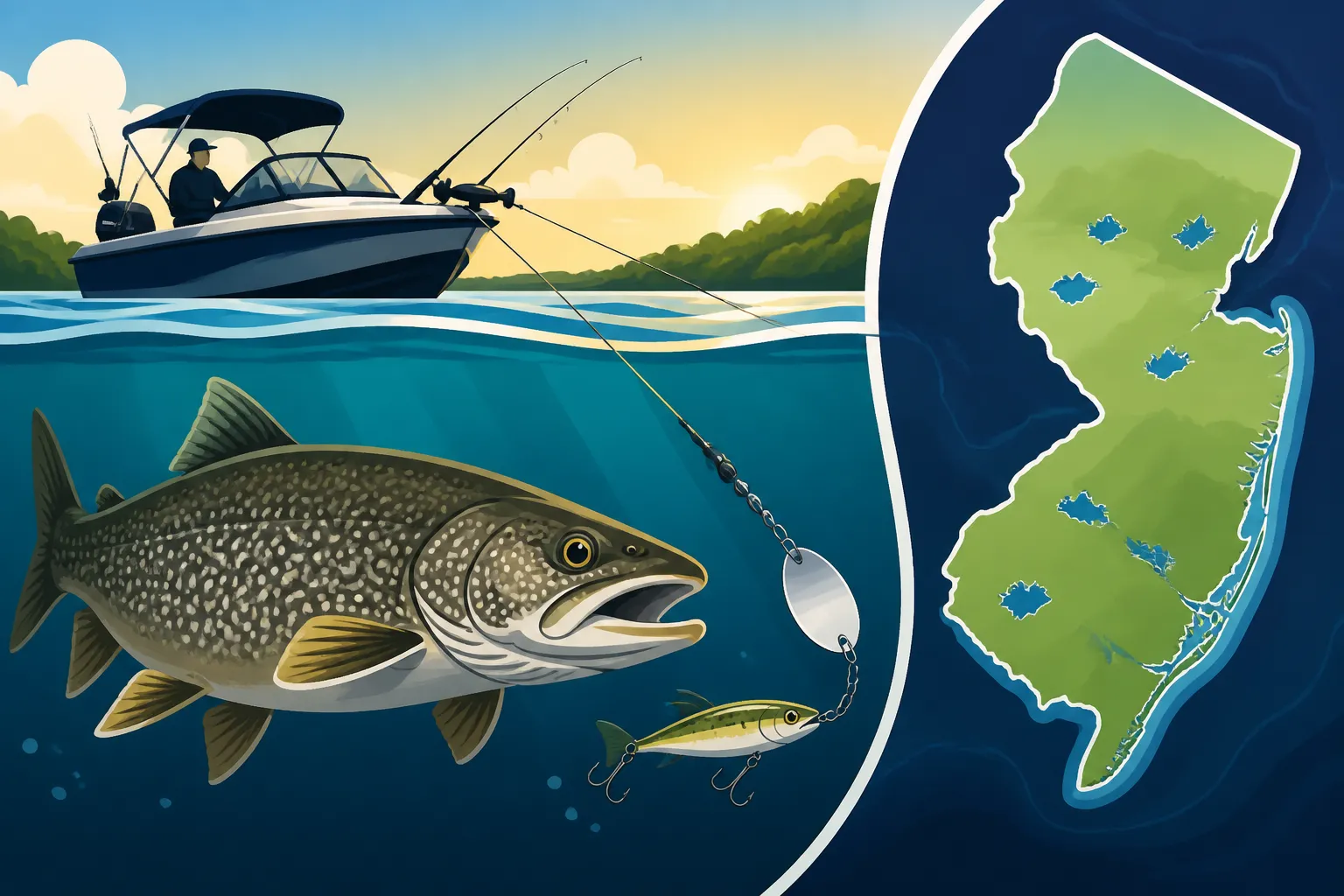
Trolling Techniques for New Jersey Lake Trout
There’s nothing quite like the thrill of chasing a true freshwater titan, and in New Jersey, that often means setting your sights on the mighty lake trout. But let's be honest, these deep-dwelling, often elusive fish can feel like a riddle wrapped in an enigma. If you've ever spent hours on the water, meticulously setting lines, only to come up empty-handed, you know the frustration. This guide is here to unravel those mysteries, diving deep into the art and science of trolling for lake trout in our New Jersey waters, giving you the insights and techniques to turn those slow days into memorable catches.
Understanding New Jersey Lake Trout and Their Habitat
Before you even think about dropping a line, it's crucial to understand the fish you're after. Lake trout are unique, requiring specific environmental conditions, and knowing where and why they hang out in certain areas is half the battle. They're not like your average panfish; these are cold-water predators.
Where Lake Trout Thrive in New Jersey
When we talk about lake trout in New Jersey, a couple of names immediately come to mind: Round Valley Reservoir and Merrill Creek Reservoir. These aren't just any lakes; they are deep, cold-water impoundments that mimic the natural habitat lake trout prefer. You won't find lake trout in every pond or shallow lake across the state because they simply can't survive the warmer water temperatures. These specific reservoirs are actively managed to support robust lake trout populations.
Round Valley Reservoir, known for its pristine, gin-clear water and impressive depth, is arguably New Jersey's premier lake trout destination. It's truly a marvel, boasting depths that plunge over 180 feet, providing that crucial cold-water refuge these fish need year-round. Similarly, Merrill Creek Reservoir, while perhaps less famous for lake trout than Round Valley, also offers the necessary deep, cold habitat to sustain a population. Knowing these unique characteristics is key to targeting them effectively. If you're looking for more details on specific locations, our comprehensive Round Valley Reservoir Fishing Guide is an excellent resource.
Lake Trout Behavior and Feeding Habits
Lake trout are opportunistic predators, but their feeding habits are heavily influenced by water temperature and the availability of their preferred forage. In New Jersey, their diet often consists of smaller baitfish like alewife, smelt, and even juvenile perch. They are often found patrolling the edges of deep structures, drop-offs, and humps, waiting to ambush unsuspecting prey. They don't typically chase bait wildly in open water like some other predators; instead, they prefer to conserve energy and strike with precision.
Their behavior shifts with the seasons, too. In cooler months, they might be more active and willing to move for a meal, while in the dead of summer, they become sluggish, holding tight to the coldest pockets of water. Understanding these nuances, such as Where Do Lake Trout Hold at Round Valley Reservoir?, will help you present your baits in the most appealing way at the right time.
Identifying Prime Lake Trout Habitat and Structure
Lake trout are structure-oriented fish, even in vast, open water. They relate to underwater features like old river channels, submerged humps, steep drop-offs, and rocky ledges. These structures provide cover, ambush points, and often hold concentrations of baitfish. Think of them as underwater highways and neighborhoods for the trout. It’s not enough to just be in deep water; you need to be in deep water with character.
When you're out on the boat, pay close attention to your electronics (more on that later!). Look for sudden changes in depth, distinct rock piles, or even submerged timber. These are the sweet spots. Lake trout will often suspend just off these features, sometimes a few feet above the bottom, sometimes higher in the water column if baitfish are present there. Knowing the typical depths and structure, such as How Deep Is Round Valley Reservoir?, can give you a significant advantage.
Essential Trolling Gear and Setup
Trolling for lake trout isn't just about dropping a line; it's a specialized discipline that requires specific gear to get your baits down to where these fish live. You can't just use your everyday bass setup here. Having the right tools makes all the difference in consistently putting these impressive fish in the net.
Rods, Reels, and Line for Lake Trout Trolling
For lake trout trolling, you'll want a setup that can handle the stress of deep-water presentations and the fight of a powerful fish. Medium-heavy to heavy action rods, typically 7 to 9 feet in length, are ideal. These longer rods provide better shock absorption and can handle the drag of heavy weights or downriggers. Look for rods specifically designed for trolling or downrigging.
Matching your rod with a sturdy levelwind or conventional reel is crucial. These reels excel at handling heavy lines and providing consistent drag. Line capacity is important, as you'll be letting out a lot of line. For main lines, 20-30 pound monofilament or fluorocarbon is common, offering good abrasion resistance. However, many serious trollers opt for braided line (like 30-50 lb test) for its no-stretch properties, which provides better feel and solid hooksets, especially at extreme depths. If you go with braid, always add a leader of 10-20 lb fluorocarbon to the end for stealth and shock absorption. You can find excellent options for these setups on online retailers like Amazon, ensuring you have reliable gear for those deep dives.
Trolling Motors and Electronics
This is where the real magic happens for deep-water trolling. A reliable trolling motor, whether bow-mounted or transom-mounted, is essential for maintaining precise speeds and subtle course corrections, especially in challenging conditions. Many modern trolling motors also integrate with GPS and allow for "spot-lock" or auto-pilot features, which can be invaluable when trying to stay over a specific contour.
But the absolute game-changer for lake trout is your electronics package. A good fish finder is non-negotiable. You need one with clear, powerful sonar to mark fish, bait, and structure at significant depths. Look for units with CHIRP sonar, which provides superior target separation. Side-scan and down-scan imaging can also give you an incredible view of the underwater world, helping you pinpoint those elusive humps or channel edges. Understanding How to Read a Fish Finder for Beginners is a skill worth developing for this type of fishing.
For true depth control, especially in waters like Round Valley, downriggers are often indispensable. These devices allow you to precisely control the depth of your lure, getting it right into the strike zone where lake trout are holding. You attach a heavy cannonball weight to a cable, which is lowered to a set depth, and your fishing line is clipped to the downrigger release. When a fish strikes, the line pops free, and you fight the fish directly. Without downriggers, hitting specific depths reliably can be incredibly challenging.
Lures, Baits, and Terminal Tackle
Lake trout, being apex predators, respond well to a variety of artificial lures that mimic their natural prey. Spoons are a classic choice, with brands like Sutton, Dodger, and Little Cleo being perennial favorites. Their wobbling action is irresistible to cruising lake trout. Stickbaits and crankbaits that dive deep or are designed to be run on downriggers are also highly effective, imitating alewife or smelt. These often come in metallic finishes or natural baitfish patterns.
For natural bait, live alewife or shiners, if legal and available, can be deadly. However, often anglers will opt for dead bait, such as a whole or cut herring, smelt, or even a large shiner, rigged to spin enticingly behind an attractor like a dodger or flasher. The combination of flash, vibration, and natural scent can be incredibly potent.
Terminal tackle should be robust. Use strong swivels (ball bearing swivels are best to prevent line twist, especially with spoons), appropriate snap swivels for quick lure changes, and sturdy leaders (15-20 lb fluorocarbon is generally a good choice). Always check your knots and leaders regularly for any nicks or abrasions, as a trophy lake trout can quickly exploit any weakness.
Mastering Trolling Techniques for Lake Trout
Once you have your gear sorted, it's time to put it to work. Trolling isn't just driving around in circles; it's a nuanced dance of speed, depth, lure choice, and boat control. The goal is to present your offering naturally and consistently in the strike zone.
Controlled Depth Trolling with Downriggers
This is arguably the most precise and effective method for targeting deep-dwelling lake trout, especially in clear-water reservoirs like Round Valley. Downriggers allow you to place your lure exactly where you're marking fish or bait on your sonar. The process involves attaching your fishing line to a release clip on the downrigger cable, which then lowers a heavy cannonball weight to your desired depth.
You'll typically run your lure anywhere from 10 to 100 feet behind the cannonball, depending on how shy the fish are. In clearer water, a longer lead is often better to keep the lure away from the disturbance of the boat and the downrigger weight. Varying your trolling speed slightly (1.5-3 mph is a common range, but experiment!) will change the action of your lure and how much it "pumps" or rises and falls slightly behind the downrigger. Watch your rod tip for that tell-tale twitch indicating your lure is swimming correctly. When a fish strikes, the line pops out of the release clip, and you fight the fish directly, giving an exhilarating battle. Make sure your downriggers are in good working order before you head out, and consider a spare release clip – these can be lifesavers.
Lead Core and Weighted Line Trolling
For those without downriggers, or in situations where you want a simpler setup, lead core line or other weighted lines are excellent alternatives. Lead core line is a specialized braided line with a lead core, designed to sink. Each "color" of lead core (usually 10 yards per color) sinks to a predictable depth at a given speed. For example, at 2 mph, a color might get you down 5 feet, so 5 colors would put your lure around 25 feet deep. It requires a bit of math and experience to get precise, but it's a very effective way to cover a range of depths.
Other weighted lines, like copper or wire, are also used, particularly by more experienced trollers, but they come with a steeper learning curve regarding handling and specific rod/reel requirements. The advantage of these methods is simplicity – fewer moving parts than a downrigger. The drawback is less precise depth control and the difficulty of getting truly deep without an immense amount of line out. When using these, it’s often helpful to add a small inline weight or a deeper diving crankbait to reach your target zone more efficiently. Always check the breaking strength on weighted lines, as they can be heavier than standard monofilament, and you’ll want to match it to your tackle.
Flat Line and Planer Board Trolling
While lake trout often prefer deep water, there are times, especially during the spring or fall turnover, when they might be found shallower. This is where flat line trolling and planer boards come into play. Flat lining simply means letting out a long length of line directly behind the boat with no additional weight, allowing the lure to run at its natural diving depth. This is most effective in the top 10-30 feet of the water column, depending on your lure choice.
Planer boards, on the other hand, are designed to take your lines out away from the boat's prop wash and noise, allowing you to cover a much wider swath of water. They attach to your main line and "plane" out to the side, then release when a fish strikes. This technique is more commonly associated with salmon or walleye fishing, but it can be effective for lake trout when they are higher in the water column and spread out. Using planer boards lets you run multiple lines simultaneously, each at a different distance from the boat and potentially different depths with the addition of small weights or diving lures. This increases your chances of finding fish and identifying preferred patterns.
Reading the Water: Depth, Temperature, and Structure
Lake trout are incredibly sensitive to their environment, making "reading the water" an essential skill. It’s not just about what you see on the surface, but understanding the hidden world beneath. The difference between a great day and a skunk often comes down to deciphering these crucial factors.
The Importance of Water Temperature and Thermoclines
This is perhaps the single most critical factor for lake trout. They are cold-water fish, preferring temperatures between 45-55°F (7-13°C). In deep reservoirs like Round Valley or Merrill Creek, a phenomenon called the "thermocline" forms during warmer months. This is a distinct layer of water where the temperature rapidly changes with depth, separating the warmer surface water from the colder deep water. Lake trout will almost invariably be found in or just below this thermocline layer.
Your fish finder is your best friend here. Many modern units can display water temperature at various depths, or at least show a distinct layer where the thermocline exists (it often appears as a dense, blurry band on the screen due to the density change). Finding this sweet spot, that comfortable temperature zone where the lake trout feel most active, is paramount. Trolling your lures precisely at or just below this depth will dramatically increase your success. Understanding the seasonal movements related to water temperature, such as those covered in New Jersey Trout Season: Spring vs Fall, is also very helpful.
Locating Deep Water Structure and Drop-offs
As mentioned earlier, lake trout are structure lovers. While they might suspend in open water chasing bait, they frequently relate to underwater features. Deep rock piles, humps that rise off the bottom, submerged ledges, and steep drop-offs from shallower flats into deep basins are all prime real estate. These features offer ambush points and concentrate baitfish.
When you're exploring a new area, use your sonar to map out the bottom contours. Look for sudden changes in depth, distinct marks that indicate rock or debris, and any features that break up the otherwise flat bottom. Once you find a promising piece of structure, make multiple passes over and around it. Pay attention to how the trout are positioned – sometimes they are right on top, sometimes along the edges, and sometimes suspended just off the structure.
Interpreting Your Fish Finder
Your fish finder is much more than just a depth sounder; it's your eyes underwater. Learning to interpret what it's telling you is a skill that takes time, but it's invaluable for lake trout trolling.
- Fish Arches: These indicate individual fish. Larger, more defined arches usually mean bigger fish. Pay attention to their depth relative to the bottom and the thermocline.
- Bait Balls: These show up as dense clouds on your screen. If you find bait, you're usually close to predators. Lake trout will often be found either directly in or just below these bait balls.
- Bottom Composition: Hard bottoms (rock, gravel) will show a thicker, more intense return than soft bottoms (mud, silt). Lake trout often prefer harder bottoms.
- Thermocline: As discussed, this will appear as a distinct, usually denser, layer on your screen. This is your primary depth guide during warmer months.
Experiment with your fish finder's settings. Adjust sensitivity, zoom, and frequency to get the clearest picture possible. Don't be afraid to slow down and circle back over areas where you've marked fish or interesting structure. Remember, lake trout are often solitary or in small groups, so a single arch can be a significant find. This skill is critical for maximizing your time on the water, whether you're fishing for lake trout or other species like those mentioned in Fish Species You Can Catch at Lake Hopatcong.
Seasonal Strategies for New Jersey Lake Trout Trolling
Lake trout trolling isn't a one-size-fits-all approach throughout the year. Their behavior and locations shift dramatically with the seasons, mainly driven by water temperature. Adapting your tactics to the time of year is crucial for consistent success.
Spring Trolling: Post-Spawn and Shallow Waters
As the ice recedes and spring arrives, the entire lake begins to cool down and "turn over," mixing the water column. During this time, the colder, oxygenated water that lake trout prefer can be found shallower than in other seasons. Lake trout will move into these upper layers, often congregating near shallower points, submerged islands, and even main lake contours that are typically too warm in summer. This post-spawn period sees them actively feeding to recover energy.
In spring, you might find success flat-lining or using very minimal weight to target fish in the top 10-40 feet of water. Trolling stickbaits, spoons, or even small bucktails can be effective. Look for areas where baitfish are abundant and focus on depths that are just starting to warm up from the coldest bottom temperatures. The key here is to not automatically assume they are deep; they'll be wherever the comfortable water and food are. Consider a search pattern over large areas to locate active fish, as they might be more dispersed.
Summer Trolling: Deep and Thermocline Tactics
Summer is when New Jersey lake trout truly embrace their deep-water identity. As surface waters heat up, these fish retreat to the coldest, most oxygenated parts of the lake. This almost always means targeting the thermocline or just below it. In a lake like Round Valley, this could mean fishing depths from 60 to over 100 feet, or even deeper depending on the specific conditions and the lake's thermal stratification.
This is prime time for downriggers. You'll want to deploy your cannonballs to precisely match the depth of the thermocline and any fish you're marking. Slow and steady trolling speeds are often best, allowing your lures to exhibit their natural action without being rushed. Lures that mimic smelt or alewife, such as slender spoons or deep-diving crankbaits, are excellent choices. Many anglers will also add an attractant, like a dodger or flasher, ahead of their lure or bait to draw attention in the low-light conditions of the deep. Patience is key in summer; it's often a game of slowly covering prime deep-water real estate until you hit that sweet spot.
Fall Trolling: Pre-Spawn and Aggressive Bites
Fall can be an incredible time to target lake trout. As water temperatures begin to cool again, the thermocline breaks down, and lake trout become much more active and aggressive in preparation for their spawning season. They'll often move shallower, mirroring some spring patterns, but with a heightened sense of urgency to feed. You might find them suspended over deep water, or cruising along structure at depths ranging from 30 to 70 feet, depending on the lake's specific temperature profile.
This pre-spawn period is characterized by strong, hard bites. Lake trout are often willing to chase a lure, so faster trolling speeds can sometimes trigger strikes. Larger spoons, stickbaits, and even jigging spoons worked near the bottom can be highly effective. This is a great time to experiment with different lure colors and actions, as the fish are less finicky. Keep an eye on your sonar for baitfish concentrations, as lake trout will be actively hunting. The cooling water and increased activity make fall a rewarding time for diligent trollers. For broader seasonal insights, check out New Jersey Fishing Seasons Explained.
Common Challenges and Troubleshooting
Even with the best gear and knowledge, lake trout fishing can present its share of challenges. It's not always smooth sailing, and knowing how to troubleshoot common issues can save a lot of frustration and lead to more success.
Dealing with Finicky Bites
There are days when lake trout seem to have lockjaw, or they'll follow your lure without committing. This can be incredibly frustrating. When facing finicky bites, the first thing to evaluate is your speed. Try slowing down considerably, or conversely, giving short bursts of speed to impart an erratic action to your lure. Sometimes, a subtle change in speed is all it takes to trigger a strike.
Next, consider your lure choice. If they're following but not biting, your lure might be too large, too bright, or simply not matching the hatch. Downsize your lure, try more natural colors, or switch to a different action (e.g., from a wide wobbling spoon to a tight wiggling stickbait). If you're using attractors, try removing them to see if a more subtle presentation works. The length of your leader behind a downrigger or attractor can also make a difference – a longer lead offers more natural movement. Even small details, like using fluorocarbon leaders to reduce visibility, can turn those follows into solid hookups. Many of these specialty items are readily available on Amazon.
Avoiding Snags and Fouls
Trolling deep for lake trout often means navigating complex underwater terrain, and snags are an inevitable part of the game. However, minimizing them is crucial for maintaining your sanity and your tackle. The most common cause of snags when trolling deep with lead core or weighted lines is letting your lure get too close to the bottom. Constantly monitor your depth sounder and adjust your line length or depth setting on your downrigger to stay a few feet above the bottom contour.
When trolling near structure, pay close attention to any sudden rises in the bottom. If you see a hump or a submerged tree, be ready to lift your rod tip or even quickly reel up a few feet of line to clear the obstruction. Using lures with single hooks instead of trebles can also reduce snagging in rocky areas. Additionally, always check your lines periodically for debris (like weeds or leaves) that can foul your lure's action – even a small piece of debris can make your presentation unnatural and deter strikes.
Adapting to Changing Conditions
New Jersey weather, as any angler knows, can be unpredictable. Lake trout are sensitive to changes in barometric pressure, light conditions, and wind. A strong cold front or a sudden shift in weather can completely shut down a bite or move fish to different depths. Being able to adapt on the fly is a hallmark of a successful troller.
If the bite slows down, don't be afraid to experiment. Change your trolling speed, switch up your lures, or try a completely different depth. Sometimes, moving to a different part of the lake, even if it seems less productive on paper, can pay dividends. On bright, sunny days with clear water, fish might hold deeper and prefer more subtle, natural-colored lures. On overcast days, they might be shallower and respond to brighter, more aggressive presentations. Paying attention to these environmental cues, and being willing to adjust your entire strategy, is how you unlock success on challenging days. Don't forget, you also need to make sure you're properly licensed, including any necessary stamps. Details like New Jersey Trout Stamp Requirements Explained are important to review before you head out.
| Trolling Method | Target Depth Range (Approx.) | Gear Needed (Key) | Pros | Cons |
|---|---|---|---|---|
| Downrigger Trolling | 20 – 150+ feet | Downriggers, Heavy Rods/Reels, Release Clips | Precise depth control, direct fish fight | Equipment cost, more setup complexity |
| Lead Core Trolling | 10 – 70 feet | Lead Core Line, Longer Rods, Large Capacity Reels | Simple depth control, no heavy equipment | Less precise, more line out, harder to fight fish |
| Flat Line Trolling | 5 – 30 feet | Standard Rods/Reels, Diving Lures | Very simple, good for shallow fish | Limited depth, lure specific, boat disturbance close |
| Planer Board Trolling | 5 – 50 feet | Planer Boards, Longer Rods, Specialty Reels | Covers wide area, moves lures from boat | Equipment cost, more complex setup, can tangle |
Remember to always check the most current New Jersey Fish and Wildlife Digest for specific regulations, bag limits, and size restrictions on lake trout, as these can change annually. Ensuring you have the correct What New Jersey Fishing License Do You Need for Round Valley Reservoir? and understanding other rules is just as important as your trolling technique.
Disclaimer
Fishing regulations, license requirements, and fish populations can change. Always consult the official New Jersey Department of Environmental Protection (NJDEP) Fish and Wildlife website or the current New Jersey Fish and Wildlife Digest for the most up-to-date information before planning your fishing trip. This guide is for informational purposes only and does not constitute legal advice or guarantee fishing success.