New Jersey Fishing Season Dates and Closures
One of the biggest headaches for any angler in New Jersey, whether you're a seasoned veteran or just starting out, is keeping track of fishing season dates and closures. It feels like every year, something changes, and trying to stay on top of bag limits, size restrictions, and open seasons for different species can be a real challenge. This comprehensive guide is here to untangle that complexity, giving you a clear, detailed look at New Jersey's fishing calendar, why it matters, and how you can always stay informed to enjoy your time on the water legally and responsibly.
Understanding New Jersey's Dynamic Fishing Calendar
Fishing seasons in New Jersey aren't just arbitrary dates plucked out of thin air; they're the result of extensive scientific research, conservation efforts, and sometimes, a bit of political negotiation. For many anglers, it can feel like the rules are constantly in flux, making it tough to plan a trip without double-checking everything. But there's a method to the madness, driven by the need to protect fish populations while still providing ample recreational opportunities.
The Role of NJDEP Fish and Wildlife in Setting Seasons
The primary authority for managing New Jersey's fish and wildlife resources falls to the New Jersey Department of Environmental Protection (NJDEP) Division of Fish and Wildlife. These are the folks who dedicate countless hours to studying fish populations, monitoring environmental conditions, and proposing regulations. They use data from angler surveys, scientific stock assessments, and environmental impact studies to determine when species are spawning, when they're most vulnerable, and how many can be sustainably harvested. It’s a delicate balance, and their goal is always long-term sustainability. They consult with advisory councils made up of anglers, conservationists, and other stakeholders to ensure a broad range of perspectives are considered before new rules are proposed.
Federal Versus State Regulations and Their Interplay
Adding another layer of complexity is the interplay between federal and state regulations, especially in saltwater fishing. Many of our most popular marine species, like striped bass, fluke (summer flounder), and black sea bass, are migratory and cross state and international boundaries. This means federal agencies, such as the National Oceanic and Atmospheric Administration (NOAA) Fisheries, often set overarching guidelines for the entire East Coast. The Atlantic States Marine Fisheries Commission (ASMFC) also plays a huge role, coordinating management efforts among coastal states. New Jersey then adopts regulations that comply with these federal and interstate mandates, but they can also add their own more restrictive rules if they deem it necessary for local conservation. For instance, while federal waters might have a certain limit, New Jersey state waters could have a different, often more conservative, rule. This coordination is why you'll often see announcements like "New Jersey will implement a new striped bass slot limit in line with ASMFC recommendations."
Key Freshwater Fishing Season Dates
New Jersey's freshwater fishing opportunities are incredibly diverse, from the trout-laden streams of North Jersey to the bass-filled lakes of the Pinelands. Each species has its own peak season, and understanding these windows is crucial for successful outings.
The Highly Anticipated Trout Season
For many, trout season is the unofficial start of the fishing year in New Jersey. The excitement leading up to opening day is palpable, with anglers lining up at bait shops and checking their gear. Typically, the spring trout season kicks off on the first Saturday in April, after weeks of intensive stocking by the state. This period is often preceded by a New Jersey Trout Season Preseason Closure Explained, where designated trout waters are closed to all fishing to allow freshly stocked fish to acclimate and spread out. It’s a necessary closure, albeit a frustrating one for those itching to get on the water, ensuring a fair shot for everyone on opening day. Following the initial opener, the state continues to stock hundreds of thousands of rainbow, brown, and brook trout in rivers, streams, and lakes across New Jersey, making for excellent fishing throughout April and May. There's also a fall stocking program, usually starting in October, that brings fresh trout to many waters, extending the season into the colder months. These fall-stocked fish are often larger and provide excellent sport for anglers who prefer cooler weather fishing. You'll need to know your New Jersey Trout Stamp Requirements Explained before heading out.
Bass and Panfish Seasons in Lakes and Ponds
Bass fishing, especially for largemouth bass, is incredibly popular in New Jersey's lakes and ponds. Generally, largemouth and smallmouth bass seasons are quite liberal, often open year-round with specific size and bag limits. However, there are usually more restrictive limits during the spring spawning period, typically from April to mid-June, to protect the breeding fish. During this time, it might be catch-and-release only or a reduced bag limit, making it extra important to check the current digest. Panfish like crappie, bluegill, and yellow perch are staples for family fishing and beginners. Thankfully, their seasons are typically open year-round with generous bag limits, making them accessible targets almost any time you want to wet a line. These species are abundant and provide consistent action, particularly in the warmer months. You can often find great deals on basic panfish tackle kits on Amazon, which makes getting started very easy for new anglers. Remember, even with liberal seasons, responsible angling means knowing the limits.
Warmwater Species Pike, Muskie, and Walleye
For those seeking larger freshwater predators, New Jersey also offers opportunities for northern pike, muskellunge (muskie), and walleye. These species often have more specific and sometimes shorter seasons, or at least different size and bag limits compared to bass. Pike and muskie, known for their aggressive strikes and formidable size, typically have seasons that run through the colder months, often closing for a period in the spring for spawning. Walleye, while less common than bass, can be found in several larger lakes and reservoirs, with seasons usually designed to protect them during their early spring spawning run. These regulations are often more complex due to the lower population numbers of these apex predators and the slower growth rates they exhibit. Always consult the official digest for the precise dates and rules for these specialized species.
Essential Saltwater Fishing Season Dates
The Jersey Shore is synonymous with incredible saltwater fishing, from surf casting for striped bass to deep-sea adventures for tuna. But just like freshwater, saltwater species are managed with specific seasons to ensure their sustainability.
Striped Bass: The Iconic Jersey Shore Catch
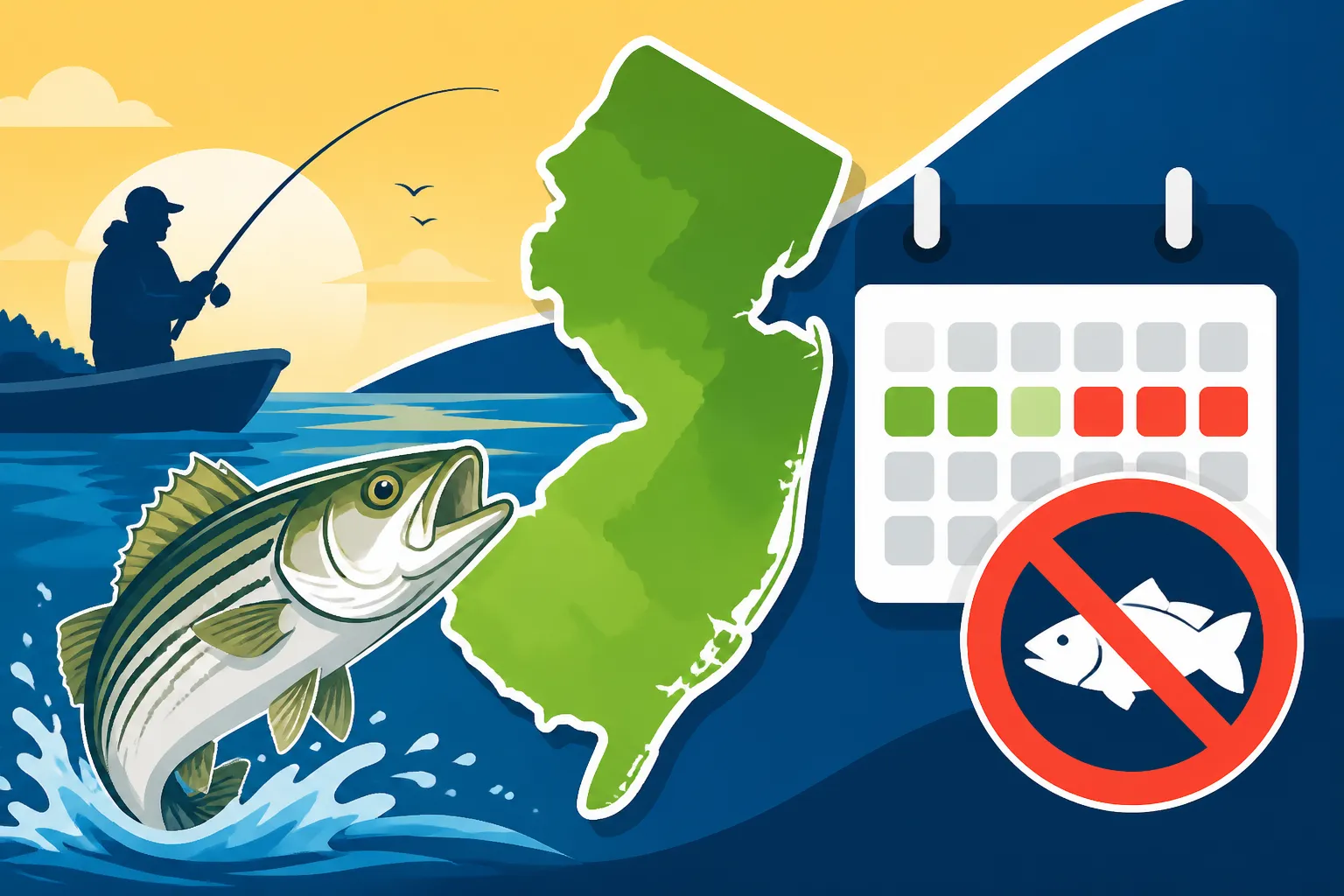
The striped bass is arguably the most iconic fish of the Jersey Shore, drawing thousands of anglers each year for its powerful fight and delicious meat. Their season is generally open for most of the year, but with a critical "slot limit" in place that dictates what size fish you can keep. This New Jersey Striped Bass Slot Limit Explained is designed to protect both the smaller, juvenile fish and the larger, older breeding females, allowing only a specific size range to be harvested. The exact slot limit and bag limit can change annually based on federal and interstate management decisions, so it's critical to check the latest regulations. You'll find two main runs for striped bass in New Jersey: the spring migration, usually from March through May, as fish move north along the coast and into the bays, and the famous fall run, from October through December, as they move south. These periods offer prime opportunities for anglers from boats, beaches, and even kayaks.
Fluke and Sea Bass: Summer Favorites
Summer in New Jersey means fluke (summer flounder) and black sea bass fishing. These are two of the most sought-after species, perfect for boat anglers and even some shore-based opportunities. The fluke season typically opens in May and runs through September or early October, providing a long window for targeting these delicious flatfish. Like striped bass, fluke also have specific size and bag limits, which are often adjusted each year in response to stock assessments. New Jersey Fluke Size and Bag Limits Explained are crucial to understand before you head out, as exceeding these limits can result in significant penalties. Black sea bass also have a staggered season, often with a spring, summer, and fall opening, allowing for targeted fishing during different periods. These seasons are generally shorter than fluke seasons and also come with specific size and bag limits. New Jersey Black Sea Bass Season Dates are important to track, as their regulations can be quite dynamic. They are often found around wrecks and reefs, making them a popular target for party boat and charter trips.
Tautog, Drum, and Other Coastal Species
Beyond the headliners, New Jersey offers great fishing for a variety of other coastal species, each with its own season. Tautog, or "blackfish," are a challenge to catch but highly prized for their meat. Their season typically includes spring and fall windows, often with a closure during the summer months to protect them during warmer, more vulnerable periods. New Jersey Tautog Season and Size Limit are generally quite restrictive due to their slow growth rate and popularity. Drumfish, specifically black drum and red drum, also have distinct seasonal opportunities, primarily in the bays and nearshore ocean during spring and early summer. Weakfish, while not as abundant as they once were, still offer a chance for anglers in certain areas, with their season generally open year-round but with very tight bag limits to support their recovery. Even species like bluefish, which can be found almost year-round, will have varying bag limits depending on their migratory patterns and population health. Each of these species contributes to the rich tapestry of New Jersey's saltwater fishery, but requires diligent checking of the regulations.
Seasonal Closures and Restrictions
While knowing when you can fish is important, understanding when and why certain areas or species are closed to fishing is equally vital. These closures are rarely arbitrary; they serve critical conservation purposes.
Pre-Season Trout Closures: Protecting the Stock
One of the most common and often debated closures is the pre-season trout closure. As mentioned earlier, designated trout waters are closed for a period, typically a few weeks before opening day in April. The reason is twofold: it allows the New Jersey Division of Fish and Wildlife to stock hundreds of thousands of trout without angler interference, and it gives these newly introduced fish time to disperse throughout the waterways, reducing overcrowding in specific spots. This strategy ensures a more equitable distribution of fish and a better experience for anglers on opening day. While it means a temporary halt to freshwater fishing in those specific streams, it's a critical management tool for a successful trout program.
Spawning Closures and Protecting Vulnerable Fish
Many species have closures or modified regulations during their spawning periods to protect them when they are most vulnerable. For example, during the spring, some areas may have specific rules for species like striped bass or certain freshwater bass species when they are actively spawning. This might mean mandatory catch-and-release, or even temporary closures of specific spawning grounds, such as certain river stretches or shallow flats in bays. The idea is to allow these fish to reproduce successfully, ensuring the next generation of anglers has fish to catch. These measures are especially critical for species like river herring or shad, whose populations depend heavily on successful spawning migrations upriver.
Federal Moratoriums and Endangered Species
In some cases, fishing for certain species might be completely prohibited due to federal moratoriums or endangered species protections. While less common for recreational angling in New Jersey, it's a possibility to be aware of. Species that are federally listed as endangered or threatened are strictly off-limits, and accidental captures often require specific handling and immediate release protocols. For example, specific shark species may be protected, or certain marine mammals (like whales or dolphins) might have strict guidelines regarding incidental contact, even if you’re not targeting them directly. Staying informed means being aware of these broader conservation mandates, as fines can be steep for violations, even unintentional ones.
The Importance of the New Jersey Fish and Wildlife Digest
When it comes to New Jersey fishing regulations, your absolute best friend is the annual Reading the New Jersey Fish and Wildlife Digest. This comprehensive publication, issued by the NJDEP Division of Fish and Wildlife, is the definitive source for all current fishing season dates, bag limits, size restrictions, and other crucial rules. Trying to rely on old information or hearsay is a recipe for disaster.
Where to Find the Latest Information
The New Jersey Fish and Wildlife Digest is readily available to all anglers, and there are several ways to get your hands on it. The most up-to-date version is always accessible online on the NJDEP Fish and Wildlife website. You can download a PDF version to keep on your phone or tablet, ensuring you have it with you on the water. Physical copies are also distributed free of charge at most bait and tackle shops, sporting goods stores (including large retailers like Walmart or other fishing supply stores you might find on Amazon), and license agents throughout the state. I always recommend grabbing a physical copy each year, as it's easier to flip through while planning, and it's a great reference to have in your tackle box. Don't forget that regulations can occasionally change mid-season, so always check the online version for any emergency updates.
Decoding the Tables and Charts
The Digest can look a little intimidating at first glance, packed with tables, charts, and legal jargon. But once you understand its structure, it becomes an invaluable tool. Look for sections dedicated to freshwater and saltwater regulations. Within these sections, you'll find tables organized by species, clearly listing:
- Season Dates: The exact start and end dates when a species can be legally harvested.
- Size Limits: The minimum (and sometimes maximum, as in a slot limit) length a fish must be to be kept.
- Bag Limits: The maximum number of fish of a particular species you can keep per day.
- Gear Restrictions: Specific rules about tackle, hooks, or bait (e.g., circle hook requirements for striped bass).
- Special Regulations: Unique rules for certain bodies of water (like a specific lake having different rules than a general statewide regulation).
Take your time reading through these tables. It’s not a novel; it’s a manual. For example, you might see a table for "Fluke (Summer Flounder)" and find rows indicating different seasons (e.g., "May 1 – Sept 30," "Oct 1 – Dec 31") each with its own specific size and bag limit. It's not uncommon for different areas, such as the Delaware Bay, to have slightly different rules than the rest of the state. Knowing Delaware Bay Fluke Rules vs the Rest of New Jersey is critical if you fish those waters. Pay close attention to the footnotes, as they often contain critical caveats. Learning to navigate this document is arguably as important as learning to cast! You should also check the New Jersey Daily Bag Limits by Species for a quick overview.
Planning Your Fishing Year Around Seasons
Understanding New Jersey's fishing seasons isn't just about avoiding a fine; it's about maximizing your angling success and enjoyment. By aligning your efforts with the natural rhythms of fish migrations and behavior, you dramatically increase your chances of a great day on the water.
Spring Strategies: The Reawakening
Spring in New Jersey is an explosion of fishing opportunities. As waters warm, fish become more active, moving out of their winter haunts. This is prime time for trout, with the general opening day in April being a major event. Many anglers target the stocked waters, but wild trout streams also come alive. Concurrent with the trout action, the rivers see the arrival of migratory fish like American shad and herring, offering exciting opportunities for light tackle and fly anglers. In the saltwater, early spring marks the arrival of the first migratory striped bass. They push into the back bays and tidal rivers, hungry after their migration. Smaller stripers can be abundant, providing excellent catch-and-release action, but always check the slot limits if you intend to keep one. This is also when you might start seeing the first signs of flounder (winter flounder) in the shallower bays, though their populations are more delicate now. Gear-wise, a good selection of smaller soft plastics and plugs will serve you well for bass, and small spinners or flies for trout.
Summer Strategies: Warm Waters and Abundance
Summer is arguably the peak season for many of New Jersey's most popular species. Fluke fishing dominates the scene, with anglers drifting for these delicious flatfish in bays, inlets, and out to the nearshore ocean. Black sea bass are also abundant around wrecks and reefs, providing consistent action for bottom fishermen. Bluefish, known for their aggressive strikes, are often present along the coast and in the bays, offering fast-paced action, especially during blitzes. For freshwater anglers, largemouth and smallmouth bass are active in lakes and ponds, though they may move to deeper, cooler waters during the hottest parts of the day. Panfish remain a reliable target, great for kids and casual outings. Night fishing also becomes a popular option in summer, especially for striped bass and catfish, as cooler temperatures bring fish into shallower feeding grounds. Remember to stay hydrated and use sunscreen during those long summer days on the boat or beach. You can find excellent fishing hats and polarized sunglasses on Amazon that will significantly enhance your comfort and vision.
Fall Strategies: The Epic Runs
For many serious anglers, fall is the undisputed champion of the New Jersey fishing year. This is when the legendary striped bass fall run kicks into high gear. Millions of baitfish, like bunker and mullet, migrate south along the coast, and striped bass follow close behind, creating incredible feeding frenzies that can stretch for miles. Surf casters, boat anglers, and kayak fishermen all converge to participate in this epic event. Bluefish are also often mixed in, adding to the excitement. Fall also sees a second stocking of trout in many freshwater locations, providing excellent angling opportunities well into November. The cooling waters stimulate activity in pike, muskie, and walleye as they feed aggressively before winter. Offshore, tuna and other pelagic species are often still a viable target during the early fall, making it a truly diverse season. Preparing for the fall run often involves having a good surf rod and reel combo and a selection of larger plugs and jigs.
Winter Strategies: Ice and Brackish Opportunities
While many anglers pack it in after the fall run, winter in New Jersey still offers unique fishing opportunities, especially for the hardy souls who embrace the cold. When ice conditions are safe and thick enough, ice fishing becomes popular on many northern lakes and ponds for species like yellow perch, crappie, pike, and even trout in certain waters. Always prioritize safety and check ice thickness before venturing out. For those who prefer open water, tidal rivers and back bays can hold resident striped bass, pickerel, and perch, especially in brackish waters where temperatures might be slightly warmer. These fish often move to deeper holes and can be targeted with slower presentations. It's a quieter, more introspective time to fish, rewarding patience and knowledge of winter fish behavior. A solid pair of insulated waterproof boots and layered clothing are essential for winter fishing, all easily sourced online if you need to upgrade your cold-weather gear.
How Regulation Changes Impact Anglers
The fishing world isn't static, and regulations can shift. It's a reality every angler must face, and understanding how and why these changes happen can make it easier to adapt.
Emergency Closures and Rule Adjustments
Sometimes, despite the best planning, unforeseen circumstances necessitate immediate changes to fishing regulations. This could be due to a sudden, drastic decline in a fish population, an unexpected environmental event like a major fish kill, or new scientific data that reveals a critical vulnerability. In such cases, the NJDEP Division of Fish and Wildlife, often in coordination with federal agencies, can implement emergency closures or adjust rules mid-season. These changes are typically announced with urgency and widely publicized through their website, social media, and direct alerts to license holders. While frustrating for anglers who have planned trips, these emergency measures are vital for preventing long-term damage to fish stocks. Being subscribed to email alerts from the NJDEP Fish and Wildlife is an excellent way to stay informed about any sudden changes. For example, New Jersey Can Change Bag Limits Mid-Season if conditions warrant it.
Advocacy and Public Input: Your Voice Matters
It's easy to feel like regulations are handed down from on high with no input from the angling community. However, this isn't entirely true. The NJDEP Division of Fish and Wildlife holds public meetings and solicits feedback from anglers before enacting major regulatory changes. These meetings, often publicized on their website and through advisory council announcements, provide an opportunity for you to voice your concerns, share your observations from the water, and contribute to the decision-making process. Angling organizations and conservation groups also play a crucial role in advocating for recreational fishermen and lobbying for responsible management. Becoming a member of such a group or simply attending a public meeting is a powerful way to have your voice heard and influence the future of fishing in New Jersey. Remember, you have a stake in these resources, and your input matters. You can learn more about How New Jersey Sets Its Fishing Regulations Each Year to understand the process.
Disclaimer
Please remember that fishing regulations, season dates, and limits are subject to change. While every effort has been made to provide accurate and up-to-date information in this guide, it is ultimately the angler's responsibility to consult the most current New Jersey Fish and Wildlife Digest before heading out on the water. Always verify all regulations with the official New Jersey Department of Environmental Protection, Division of Fish and Wildlife, or through their official website.