Absecon Bay Fluke Fishing Near Atlantic City
Trying to figure out where to chase fluke around Atlantic City can feel like searching for a needle in a haystack, especially with so many waterways. It's easy to get overwhelmed by the sheer volume of water, wondering which channels hold fish and which tides are best. This comprehensive guide is here to unravel the mysteries of Absecon Bay fluke fishing, offering clear insights into prime locations, effective techniques, and crucial regulations to help you land that keeper summer flounder.
Understanding Absecon Bay for Fluke Fishing
Absecon Bay, nestled right behind Atlantic City and stretching towards Brigantine, isn't just a pretty backdrop; it's a dynamic estuary system teeming with life, making it a fantastic locale for targeting fluke. Many anglers, especially those new to the area, often overlook the bay in favor of the open ocean, but they're missing out on some incredible action. The bay offers a unique environment that fluke absolutely thrive in, provided you know where to look and what to look for.
Bay Characteristics and Structure
Absecon Bay itself is a complex network of channels, mudflats, sandbars, and oyster beds, all connected by tidal flows. Unlike the uniform depths of the open ocean, the bay's bottom contour is constantly changing, creating numerous ambush points for predatory fish like fluke. The average depth throughout much of the bay is relatively shallow, often ranging from 5 to 15 feet, but there are deeper channels, particularly near the inlets and bridges, that can drop to 20-30 feet or more. These deeper cuts are critical, especially during strong current or hotter summer months when fluke seek cooler water and escape from swift flows.
The bay is fed by several smaller creeks and rivers, bringing in freshwater and nutrients, which creates a rich ecosystem. This freshwater influence, combined with the saltwater coming in from the Atlantic Ocean through Absecon Inlet, results in a brackish environment. Salinity levels fluctuate with the tides and rainfall, influencing baitfish movements and, consequently, where the fluke will be holding. Keep an eye on the water clarity too; after heavy rains, the bay can get muddy, which can sometimes make fishing tougher, but fluke are resilient and will often just move to cleaner water pockets or feed by scent. The tides here are significant, with strong currents often ripping through the main channels. Understanding these currents is paramount, as fluke are ambush predators that rely on the tide to bring food to them.
Why Absecon Bay is Prime for Fluke
Absecon Bay is truly a fluke haven for several compelling reasons, making it one of the most productive fishing grounds near Atlantic City. Firstly, it functions as a crucial nursery ground for a vast array of baitfish, including spearing, mullet, killifish, and juvenile menhaden (bunker). These abundant food sources are the primary reason why fluke congregate here. As the water warms in spring, baitfish migrate into the shallower, warmer bay waters to feed and reproduce, and the fluke follow right behind them, ready to feast.
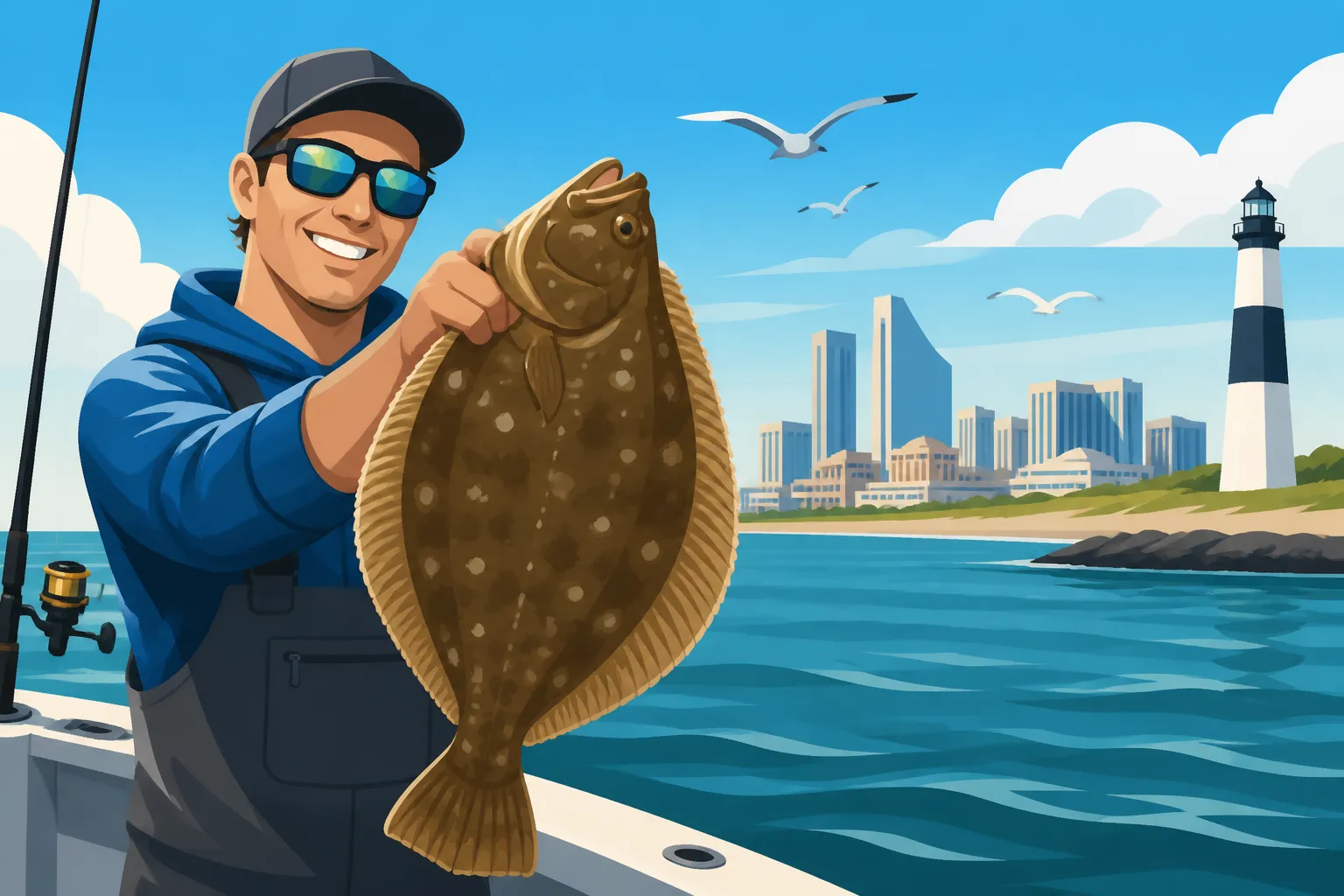
Secondly, the bay's diverse bottom structure provides ideal habitat. Fluke, also known as summer flounder, are masters of camouflage, burying themselves in the sand or mud, waiting to ambush unsuspecting prey. The numerous sand flats, drop-offs, and even scattered debris like old pilings or clam beds offer perfect hiding spots. The interplay of shallow flats next to deeper channels creates natural highways and resting areas for fluke. As the tide pushes in or out, these fish position themselves along channel edges or behind submerged structures, letting the current do the work of delivering their next meal. This dynamic environment means that if one spot isn't producing, another just a short boat ride away might be holding a school of hungry fish. The bay is also less susceptible to the wilder conditions of the open ocean, offering calmer waters on many days, which is a huge bonus for smaller boats and more comfortable fishing.
Key Fluke Fishing Spots Within Absecon Bay
Knowing why Absecon Bay is good for fluke is one thing, but knowing where to drop your line is another. The bay offers a variety of productive spots, whether you're fishing from a boat or trying your luck from shore. Each area has its nuances, and understanding them can significantly improve your chances of success.
Specific Hotspots for Boat Anglers
For those with access to a boat, Absecon Bay opens up a world of possibilities. One of the most consistently productive areas is the main channel leading from Absecon Inlet. This channel, often marked by buoys, features deeper water and strong currents, acting as a major highway for baitfish and migrating fluke. Drifting along the edges of this channel during a strong tide can be incredibly effective. Look for areas where the channel narrows or bends, as these create current breaks and eddies where fluke will often stack up.
Another prime location is around the various bridges connecting Atlantic City to the mainland or Brigantine, such as the Brigantine Bridge or the Atlantic City Expressway Bridge. The pilings and bridge structure create significant current breaks and scour holes where fluke love to hide. Drifting or even anchoring up-current and casting towards the pilings can yield excellent results. However, be mindful of boat traffic and strong currents around these structures. Just north of Atlantic City, the area around Rum Point and the adjacent channels offers expansive mudflats and deeper guts that are very productive, especially during the peak summer months. These areas are characterized by grass beds and oyster shell bottoms, providing both food and cover for fluke. Using a fishing guide service found on platforms like FishingBooker can often pinpoint these less obvious but highly productive zones. They know the subtle nuances of the bay that only years of experience can teach.
The back bay waters towards Somers Point and Ocean City, while technically outside the immediate Absecon Bay definition, are connected through various channels and share similar characteristics, often holding excellent numbers of fluke as well. Don't be afraid to explore some of the shallower flats too, particularly on an incoming tide. Sometimes the biggest fluke are found in surprisingly shallow water, especially early in the season or during cooler periods when the sun warms the flats.
Shoreline Access Points
Not everyone has a boat, and that's perfectly fine! Absecon Bay still offers some great opportunities for shore anglers. One of the most popular and accessible spots is the area around the Frank S. Farley Service Plaza on the Atlantic City Expressway. While primarily a service area, there are spots along the causeway where you can safely fish. The bridges and causeway create structure and current, drawing baitfish and hungry fluke. This is a great spot for those without a boat, offering a taste of bay fishing.
Another excellent option is the shoreline near the Brigantine Bridge. There are designated fishing areas and bulkheads on both the Atlantic City and Brigantine sides where anglers can cast. The deep water and strong currents under the bridge make it an ideal ambush point for fluke. You'll often see anglers setting up here with long surf rods, casting bucktails or bait rigs. Remember that a valid fishing license and a New Jersey Saltwater Registry are required even when fishing from shore. You can find more detailed information on the requirements for a New Jersey Saltwater Registry Program Requirements to ensure you're fishing legally.
For those willing to explore a bit, smaller parks and undeveloped areas along the bayfront in places like Brigantine or Galloway Township might offer intermittent access. Always respect private property and posted signage. While shore fishing can be a bit more challenging due to limited casting range, strategic placement of your bait or lure during peak tidal flows can still result in a rewarding catch. Focus on areas with current, drop-offs, or any visible structure like old pilings or docks, as these are where fluke will concentrate.
Essential Techniques and Tackle for Absecon Bay Fluke
Successfully catching fluke in Absecon Bay isn't just about finding the right spot; it's also about employing the right techniques and having the proper gear. Fluke are cunning predators, and understanding their behavior will give you a significant advantage.
Best Baits and Lures
When it comes to fluke, presentation is often as important as the bait itself. The absolute cornerstone of fluke fishing in Absecon Bay is live bait. Nothing beats a lively peanut bunker, spearing, or killifish for attracting a hungry fluke. These baits mimic the natural forage in the bay perfectly. You can rig them on a traditional three-way swivel rig with a leader and a hook, or on a simple snell rig under a bucktail. The movement of the live bait is often irresistible. For those interested in Best Bait for Fluke Fishing, a deeper dive into the specifics can be very helpful.
However, live bait isn't always practical or available, which is where Gulp! artificial baits really shine. Berkley Gulp! Alive! shrimp, minnows, and swimming mullet in white, chartreuse, or natural baitfish colors are incredibly effective. These baits release a powerful scent that fluke home in on, and their action in the water is remarkably lifelike. Many anglers find them even more effective than fresh cut bait. The eternal debate of Gulp Bait vs Live Bait for Fluke Fishing is a real one, but both have their place in your tackle box.
Bucktail jigs are another indispensable tool. They are versatile and can be tipped with a piece of squid, a strip of fluke belly, or a Gulp! trailer. Jig weights typically range from 1/2 oz to 2 oz, depending on current and depth. Chartreuse, white, pink, and glow are all excellent colors. The key is to keep the bucktail "dancing" near the bottom, mimicking a scurrying baitfish. For a full breakdown on how to properly work these lures, check out a guide on How to Fish for Fluke in New Jersey.
For rigs, the classic teaser rig is extremely popular. This involves a bucktail or heavy sinker at the bottom, with one or two dropper loops above it, each with a small hook and a teaser (often a soft plastic or a bucktail fly). The teaser provides an extra visual target, and it's not uncommon to catch two fluke at once on this setup!
Drifting vs. Anchoring Strategies
Your fishing technique in Absecon Bay will largely depend on the currents and the specific spot you're targeting. Drifting is by far the most popular and effective method for fluke in the bay, especially for covering ground and finding where the fish are holding. You allow your boat to drift with the current, dragging your bait or lure along the bottom. This presents your offering naturally and allows you to cover a wide area, hitting various depths and structures. The ideal drift speed is often a slow crawl, allowing your bait to stay close to the bottom without snagging too frequently. Sometimes, a sea anchor (drift sock) is needed to slow your drift if the current is too strong. Learning How to Drift Fish for Fluke effectively is a skill that will pay dividends.
Anchoring can also be effective, particularly in areas with specific structure, like bridge pilings, wrecks, or oyster beds, where you know fluke are concentrated. When anchoring, try to position your boat up-current from the structure, allowing your bait to drift back into the strike zone. This method is often preferred when fishing with live bait in a very localized area. Chumming (using ground bait to attract fish) can also be done while anchored, though it's less common for fluke than for other species.
| Bait/Lure Type | Description | Best Conditions/Usage |
|---|---|---|
| Live Bait | Peanut bunker, spearing, killifish, minnows | All conditions, especially effective on picky fish. Requires careful rigging. |
| Berkley Gulp! | Artificial scented soft plastics (minnows, shrimp, swimming mullet) | All conditions, especially good when live bait is scarce. White, chartreuse, natural colors. |
| Bucktail Jigs | Lead head jigs with deer hair or synthetic skirts | Strong currents, deeper channels. Tip with Gulp! or natural bait for added appeal. |
| Squid Strips | Fresh or frozen squid cut into strips | Great added scent and visual appeal for bucktails and bait rigs. Very versatile. |
| Fluke Belly Strips | Freshly cut strip from a legal fluke's belly | Highly effective natural bait, excellent scent and durability. |
Always remember that regulations are crucial. For example, the New Jersey Fluke Size Limit: 18 Inches is strictly enforced, and you'll want to be familiar with the New Jersey Fluke Bag Limit Explained before heading out. Carry a measuring device!
Optimal Conditions for Fluke Success in Absecon Bay
Fishing success isn't just about location and technique; it's also heavily influenced by the conditions. Understanding how tides, time of year, and even time of day affect fluke behavior in Absecon Bay can turn a slow day into a banner one.
Tidal Influence
The tide is arguably the single most important factor when fishing for fluke in Absecon Bay. Fluke are ambush predators that use the current to their advantage, positioning themselves to intercept baitfish swept past them. Generally, a moving tide is best, whether incoming or outgoing. Strong currents bring food to the fluke, making them more active and willing to strike. Many experienced anglers prefer the last hour or two of the outgoing tide and the first hour or two of the incoming tide. This is often when the baitfish are most disoriented, moving with the current, and thus easier targets for the fluke.
During the slack tide, when the water is barely moving, fishing can slow down considerably. The fluke have less current to assist them in hunting, and baitfish are less active. However, slack tide isn't always a bust. Sometimes, larger fluke will move into deeper holes or structures during slack, and a carefully presented bait directly on their nose can still entice a bite. It's often a good time to move to a new spot or take a break, waiting for the current to pick up again. Pay close attention to local tide charts; the timing of high and low tide in Absecon Bay will differ from the oceanfront. Stronger tides, often associated with new or full moons, can also be productive, but may require heavier sinkers or jigs to stay on the bottom.
Time of Year and Day
The time of year is critical for fluke fishing in Absecon Bay. The official New Jersey Fluke Season Dates for 2026 typically run from May into September or even early October, but the peak action in the bay usually occurs from late May through August.
- Spring (May-June): As the water in Absecon Bay warms up, fluke move in from the ocean. They can be found in shallower areas, especially sun-drenched flats, looking for smaller baitfish. This is a great time for numbers, though the average size might be smaller.
- Summer (July-August): This is prime time. Fluke are abundant throughout the bay, from the channels to the flats. As bay waters get warmer, larger fluke often migrate into deeper channels and holes to find cooler water. This is when you'll find a mix of sizes and the best chances at a true doormat.
- Fall (September-October): As the water cools, fluke begin their migration out of the bay and back to the ocean. They can still be caught, often in larger sizes, especially around the main inlet and deeper channels as they prepare to leave. This can be a fantastic time for trophy fluke.
For a broader understanding, you might also want to consult resources on the Best Time of Year to Fish for Fluke in New Jersey.
As for the time of day, while fluke can be caught throughout daylight hours, early morning and late afternoon often prove most productive, especially during the hot summer months. These cooler periods can coincide with more active baitfish movements and stronger tidal pushes. Overcast days can also extend the "prime time" as the reduced sunlight can keep fluke more active in shallower water. However, if the tide is ripping and bringing food, fluke will bite even in the middle of a sunny day. The most important thing is to be out there when the conditions are right, combining a strong tide with the right season. Many local charter captains and guides listed on FishingBooker can tell you the best times to fish based on current conditions and recent reports, offering invaluable insights.
Navigating Regulations and Responsible Fishing
Beyond knowing where and how to fish, understanding the rules and practicing responsible angling is vital for maintaining the health of Absecon Bay's fluke population and ensuring good fishing for years to come.
Understanding Fluke Specific Regulations
New Jersey has specific regulations for fluke (summer flounder) that every angler must abide by. These rules are put in place by the New Jersey Division of Fish and Wildlife and often align with federal guidelines, aiming to manage fish stocks sustainably. As mentioned earlier, the most critical regulations involve New Jersey Fluke Size Limit: 18 Inches and the New Jersey Fluke Bag Limit Explained. These limits can change annually, so it's paramount to check the current New Jersey Fish and Wildlife Digest or their website before each season. Typically, the size limit requires fluke to be a certain length (often 18 inches, as of recent years) to be legally kept, and there's a daily bag limit (e.g., 2-3 fish per person). There may also be different rules for various regions, such as the Delaware Bay Fluke Rules vs the Rest of New Jersey, though Absecon Bay generally falls under the general coastal regulations.
It's also important to know How to Tell If a Fluke Is Legal Size. Lay the fish flat and measure it from the tip of its snout to the end of its tail, ensuring its mouth is closed. If it's short, it must be immediately released. Handling fish gently, especially those you intend to release, is a crucial part of responsible angling. Try to minimize their time out of the water and use appropriate de-hooking tools.
The Importance of the Saltwater Registry
Any angler 16 years of age or older fishing in New Jersey's marine and estuarine waters (which includes Absecon Bay) for summer flounder, even from shore, is required to register with the New Jersey Saltwater Recreational Registry Program. This registry is free and helps the state collect vital data on fishing effort, which is used to manage fish stocks effectively. It's a simple process that can be completed online. You can learn more about New Jersey Saltwater Registry Explained and detailed steps on New Jersey Saltwater Registry Program Requirements to ensure you are fully compliant. This is separate from a freshwater fishing license, and even if you have one, you still need to register for saltwater fishing. Failing to register can result in a fine, so it's not something to overlook!
This data collection is crucial. It helps biologists understand population trends, migration patterns, and the overall health of the fishery. By participating, you're directly contributing to better management decisions that help ensure there are plenty of fluke for future generations of anglers to enjoy. So, before you head out to Absecon Bay for some fantastic fluke action, double-check your registration and be aware of the latest regulations. It's a small effort that makes a big difference.
Disclaimer
Fishing regulations, seasons, and licensing requirements can change. Always consult the official New Jersey Department of Environmental Protection (NJDEP) Division of Fish and Wildlife website or the current annual New Jersey Fish and Wildlife Digest for the most up-to-date information before planning your fishing trip. This guide is for informational purposes only and does not constitute legal advice.