New Jersey Catfish Species Guide
We've all been there: scanning the latest fishing reports, dreaming of trophy striped bass or plump fluke, and sometimes, in our pursuit of the glamour species, we completely overlook the incredible fishing opportunities right under our noses. Catfish in New Jersey are often seen as a secondary target, but I'm here to tell you that these whiskered wonders offer some of the most consistent action and delicious table fare in our state. This comprehensive guide will illuminate the diverse world of New Jersey's catfish species, helping you identify them, find their prime habitats, and equip you to catch them, adding a new dimension to your angling adventures.
The Allure of New Jersey Catfishing: Why They're Worth Your Time
It's easy to get caught up in the hype surrounding the latest striper run or the opening day of trout season, but for many anglers, especially those just starting out or looking for a more relaxed outing, catfish are an absolute treasure. They're often abundant, can be found in a wide variety of waters, and put up a surprisingly strong fight.
Overlooked Gems: The Fight and the Feast
Let's be honest, many folks think of catfish as bottom-dwelling mudsuckers, not worthy of a dedicated fishing trip. But that's a huge misconception! Catfish, especially the larger channel cats, are tenacious fighters. They don't make blistering runs like a bluefish, but they dig hard, pull relentlessly, and won't give up until they're in the net. Landing a big channel cat from a river current can be a true test of your tackle and skill, providing an exhilarating experience that rivals many more celebrated game fish. It's a different kind of fight, perhaps less flashy, but every bit as satisfying.
Then there's the eating. Oh, the eating! Freshly caught New Jersey catfish, particularly the smaller and medium-sized ones (say, under 5 pounds), are absolutely delicious. Their flesh is firm, flaky, and has a mild flavor that can be pan-fried, baked, or even grilled. The "muddy" taste often associated with catfish usually comes from fish caught in stagnant, poor-quality water, or simply from improper cleaning. If you bleed your catfish immediately and fillet them cleanly, removing any dark meat, you'll be rewarded with fantastic fillets. Trust me, once you taste properly prepared New Jersey catfish, you'll wonder why you ever ignored them.
Furthermore, these fish offer an accessible thrill. You don't always need a fancy boat or expensive electronics. Many of New Jersey's public ponds, lakes, and riverbanks are teeming with catfish, making them perfect for a casual afternoon trip. They're often less pressured than trout or bass, meaning you have a better chance of consistent bites.
Resilient and Widespread: A Fishery for Everyone
One of the greatest attributes of catfish is their incredible adaptability. They can thrive in conditions that would send other fish packing. From the slow, silty rivers of South Jersey to the deeper, clearer lakes in the north, you can find catfish. They tolerate a wide range of water temperatures and oxygen levels, which means they're often one of the few species actively biting when others have shut down. This resilience makes them a fantastic target for almost any angler, regardless of their preferred fishing environment.
Because they're so widely distributed and often eager to bite, catfish are truly a "gateway" fish. There's nothing quite like the excitement of a bent rod and a tug on the line to hook a new angler, especially a child, on the sport. Catfishing requires fairly simple gear and straightforward techniques, which makes it ideal for introducing kids to the joys of fishing without overwhelming them with complex setups or frustrating periods of no bites. Many of New Jersey's local parks and lakes, often overlooked by serious anglers, hold abundant populations of bullheads and channel cats, perfect for a family outing. You might find that participating in New Jersey Youth Fishing Programs and License Waivers exposes you to some prime catfish opportunities.
What's more, catfish provide angling opportunities throughout much of the year. While their bite might slow down significantly during the coldest winter months, they remain active well into late fall and can be caught early in spring. This extends your fishing calendar, offering exciting options when other seasonal species are out of reach. It's a great way to stay connected to the water, practice your skills, and still bring home some fresh fillets for dinner.
The Big Three: Channel Catfish, White Catfish, and Brown Bullhead
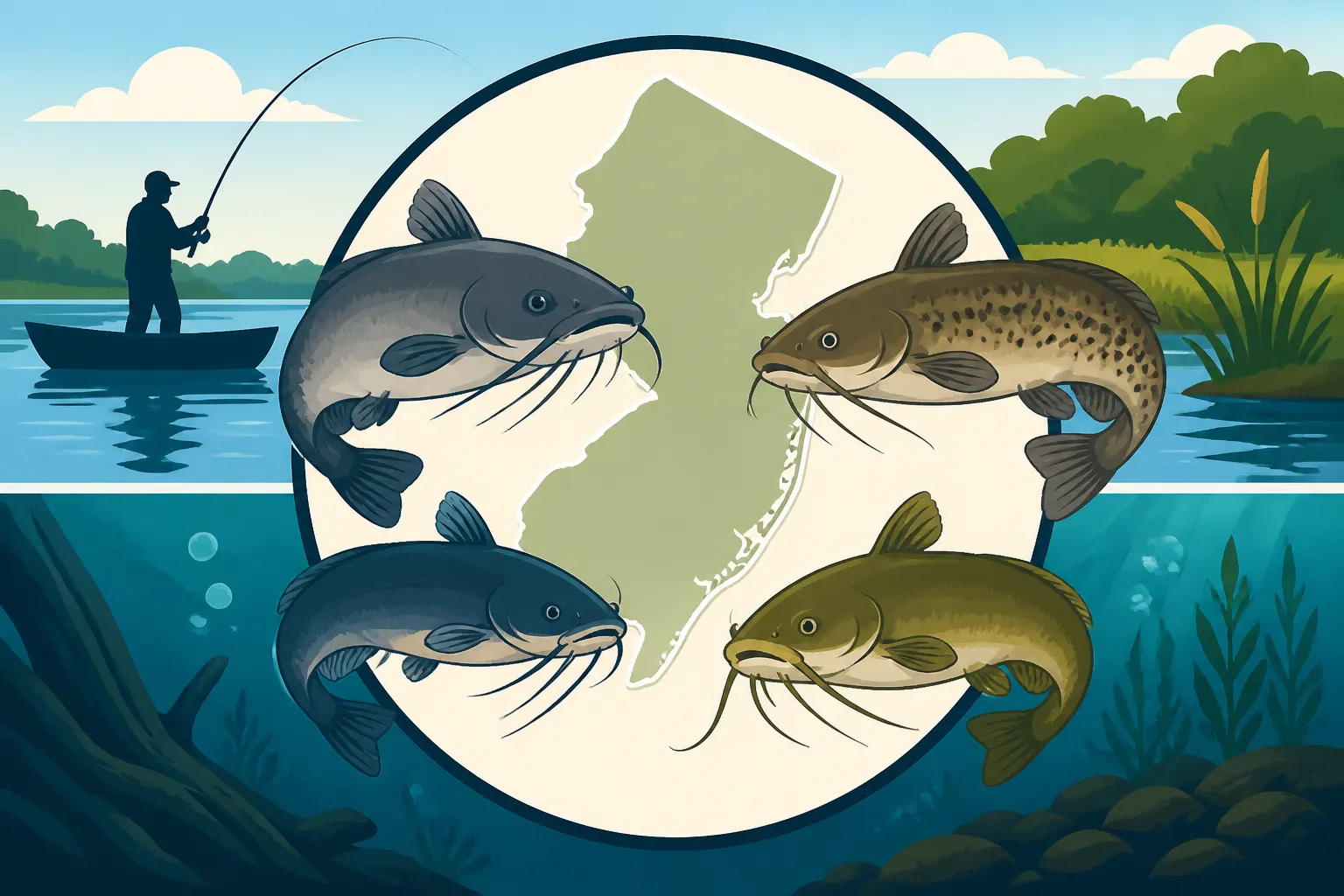
In New Jersey, when most anglers talk about catfish, they're typically referring to three main species: the Channel Catfish, the White Catfish, and the Brown Bullhead. Each has its own distinct characteristics, preferred habitats, and fighting styles, though they all share that iconic whiskered face. Knowing how to identify them will not only deepen your appreciation for these fish but also help you tailor your techniques for better success.
Channel Catfish: The Sporty Whiskered Warrior
The channel catfish is, without a doubt, the most popular and sought-after catfish species in New Jersey. They're built for speed and power, with a sleek, torpedo-shaped body that sets them apart from their chunkier cousins. The most distinctive feature is their deeply forked tail, which gives them the power to fight hard and fast in moving water. Younger channel cats often have dark spots on their sides, which tend to fade as they mature. Their mouth is fairly large, capable of engulfing substantial baits, and their barbels (whiskers) are usually dark.
Channel cats love structure and current. You'll find them in larger rivers like the Delaware, Raritan, and Passaic, especially in deeper holes, around submerged logs, rock piles, or bridge pilings where they can ambush prey and find refuge from strong currents. They also thrive in many of our larger lakes and reservoirs, such as Mercer Lake or Assunpink Lake, preferring deeper sections with access to open water. They are active hunters, often patrolling for food rather than just sitting and waiting.
Fishing for channel catfish is a blast. They hit hard and fight with incredible determination. For bait, think scent: cut bunker, clam bellies, chicken livers, and even large nightcrawlers are excellent choices. A simple bottom rig, often a slip sinker rig with a wide gap or circle hook, is effective. Casting into current seams, near drop-offs, or alongside submerged structure will increase your odds. Remember, these fish use their powerful forked tails to their advantage, so be ready for a strong pull! As for their diet, they're quite opportunistic. You might be interested in reading What Do Channel Catfish Eat? to better understand their feeding habits.
Channel catfish can grow quite large in New Jersey, with some reaching double-digit weights. The smaller ones, generally under 3-4 pounds, are considered excellent table fare, offering firm, white, mild-flavored meat. Larger fish can sometimes develop a stronger taste, but a good cleaning process can mitigate this. They're a fantastic species for both sport and dinner.
White Catfish: The Chunky Bottom Dweller
The white catfish is another common and popular species in New Jersey, often found in slightly different habitats than its channel cat cousin. These fish have a noticeably chunkier, more robust body compared to the streamlined channel cat. Their most distinguishing feature is their tail, which is either slightly notched or entirely rounded, never deeply forked. They also tend to have a paler, often yellowish-white belly, and their barbels are typically white or pale. Sometimes they might have a slight greenish or bluish tint to their overall coloration, especially in cleaner waters.
Unlike channel cats who prefer current, white catfish are more at home in slower-moving waters, ponds, smaller lakes, and especially brackish estuaries and tidal rivers. They're very tolerant of varying salinity levels, so you can catch them in places like Barnegat Bay or the tidal sections of the Mullica or Maurice rivers. They often hang out in areas with soft, muddy bottoms, weed beds, and plenty of submerged cover, where they can root around for food. They don't mind warmer water and can be found in many of New Jersey's smaller, shallower impoundments.
Fishing for white catfish is generally quite similar to channel cats, but they're often less finicky. While they'll certainly hit chicken livers and cut bait, they also respond incredibly well to "prepared" baits like dough balls, corn, and even pieces of hot dog or shrimp. They're a favorite target for casual bank anglers because they're so accessible and willing to bite. A simple bobber rig or a light bottom rig with a small sinker can be very effective. Look for them around weed lines, dock pilings, or any submerged structure in calm, shallow to medium-depth water.
White catfish typically don't grow as large as channel cats, but they can still reach impressive sizes, often in the 2-5 pound range. What they lack in size, they often make up for in abundance. They are highly regarded for their eating quality, often praised for their sweet, mild, and flaky flesh. Many anglers consider them even better eating than channel catfish, especially the smaller ones.
Brown Bullhead: The Small but Mighty Scavenger
The brown bullhead is perhaps the most ubiquitous catfish in New Jersey, and probably the most recognized, even by non-anglers. These tough little fish are characterized by their dark brown to almost black coloration, often mottled or blotchy. Their tail is square or very slightly rounded, much like a white catfish, but their overall shape is more robust and less tapered at the tail. Their barbels are usually dark, matching their body color. They don't have the spots of juvenile channel cats or the pale belly of white cats.
Brown bullheads are the ultimate survivors and can be found almost everywhere there's water. They thrive in muddy ponds, slow-moving streams, marshy areas, and weed-choked lakes – often in places where other fish struggle to exist. If a body of water holds fish, chances are it holds brown bullheads. They prefer soft, mucky bottoms where they can dig for insects, crustaceans, and detritus, but they'll happily forage in almost any habitat. Their resilience is truly remarkable, and they're often the most common catch in smaller, shallower water bodies.
If you're looking for consistent action, brown bullheads are your fish. They are probably the easiest catfish to catch, willing to hit almost any bait presented to them. Worms are a perennial favorite, but they'll also gobble up corn, hot dogs, bread balls, or even small pieces of cheese. Light tackle is all you need – a simple spinning rod, small hook, and a bobber or small sinker is perfect. They're a fantastic target for beginners and kids due to their aggressive feeding habits and widespread availability. You can literally drop a worm off a dock in many New Jersey ponds and expect a bite.
Brown bullheads are generally smaller fish, rarely exceeding a pound or two, though some can grow larger in prime conditions. While they may not offer the drag-screaming runs of a channel cat, they provide constant entertainment and are surprisingly good to eat when caught from clean waters. Their firm, flavorful meat is excellent for frying, and because you can often catch so many, they make for a plentiful meal.
Beyond the Big Three: Other Catfish Species (and Lookalikes) in NJ
While channel catfish, white catfish, and brown bullheads dominate the New Jersey catfishing scene, our waters can occasionally surprise you with other whiskered inhabitants. Some are native but less common, while others are invasive species that require special attention.
Yellow Bullhead and Black Bullhead: Subtle Differences
Beyond the common brown bullhead, New Jersey also hosts populations of yellow bullheads and, to a lesser extent, black bullheads. Distinguishing between these bullhead species can sometimes be tricky, even for experienced anglers, as they share many characteristics. However, there are some key tells.
The yellow bullhead is often identified by its, well, yellowish belly and chin barbels that are typically white or pale yellow, contrasting with its darker back and sides. The tail is usually rounded, and its body is generally less stout than a brown bullhead. They tend to prefer cleaner water than brown bullheads, often found in slow-moving streams, ponds, and small lakes with clear water and abundant vegetation. While they can coexist with brown bullheads, they often occupy slightly different niches within the same water body. They feed on similar fare – insects, crustaceans, and detritus – and will readily take common baits like worms.
The black bullhead, as its name suggests, is typically a darker, almost uniform black or dark olive color. Its chin barbels are usually dark, like the brown bullhead, but a key identifying feature is often a pale or whitish bar at the base of its caudal (tail) fin, though this can fade. The tail is usually squarish to slightly rounded. Black bullheads are known for their extreme hardiness and ability to tolerate poor water quality, even more so than brown bullheads. They are less common than brown or yellow bullheads in New Jersey but can be found in isolated ponds and slow-moving streams, particularly in the western and southern parts of the state. They are also opportunistic feeders and easy to catch on similar baits.
For the casual angler, distinguishing these three bullhead species might not seem critical, as their fishing methods and eating qualities are very similar. However, knowing the subtle differences can enhance your understanding of the local ecosystem and the specific conditions that each species prefers.
Flathead Catfish: An Emerging Presence (Careful!)
The flathead catfish is a species that has generated both excitement and concern in New Jersey's angling community. While native to the Mississippi River basin, flatheads have been introduced to various river systems outside their native range, including some in New Jersey, largely through illegal stocking. These are impressive fish, capable of growing to enormous sizes – well over 50 pounds in some cases. Their identification is quite distinct: they have a noticeably flattened head, a protruding lower jaw (giving them a perpetual frown), small eyes, and a unique mottled brown and yellow coloration. Unlike channel cats, their tail is not deeply forked; it's usually square or only very slightly notched.
Flathead catfish are ambush predators. They primarily feed on live fish, making them a significant threat to native fish populations in the ecosystems where they are introduced. Their presence can disrupt the delicate balance of a local fishery by outcompeting or preying upon desirable native species. For this reason, in many areas where they are non-native, including parts of New Jersey, there's often a strict "do not release" policy if one is caught. You'll want to review What Invasive Fish Species Are Found in New Jersey Waters? for more details on this topic.
If you are targeting flatheads, you'll need heavy gear and, almost exclusively, live bait. Small sunfish, bluegills, or other legal baitfish are prime choices. They tend to inhabit deep holes, log jams, and heavy cover in large rivers, waiting for unsuspecting prey to swim by. Fighting a large flathead is an epic battle, as they use their broad heads and powerful bodies to stay glued to the bottom.
It is absolutely crucial for anglers to be aware of the regulations concerning flathead catfish in New Jersey. Always check the current New Jersey Fish and Wildlife Digest for the most up-to-date information on any "do not release" mandates or reporting requirements for this invasive species. Catching one can be a thrill, but responsible angling means adhering to conservation guidelines to protect our native fisheries.
Madtoms and Stonecats: The Little Guys
While not typically targeted by anglers, it's worth noting the presence of smaller, native catfish species like madtoms and stonecats in some of New Jersey's cleaner streams and rivers. These are diminutive fish, usually only a few inches long, and are more likely to be encountered accidentally than intentionally. They are often mistaken for juvenile versions of larger catfish species.
Madtoms are characterized by their small size (most are under 6 inches), a generally slender body, and importantly, they possess a mild venom in the pectoral and dorsal spines. A poke from a madtom can be surprisingly painful, similar to a bee sting, so handling them with care is advised. They are typically found in clear, rocky streams and rivers, often hiding under stones or in crevices. They play an important ecological role as detritivores and prey for larger fish.
Stonecats are another small species, similar in appearance to madtoms but typically a bit more robust and also possessing venomous spines. They also prefer rocky stream beds and are incredibly well-camouflaged, blending in perfectly with their surroundings. Both madtoms and stonecats are nocturnal, primarily feeding on aquatic insects and small invertebrates.
For the average angler, encountering a madtom or stonecat is a rare event, usually happening when flipping rocks in a stream or as an incidental catch on very small bait. While not sport fish, they are a fascinating part of New Jersey's aquatic biodiversity. If you do happen to catch one, handle it carefully to avoid a painful jab, and release it unharmed.
Where to Find New Jersey Catfish: Habitats and Hotspots
One of the beautiful things about catfishing in New Jersey is their sheer ubiquity. You can find them in nearly every type of freshwater, and even some brackish, environment across the state. Knowing their preferred habitats can significantly increase your chances of success, whether you're looking for a trophy channel cat or a mess of bullheads for the frying pan.
Freshwater Lakes and Ponds: Accessible Catfish Havens
New Jersey's vast network of freshwater lakes and ponds are prime real estate for catfish, especially white catfish and bullheads, but also many healthy populations of channel cats. These water bodies offer the slow-moving or still water, soft, muddy bottoms, and abundant cover that catfish adore. The shallower, warmer waters of many ponds are perfect for bullheads, while deeper lakes can hold impressive channel cats.
You'll find fantastic catfishing opportunities in larger impoundments like Mercer Lake in Mercer County, which is well-known for its abundant channel catfish. Fishing Mercer Lake for Bass and Catfish Similarly, Assunpink Lake in Monmouth County and Farrington Lake in Middlesex County are excellent choices, offering diverse habitats that appeal to various catfish species. Don't overlook Union Lake in Millville, which is known to hold good numbers of catfish. Fishing Union Lake in Millville Fishing Farrington Lake for Bass Smaller, lesser-known local ponds, often found within county or municipal parks, can be absolute goldmines for bullheads and smaller white catfish, providing consistent action for anglers of all ages.
When targeting catfish in these still waters, focus on specific areas. Deeper holes, especially those near drop-offs or submerged creek channels, are excellent for larger channel cats. Areas with submerged logs, brush piles, or dense weed beds provide crucial cover and ambush points for all species. Look for inflows or outflows of water, as these can concentrate baitfish and nutrients, drawing in hungry catfish. Also, don't ignore shaded areas during the day, as catfish are primarily nocturnal and seek refuge from bright sunlight.
Rivers and Streams: Current-Loving Channel Cats
If trophy channel catfish are what you're after, New Jersey's larger rivers are where you need to be. These moving water systems provide the current, oxygen, and abundant food sources that channel cats, in particular, thrive on. While bullheads and white catfish can also be found in river systems, the channel cat truly dominates here.
The Delaware River, forming a significant portion of New Jersey's western border, is perhaps the state's premier channel cat fishery. Its vast stretches offer countless deep holes, eddy lines, and rocky structures that attract big channel cats. Similarly, the Raritan River and Passaic River, particularly their middle and lower sections, are also excellent choices. Fishing the Raritan River for Smallmouth Bass Fishing the Passaic River for Bass Look for areas where the current breaks – behind large rocks, around bridge pilings, or in the calmer water of eddies downstream from obstructions. These are classic ambush points for hungry catfish.
Many of New Jersey's tidal rivers and estuaries, which eventually feed into the Atlantic Ocean, also hold robust populations of white catfish. These species are tolerant of brackish water and can be found far downstream from purely freshwater areas. In these tidal zones, pay attention to the tides. Often, the hour or two before and after a slack tide can be particularly productive, as the changing currents stir up food and encourage catfish to forage. Focus on channel edges, oyster beds, and deeper bends in the river.
Urban and Suburban Waters: Surprise Catfish Spots
It's a common frustration among anglers living in more populated areas to think they have to drive hours to find decent fishing. However, many urban and suburban parks, especially those with small lakes or ponds, are surprisingly productive catfish spots. These are often stocked by the state or local municipalities, or simply hold self-sustaining populations of resilient bullheads and white catfish.
Think about local parks in towns like Princeton, Trenton, or Cherry Hill. Many have public ponds that, while not glamorous, offer fantastic bank fishing opportunities for catfish. These waters often see less angling pressure for catfish compared to bass or trout, making them an excellent choice for a productive and convenient outing. Always check local park regulations, as some may have specific rules about fishing hours or bait types.
The accessibility of these urban and suburban waters is a huge advantage. You don't need a boat, and you don't need to commit to a full-day trip. A rod, a bucket of worms, and a comfortable chair can be all you need for a relaxing and rewarding few hours of fishing right close to home. They're perfect for a quick escape from city life, or for introducing children to the joy of catching their first fish.
Gear Up for Catfish: Essential Tackle and Bait
Catfishing doesn't demand the most expensive or specialized gear, which is part of its universal appeal. However, having the right basic setup can significantly improve your experience and success rate. Catfish are strong, and their spiny fins can be a hazard, so planning your tackle and accessories is key.
Rods, Reels, and Line: Strength is Key
When it comes to rods, versatility is your friend for New Jersey catfishing. A medium to medium-heavy action spinning or baitcasting rod, typically between 6.5 and 8 feet in length, will cover most situations. You need a rod with enough backbone to handle a strong, pulling fish, but also enough sensitivity to detect subtle bites. For the larger channel cats in rivers, you might lean towards the heavier side, while lighter rods are perfectly fine for bullheads in ponds. A good strong tip will help set the hook, while a solid parabolic bend will absorb the shocks of a fighting fish.
Your reel is equally important. Whether you prefer a spinning reel or a baitcasting reel, ensure it has a smooth, reliable drag system. Catfish might not make blistering runs, but they apply constant, heavy pressure, and a sticky drag can lead to broken lines or pulled hooks. Look for a reel that can hold a decent amount of line – typically 100-200 yards of your chosen pound test – so you don't get spooled by an unexpectedly large fish. A quality reel with a robust gear system will stand up to the consistent stress of wrestling these powerful fish.
For line, monofilament is a classic choice for catfishing, offering good knot strength and stretch for shock absorption. Many anglers use 10-25 pound test mono, depending on the size of the fish they expect and the amount of snags in the water. Braided line, with its superior strength-to-diameter ratio and no stretch, has also become popular. You can use 20-50 pound test braid for more power and sensitivity, especially in areas with heavy cover or strong currents. Remember, while What Pound Test Line for Surf Fishing talks about saltwater, the principles of choosing appropriate line strength for the fight apply directly to catfishing.
Finally, consider your hooks and sinkers. Circle hooks are a game-changer for catfishing. Sizes 2/0 to 6/0 are common, depending on your bait size and target species. They are designed to hook fish in the corner of the mouth, significantly reducing gut-hooking and making catch-and-release much safer for the fish. For sinkers, egg sinkers or no-roll sinkers are popular for bottom fishing, allowing the line to run freely. Pyramid sinkers are great in current to hold your bait in place. If you're looking to upgrade your setup without breaking the bank, searching for a reliable catfish rod and reel combo on Amazon can yield some fantastic, affordable options that ship right to your door.
Baits That Drive Catfish Wild
Catfish are primarily scavengers with an incredible sense of smell, making them highly receptive to pungent, natural baits. This is where the fun begins, as there's a huge variety of proven catfish baits.
The classics are classic for a reason: they work! Nightcrawlers or large earthworms are universally effective, especially for bullheads and smaller channel/white cats. They offer movement and a natural scent trail. Chicken livers are legendary for their strong scent and effectiveness, particularly for channel cats, though they can be messy to handle and keep on the hook. Cut bait, such as fresh bunker, herring, or even bluegill fillets (check local regulations on using game fish as bait), exudes natural oils and blood that catfish simply can't resist. Clam bellies are another highly effective natural bait, especially in brackish waters where white catfish roam.
Prepared baits offer convenience and often have potent attractants. Dough baits, made from various ingredients including cheese and corn, are particularly good for white catfish and bullheads. Commercial "stink baits" or dip baits, often formulated with strong, fish-attracting odors, can be incredibly effective, though they come with a distinct aroma. Hot dogs, cut into chunks, are a surprisingly good and easy-to-use bait, especially for bullheads. Even canned corn, alone or mixed into a dough bait, can entice bites, especially from smaller bullheads.
For targeting larger channel cats or the elusive flathead, live bait is often the ticket. Small sunfish, shiners, or legal baitfish presented alive are irresistible to these predators. Be sure to check your New Jersey Freshwater Fishing Regulations Every Angler Should Know for specific rules on using live baitfish, including source and transport restrictions. Catfish are not picky, but knowing what they're likely feeding on in a particular body of water can give you an edge. When you're ready to experiment with different baits or stock up on your favorites, Amazon is a treasure trove for prepared baits, bait additives, and even ingredients if you want to concoct your own special brew.
Essential Accessories for a Successful Trip
Beyond your rod, reel, and bait, a few key accessories can make your catfishing trip safer and more enjoyable.
First, a sturdy landing net is absolutely crucial, especially when targeting larger catfish from a bank or dock. Their powerful thrashing and sharp spines make hand-landing risky. A net with a deep basket and a strong handle will help you safely subdue and bring your catch to shore. Speaking of safety, a good pair of fishing gloves can protect your hands from the sharp spines on a catfish's dorsal and pectoral fins, which can inflict painful punctures.
Unhooking tools like long-nosed pliers or a dedicated hook remover are invaluable. Catfish have small, often bony mouths, and getting hooks out can be challenging, especially with bullheads. These tools minimize contact with spines and make the release process smoother if you're practicing catch-and-release.
Finally, don't forget comfort items. A comfortable chair for bank fishing, bug spray (especially during warmer months), and a cooler for your bait, drinks, and any fish you plan to keep are highly recommended. A headlamp or flashlight is also a must if you plan on fishing into the evening, which is often the best time for catfish. While What to Wear Ice Fishing focuses on cold weather attire, the general principle of being prepared and comfortable applies to all fishing outings. You can find robust fishing gloves and sturdy nets easily on Amazon, ensuring you're ready for any whiskered challenge.
Catfish Conservation and Regulations in New Jersey
Fishing for catfish in New Jersey is generally very accessible, but it's still governed by regulations designed to ensure healthy fish populations for the future. Being a responsible angler means understanding and adhering to these rules, as well as practicing safe handling techniques for both your catch and yourself.
Understanding Limits and Seasons
Compared to many other game fish species in New Jersey, catfish often have more lenient, or even no, specific bag and size limits. This is largely due to their prolific nature and widespread distribution. However, this doesn't mean you should simply assume there are no rules. It is absolutely essential to always consult the current New Jersey Fish and Wildlife Digest before heading out. This digest is your ultimate resource for all fishing regulations, including those pertaining to catfish. Reading the New Jersey Fish and Wildlife Digest
Regulations can and do change, sometimes annually, sometimes mid-season if a species' health requires it. For example, while most native catfish species have generous limits, an invasive species like the flathead catfish might have a strict "do not release" policy in certain waters, meaning you are required to keep or humanely dispatch any you catch to prevent their spread and protect native fish. Such rules are put in place for a good reason – to preserve the delicate balance of our aquatic ecosystems. Ignorance of the law is not an excuse, and penalties for violations can be steep.
To stay informed, bookmark the official New Jersey Department of Environmental Protection (NJDEP) Fish and Wildlife website, or pick up a physical copy of the annual digest from a licensed vendor. Many bait and tackle shops will also have copies available. A quick check before each season, or even before a trip to a new water body, can save you a lot of trouble and ensure you're fishing legally and responsibly.
| Catfish Species | Typical NJ Regulations (Consult Digest) | General Notes |
|---|---|---|
| Channel Catfish | Generous or no daily bag limits; no size limit often | Highly sought-after sport fish. |
| White Catfish | Generous or no daily bag limits; no size limit often | Excellent eating; tolerant of brackish water. |
| Brown Bullhead | Generous or no daily bag limits; no size limit often | Most widespread; excellent for beginners/kids. |
| Yellow Bullhead | Generous or no daily bag limits; no size limit often | Less common than Brown; prefers cleaner water. |
| Black Bullhead | Generous or no daily bag limits; no size limit often | Hardiest bullhead; very dark coloration. |
| Flathead Catfish | Varies by waterbody, often "Do Not Release" in non-native waters | Invasive species, powerful predator. Check regulations! |
Note: This table provides general guidance. Always refer to the official New Jersey Fish and Wildlife Digest for current and specific regulations.
Handling Catfish Safely and Responsibly
Catfish are tough fish, but they require careful handling, not just for their well-being if you're releasing them, but also for your own safety. Their dorsal and pectoral fins are equipped with sharp, stiff spines that can inflict painful punctures. These spines can lock into an upright position when the fish feels threatened, making them quite formidable.
When handling a catfish, especially bullheads, avoid grabbing them without protection. The safest way is to firmly grip them behind the head, placing your thumb and forefinger around the pectoral fin spines, effectively pinning them down. Alternatively, for larger fish, you can hold them by their lower jaw, being careful to avoid any teeth (though catfish teeth are more like sandpaper than sharp points). Wear those fishing gloves we talked about! If you're removing a hook, use pliers or a hook remover to minimize contact with the fish and its spines.
If you plan to release a catfish, do so quickly and gently. Minimize its time out of the water, and if possible, keep it in the water while unhooking. If you're keeping your catch for the table, dispatch it quickly and humanely. Bleeding the fish immediately after catching it (by cutting a gill arch) can significantly improve the quality and taste of the meat. Once bled, get your fish into a cooler with ice as soon as possible to preserve its freshness. When it comes to cleaning, most anglers choose to skin catfish, as their skin is tough and can contribute to a stronger flavor. A good pair of fillet pliers can make skinning much easier.
The Importance of Your Fishing License
Last but certainly not least, remember that a valid New Jersey freshwater fishing license is a fundamental requirement for anyone 16 years of age or older to fish for catfish in any of the state's public freshwater bodies. It's not just a piece of paper; it's your contribution to the health and sustainability of our fisheries. New Jersey Fishing License Age Requirements
The fees collected from fishing licenses directly fund critical conservation efforts. This includes fish stocking programs (many of which benefit catfish populations indirectly, or even directly in some cases), habitat restoration projects, research into fish populations, and enforcement by the New Jersey Conservation Police. By purchasing a license, you're actively supporting the very resources that make fishing in New Jersey possible and enjoyable for everyone.
Getting your license is easy. You can purchase one online through the official New Jersey Fish and Wildlife website, or visit an authorized license agent, which includes many bait and tackle shops, Walmart locations, and sporting goods stores across the state. Where and How to Buy a New Jersey Fishing License Always carry proof of your license while fishing, either a printed copy or a digital version on your phone, as Conservation Police Officers conduct routine checks. It's a small step that makes a huge difference, ensuring that future generations can enjoy the thrill of catching New Jersey's diverse catfish species.
Disclaimer
This article is for general informational purposes only and does not constitute professional advice. Laws, prices and regulations vary by location and change over time. Consult a qualified professional for guidance on your specific situation.